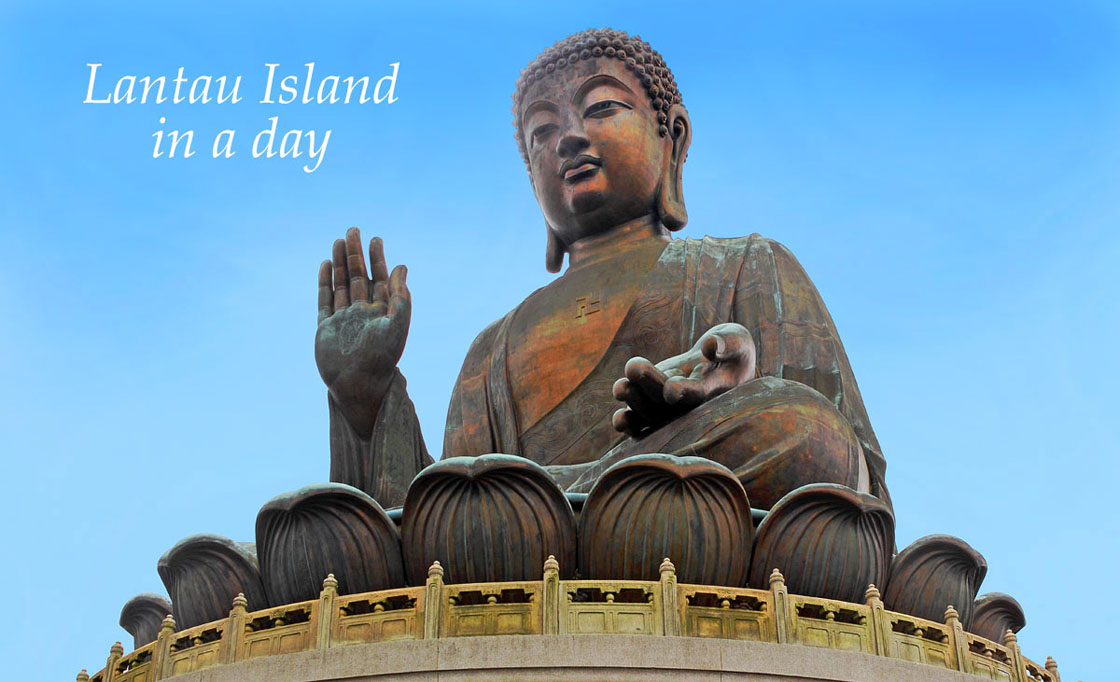
Don’t leave Hong Kong without a visit
If you do some online research, you’ll find that there’s enough attractions and sites in Lantau Island to fill a three or four day stay. However most tourists come to the island on a day trip, as part of their main Hong Kong holiday itinerary. It draws in thousands of visitors (both domestic and foreign), to man made landmarks like Hong Kong Disneyland, Ngong Ping Village and Cable Car and the Giant Buddha, to name a few. Therefore, if time is limited, it would be practical to select 2 or 3 sites to visit without rushing, and make your day trip a memorable one.
Ngong Ping Village
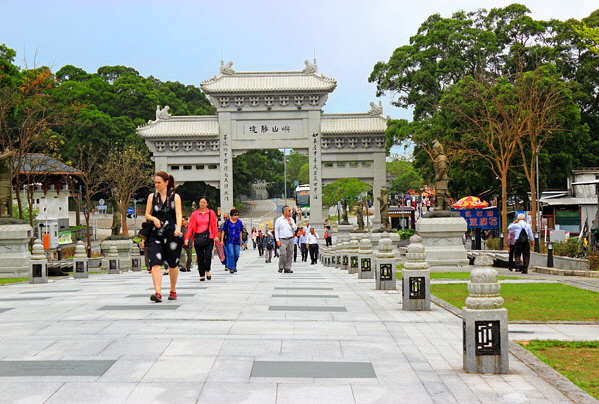
Walkway to the Monastery site
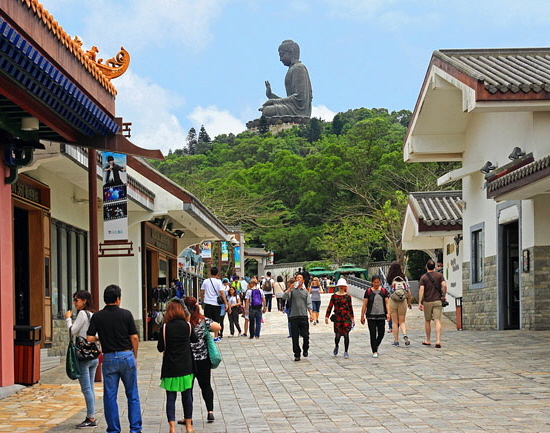
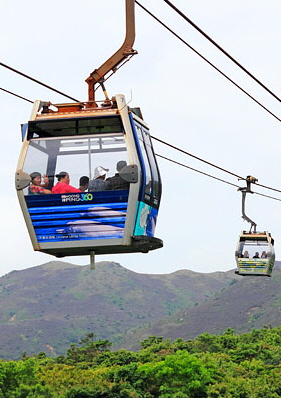
The quick way to Ngong Ping Village
The largest of Hong Kong’s islands, Lantau is visited mostly by those arriving on escorted tour groups. However, I was fortunate to have my friend Chemo, an expert in all things Hong Kong, who offered to accompany me on my day trip.
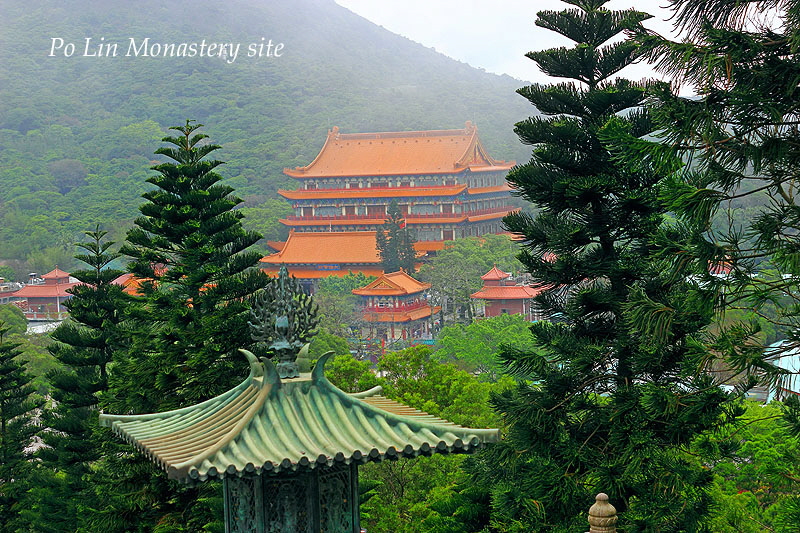
“Lets do a couple of things and do it well” suggested Chemo. Our plan for the day was to spend the morning at the famous Po Lin Monastery site, and afternoon at Tai O fishing village.
We took an early morning MTR (subway) to Tung Chung (the line that connects to the Hong Kong International Airport). And from there, the option was the cable car, or as we decided the much slower bus trip to Ngong Ping Village (site of the monastery). The scenic ride along winding roads uphill and by the coast took around an hour. Stepping off the bus, we headed for the streets which were paved with shops, souvenir stalls, and restaurants, and unfortunately had anything but a ‘village’ feel to it. However, the Big Buddha statue on the mountain top, was visible from anywhere, and we followed the signs in that direction. “ It looks very touristy” I commented to Chemo, who nodded agreeing. “Most are visitors from mainland China, and other Asian countries” he added.
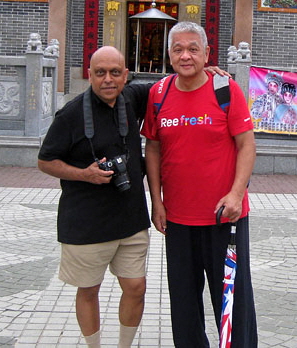
With Chemo, my friend
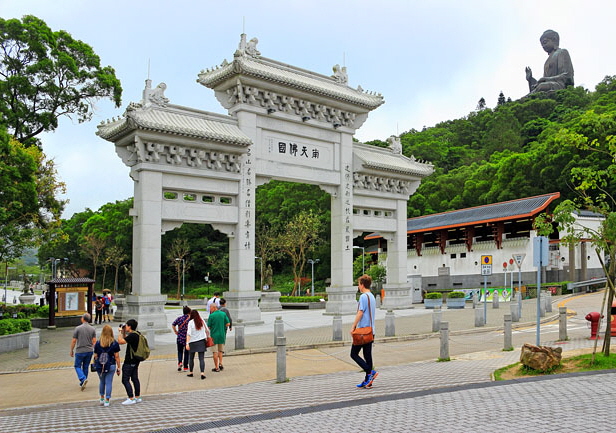
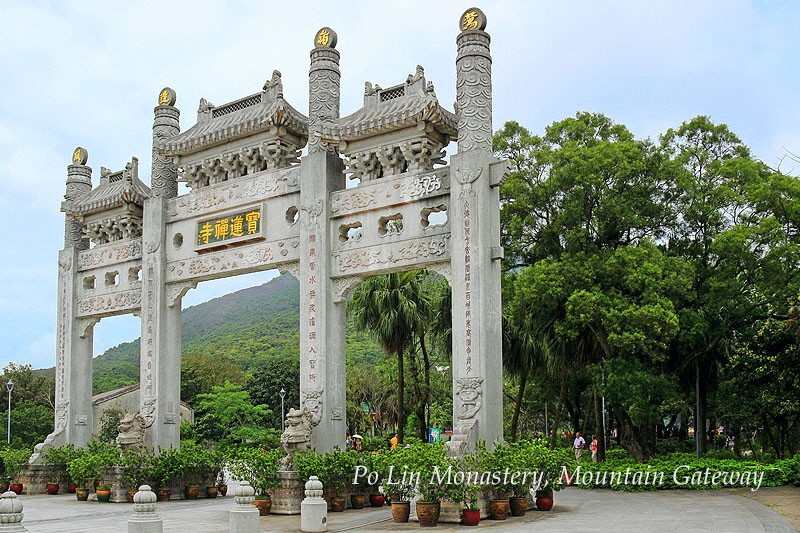
Mountain Gateway
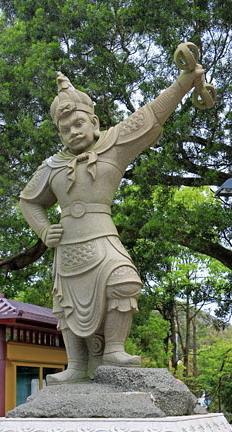
Guardian statue
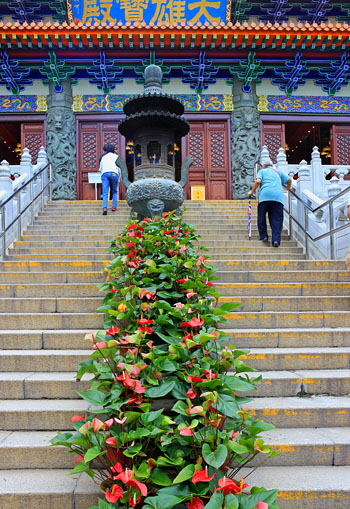
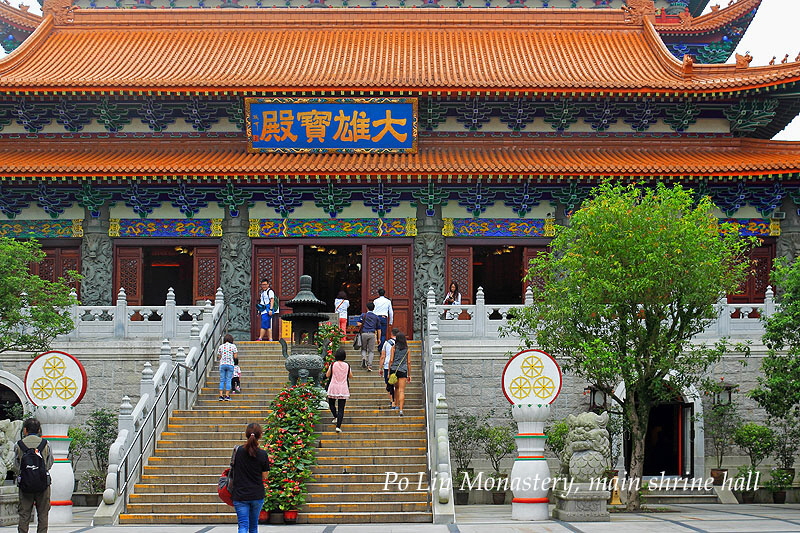
Steps to the main shrine hall
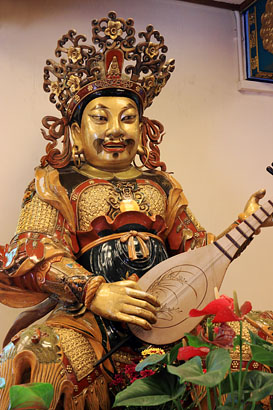
Heavenly King statue
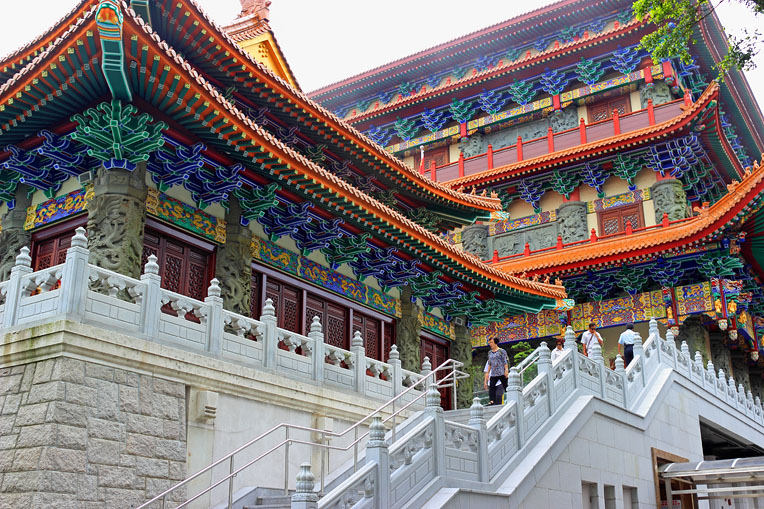
The immaculately laid walkway, decorated with imposing guardian statues on each side, led to a massive ‘mountain gateway’, and entrance to the Po Lin Monastery complex. Although one of the top attractions, the monastery first and foremost is a place of worship. As we had arrived early, the visitors were few, and we were able to explore the temple complex in a leisurely manner.
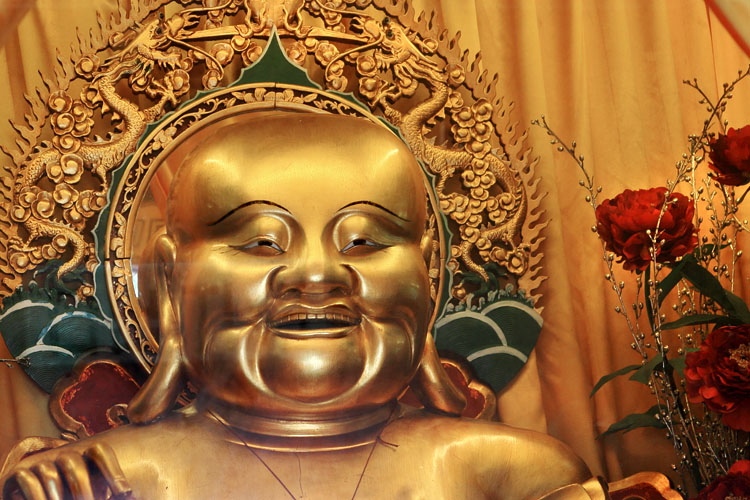
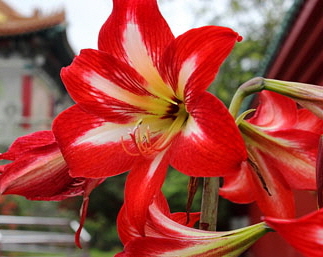
The stone stairway, lined with red Anthuriam flowers, led up to the entrance of the shrine hall, which is the main feature of the complex, and contained statues of deities and altars for worshippers. It also led to the Hall of Bodhisattva Skanda, which contains four huge decorative and gold painted ‘Heavenly King’ statues, believed to be guardians of the main shrine of the Buddha.
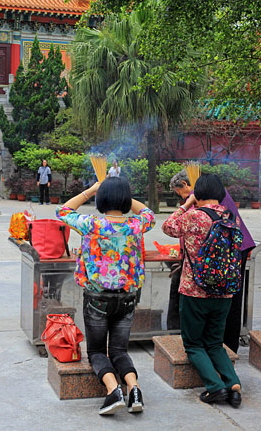
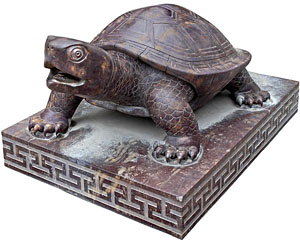
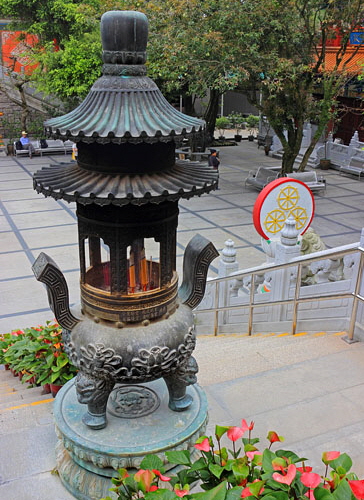
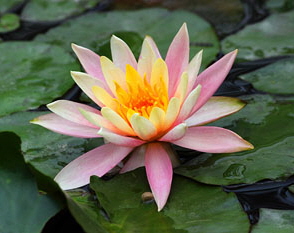
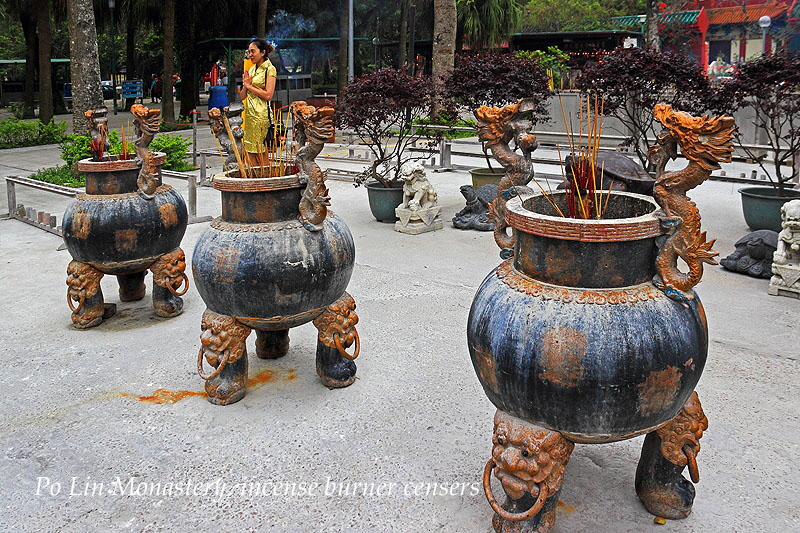
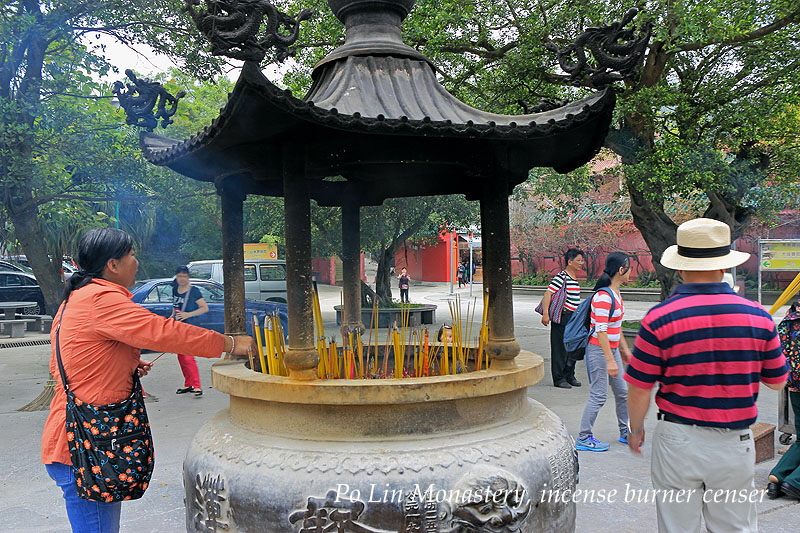
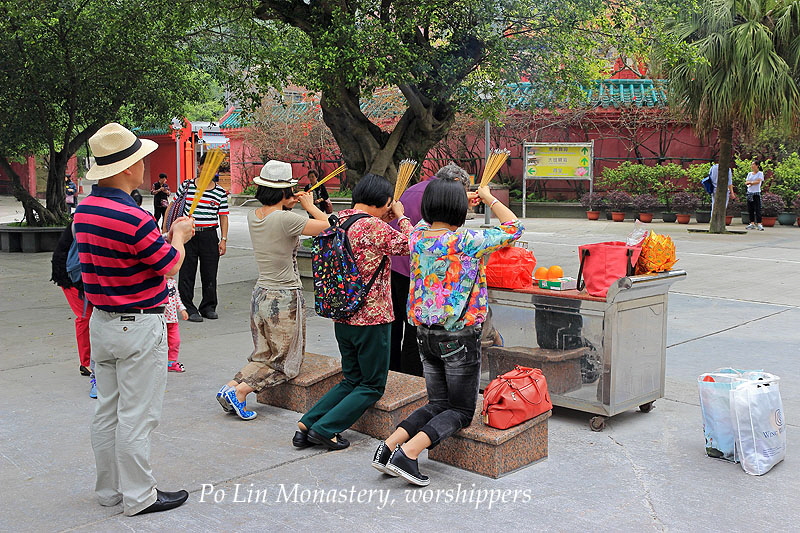
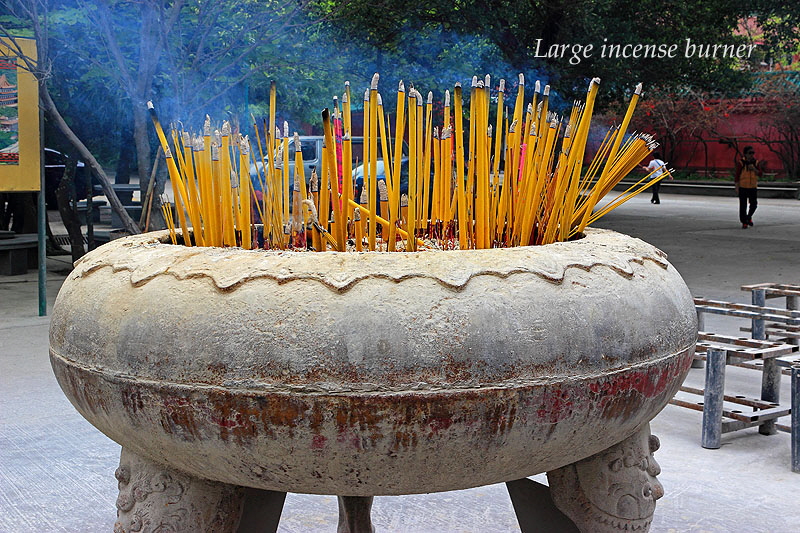
Outside, the temple grounds, with beautifully landscaped gardens, rows of potted lilies, lily pond and seating areas, gave it a sense of tranquillity. Several incense burner censers spread around wafted the air with the sweet smell of the burning joss sticks, Elsewhere, a large courtyard contained several stone statues and turtle sculptures.
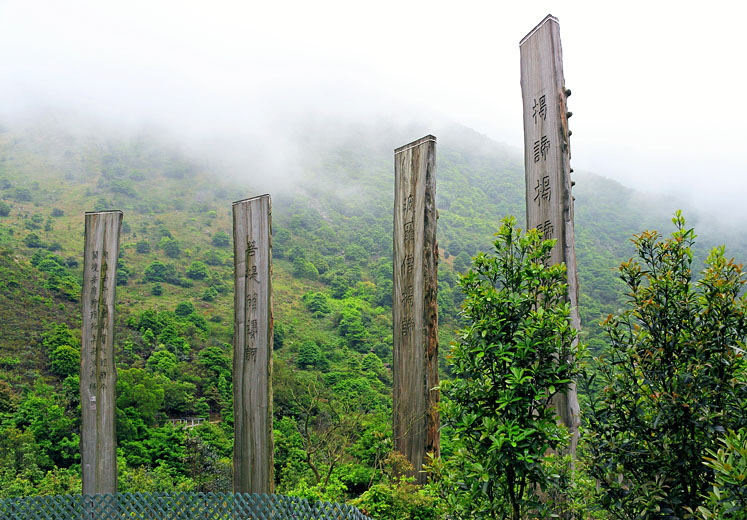
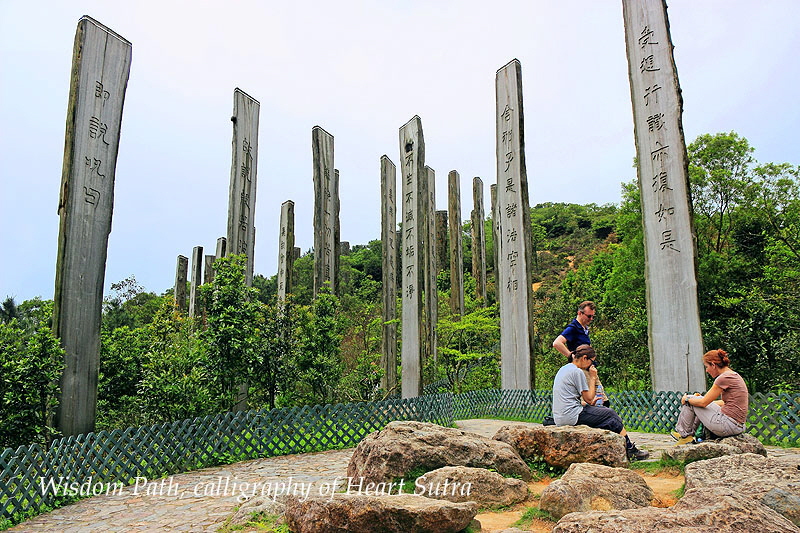
While there are several nature walks, hiking trails along the island’s chain of mountains, and for the more energetic, a trek up 934 metres to Lantau Peak, Chemo instead suggested a gentle stroll uphill to the nearby ‘Wisdom Path’. It contains an outdoor installation of 38 large wooden columns, and stands against a mountain backdrop and mist, giving it a serene atmosphere. The columns have been carved in calligraphic style with concise texts taken from The Heart Sutra (Buddhist scriptures).
Nature walks
Wisdom Path
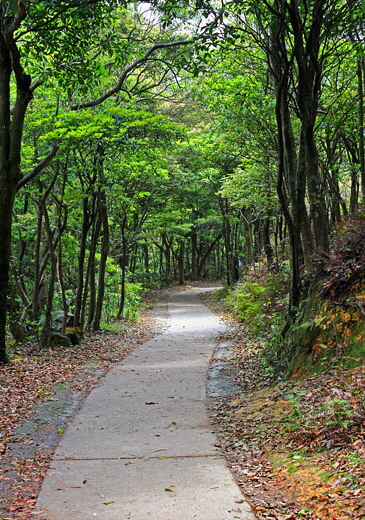
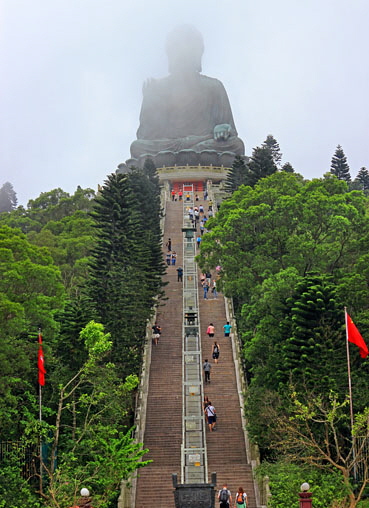
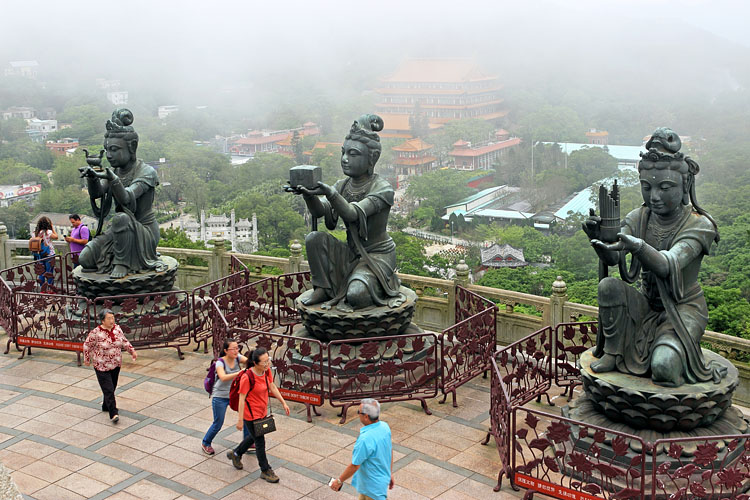
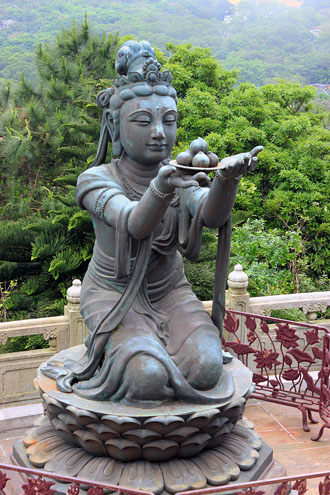
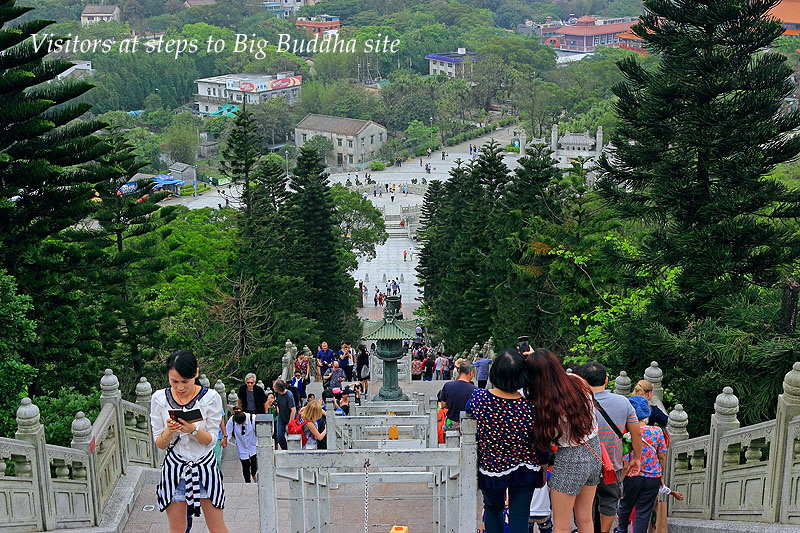
By mid morning the crowds were building, as we began our climb up the 250 or so stone steps, weaving through visitors taking their selfies, to view the Big Buddha (Tian Tan) statue. At 112 feet (34 metres) high, it is one of the world’s largest bronze, seated posture Buddha statues. Encircling the statue are six smaller beautifully carved stone sculptures of ‘Devas’(or Bodhisattvas - enlightened beings) each holding gifts, symbolising the necessities required to enter nirvana (perfect place of peace and happiness). The views from the top were dramatic, though slightly marred by the surrounding mist.
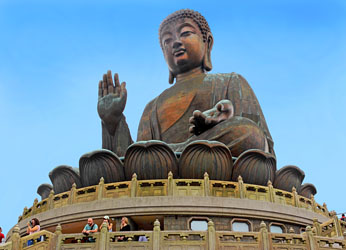
Tian Tan (Big Buddha) statue
Deva sculptures
Deva sculpture
Walking back to Ngong Ping, we caught the 20 minute bus ride going down the mountain slopes to Hong Kong’s oldest fishing village of Tai O.
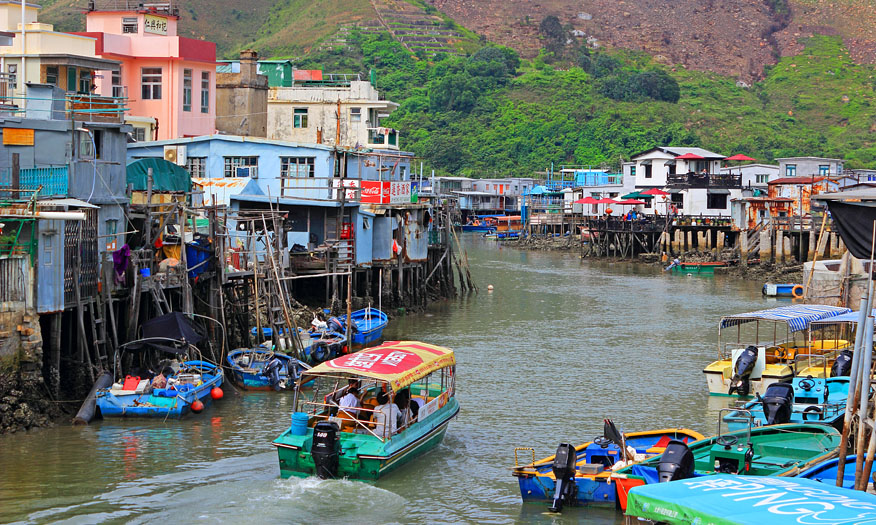
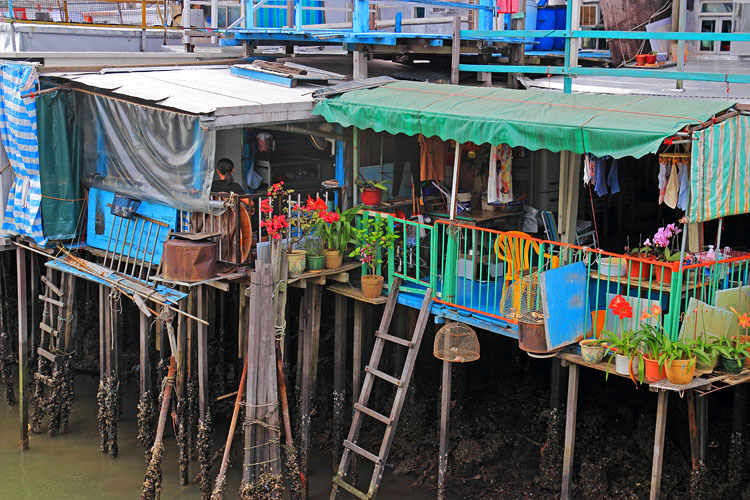
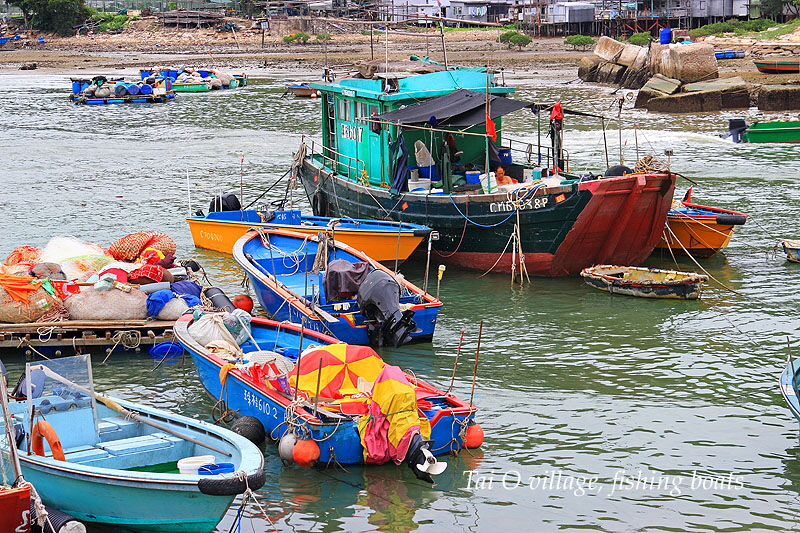
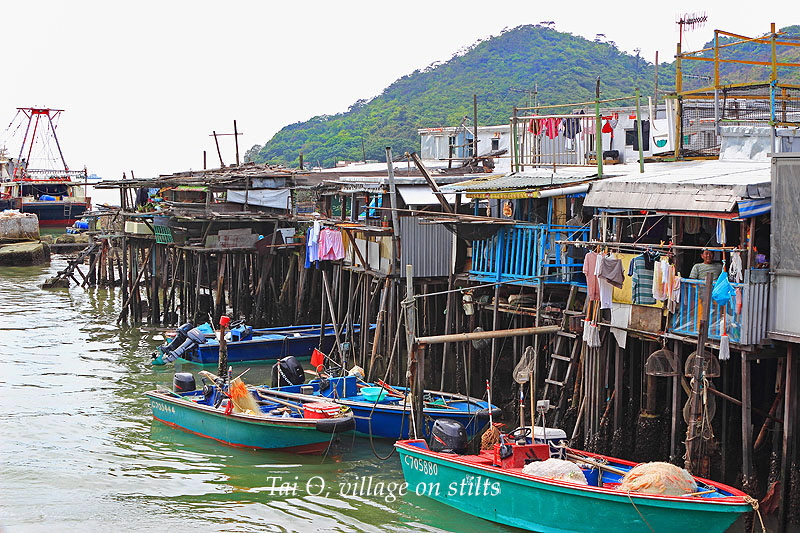
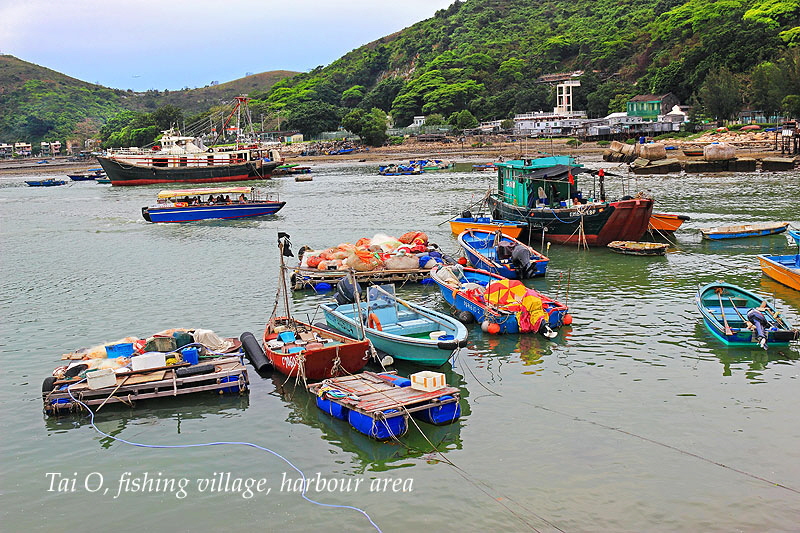
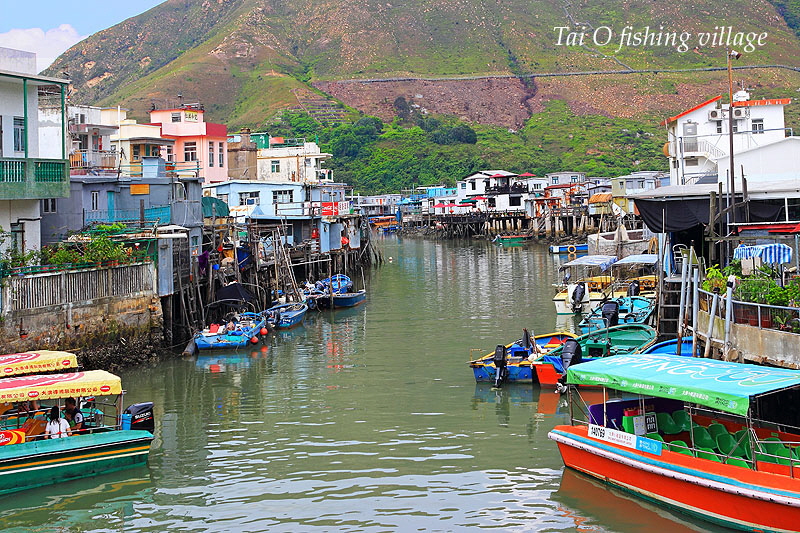
Undeterred by the modernization of the rest of Hong Kong, Tai O, along with several other villages on the island, has managed to preserve some of its ancestral culture and rural lifestyle. It is located on the west side of the island, on the banks of the Tai O river. The most common sight as you arrive, are the homes built on stilts over the water. The picturesque village has been a filming location for several movies in the past, and more recently ‘Skiptrace’ with Jackie Chan and ‘Kung Fu Killer’ with Donnie Yen. No tall buildings, no cars to be seen either, giving it a rural feel, in complete contrast to the high-rise modern architecture of Hong Kong.
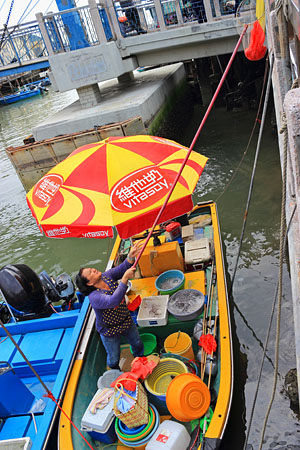
To see more of the village, we walked up past the small fishing harbour and over the bridge and meandered through the narrow streets and alleyways, teeming either side with small shops, and yes, souvenirs stalls too. Below, by the riverside were small boats, with tanks full with live seafood, and vendors trading directly from the boat to the customer on the street above. Once your choice is made and paid for, the vendor puts the fish into a basket at the end of a long pole and lifts it up for the customer to collect.
Tai O, village on stilts
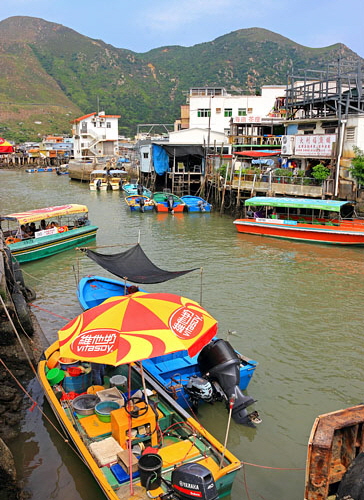
Selling seafood, straight from the boat
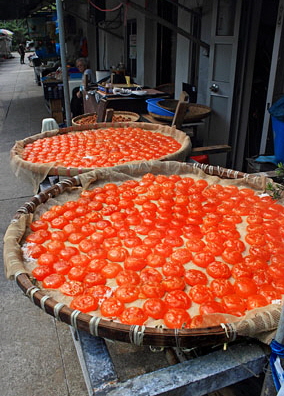
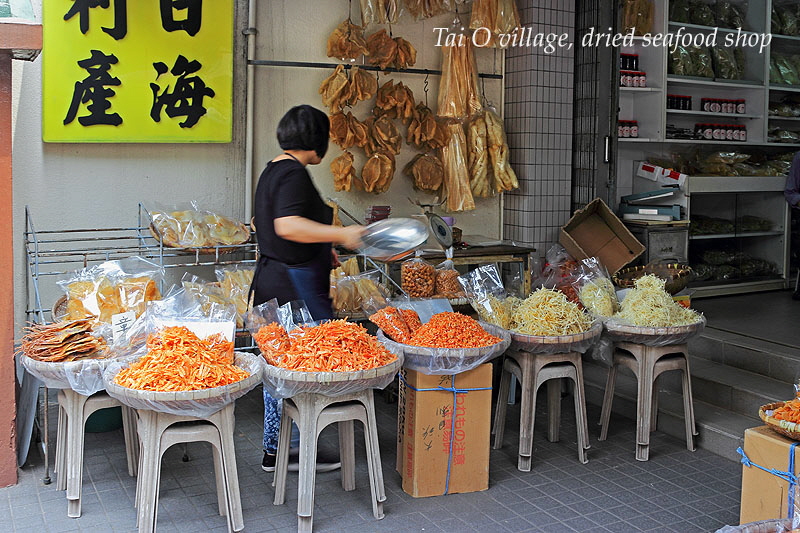
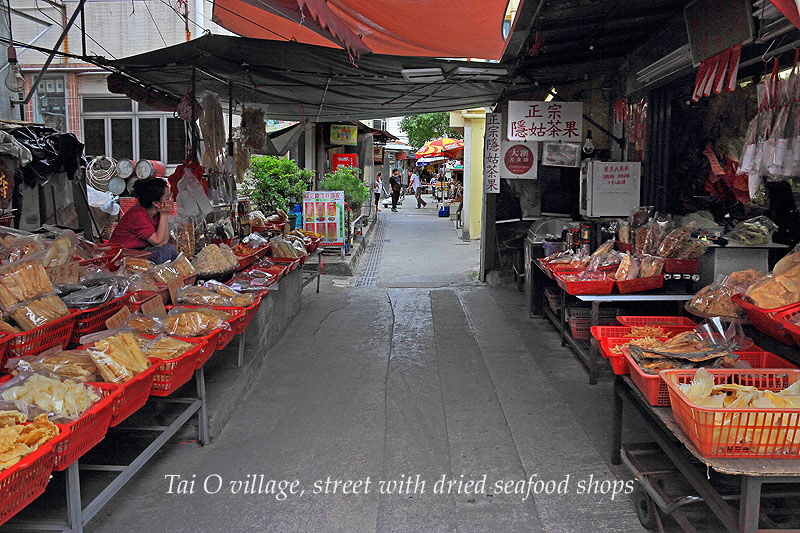
After pausing to watch the activity, we ventured further into the village, where more small markets were everywhere, mainly dried seafood shops. Anything from dried cuttle fish, squid, octopus, puffer fish, star fish, sea cucumber to name a few were on sale. Some house fronts even had their own little stalls selling seafood. We also came across wide shallow baskets filled with duck egg yolks, drying in the sun, for making salted eggs - a local speciality.
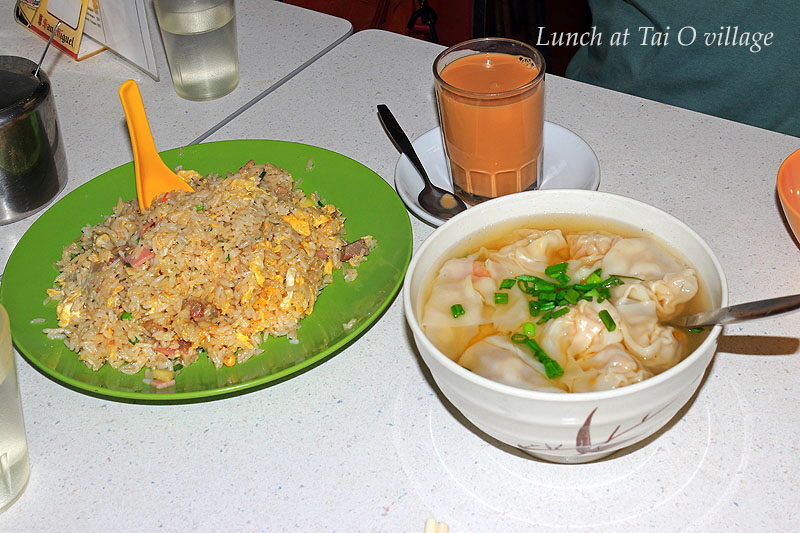
And then the aroma of restaurant food! Unable to resist, and well past lunch time, Chemo took me to a tiny cafe-like establishment, that resembled more like someone's home than a restaurant, which had just four small tables and chairs. There was no menu, and the elderly owner/couple explained what the ‘dishes of the day’ were.
Here, I enjoyed some of the finest food I’ve had in years. Egg and pork fried rice, with prawn and pork Won Ton Soup - so full of flavour. I’ve had Won Ton soup numerous times before, but this was exceptionally good. And to top it off we had some traditional tea - sweetened with condensed milk.
Duck egg yolks
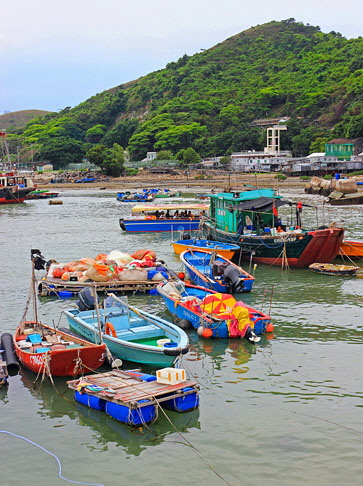
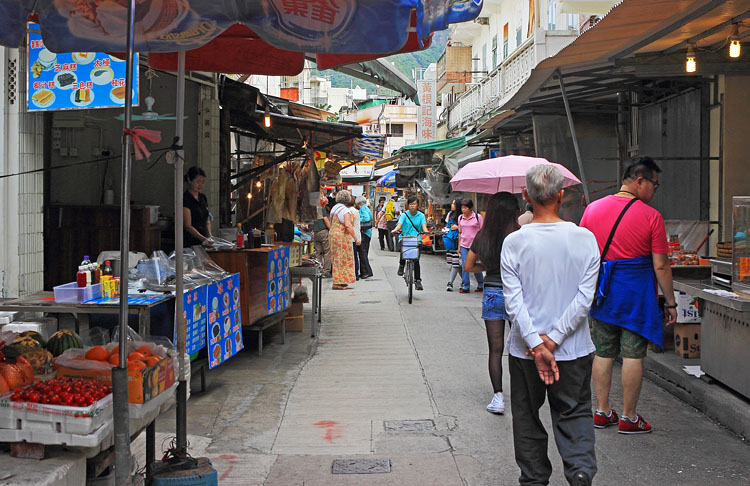
For the visitor, it is a beautiful, and colourful place to visit. But life at Tai O could not be easy, I imagined. The community’s livelyhood depended on fishing, which meant extremely hard work to sustain a basic living. But the determination to maintain its culture and traditional village lifestyle is to be admired.
As the evening light approached, it was time to take the 50 minute bus ride to Tung Chung MTR and head back to skyscraper-land on Hong Kong island.
16 images here ©JAYTRAVELPHOTOS
© COPYRIGHT notice. The images on this site are for viewing only.
To purchase any, for personal or commercial use, please contact us at jaytravelphotos@aol.com