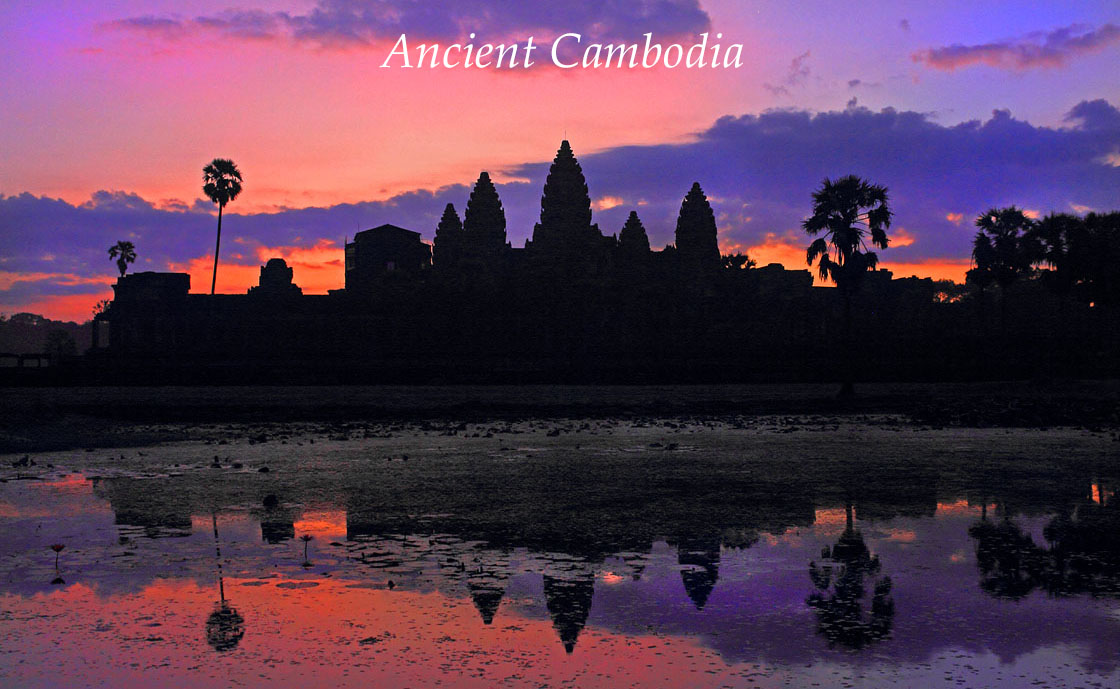
Walking in awe in Angkor
Stepping out of my hotel in Siem Reap, I was approached by those familiar words “good morning sir, taxi?”. Smiling widely, the driver pointed me to his tuk-tuk, with blue and yellow painted sign saying ‘Bat Mobile’. He assured me, that he could take me anywhere, anytime and show me everything. After a few pleasant minutes of negotiation, Jai and his bat mobile were ready for me the next day, for exploring Angkor Archaeological Park. To begin, I purchased a 7 day pass (US$72 in 2019), that would enable me to visit as many sites I wished to.
I had briefly read about places I wanted to see, and instead of going into depth about Angkor’s history, I was more interested in being there to experience and feel the atmosphere of the place, which had volumes written about. However, a brief introduction should suffice to indicate the vastness of this ancient city like no other.
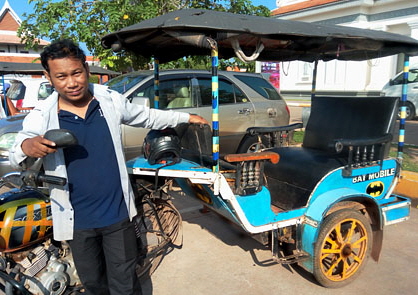
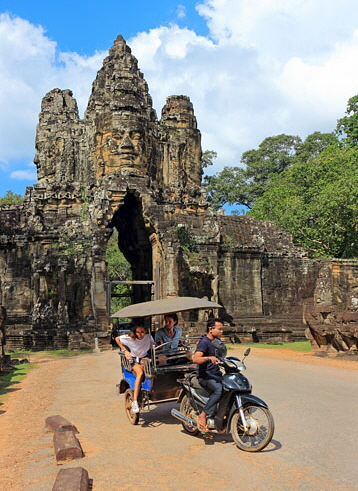
Jai’s ‘Bat Mobile’
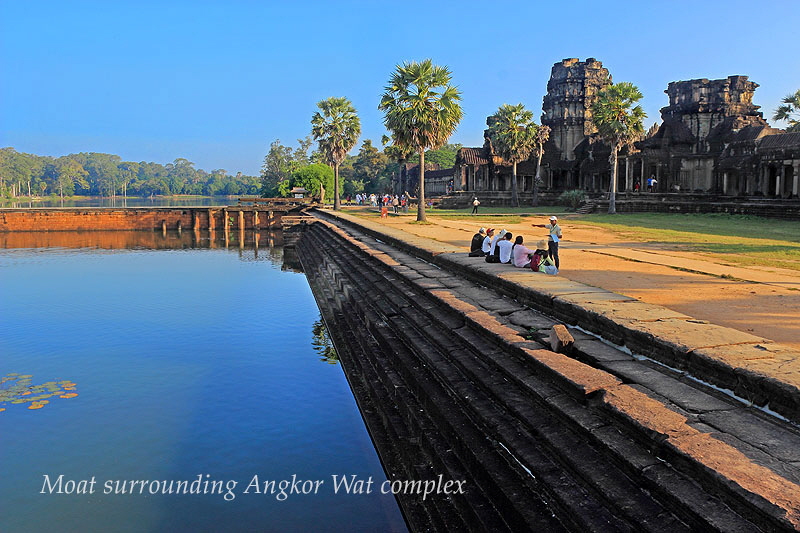
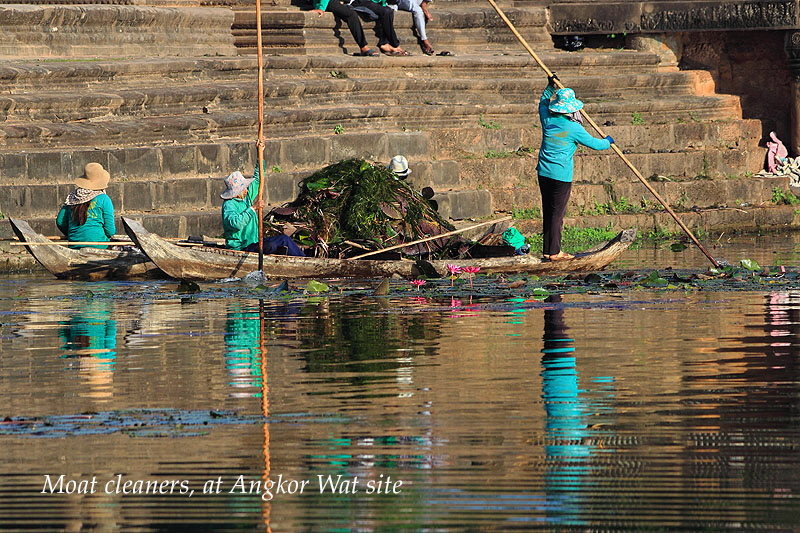
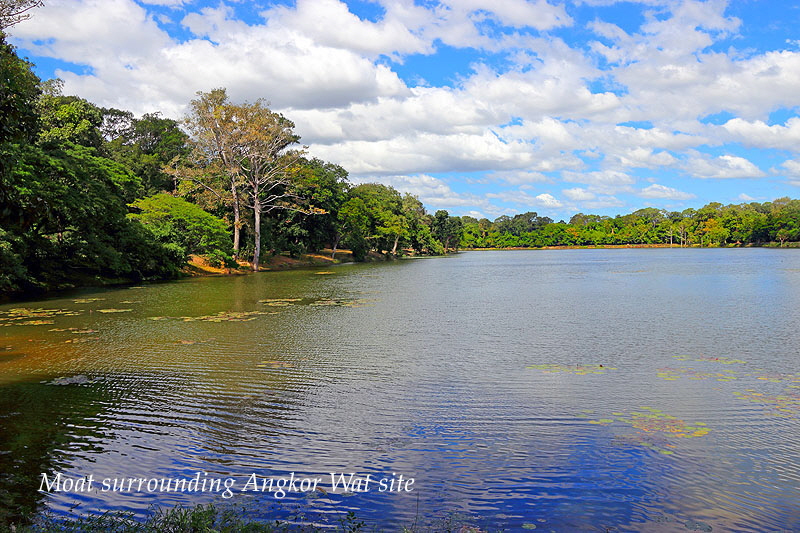
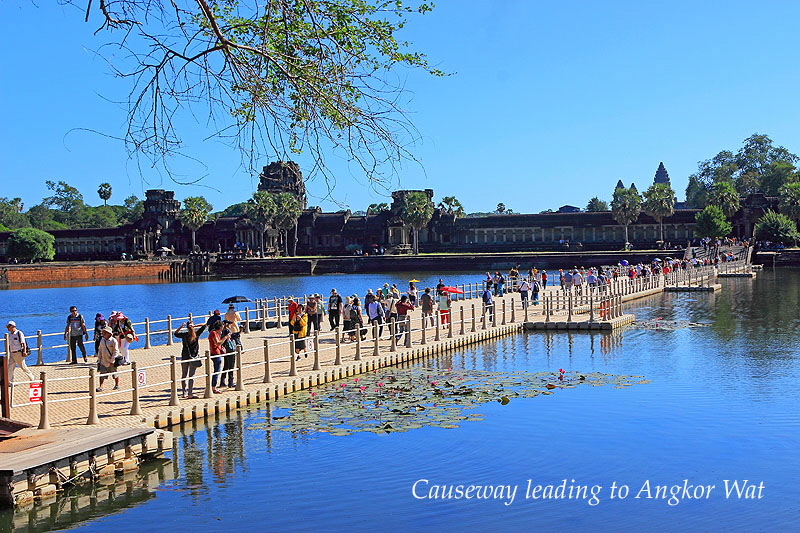
Moat surrounding Angkor Wat
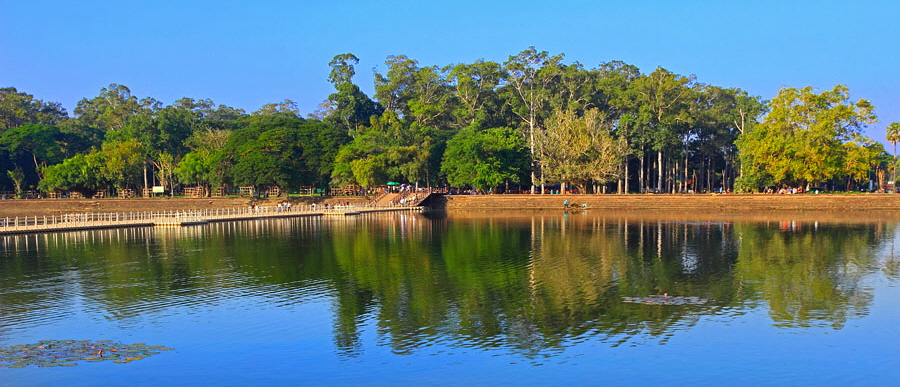
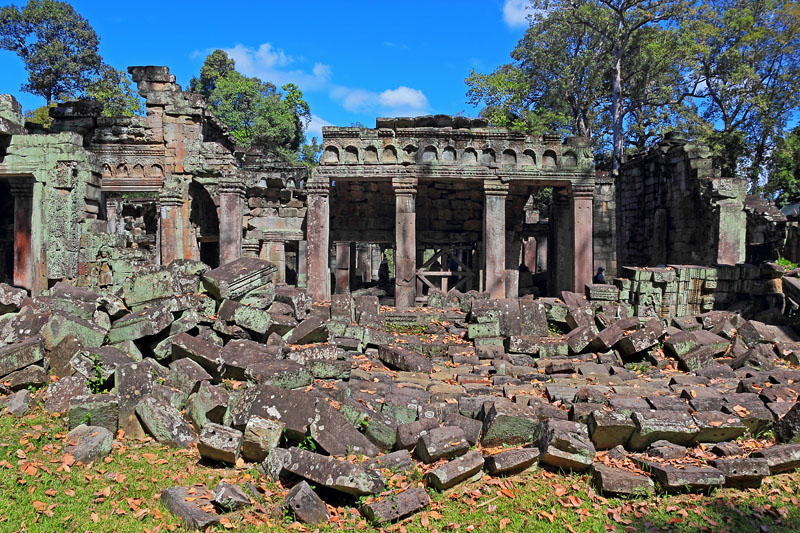
Angkor was the capital city of the Khmer Empire, that reigned between the 9th and 15th centuries. One of the most important archaeological sites, it covers an area of around 400 square kilometers. It is considered an exceptional and advanced civilization in engineering, architectural artistry, and irrigation skills that built hundreds of temples, as well as reservoirs, canals, and dykes. Located just north of Siem Reap, it is estimated that there are over 1000 temple ruins, ranging from just piles of stones found in jungles and farmed land, to the famous Angkor Wat - the world’s largest temple complex.
Ruins untouched for centuries
A week is just about enough to explore Angkor at leisure
In the week, I managed to see most of the major sites, as well as some smaller temples and ruins. The places mentioned here are ones that no visitor should miss. It can be quite daunting to see too many in a day and take it all in. So visiting a couple of sites a day at a leisurely pace was just right, with breaks for lunch and drinks and conversations with Jai in-between. And for me, this was no in-depth history lesson. I was here to enjoy and see the works of a once highly skilled and dynamic civilization, and be in awe.
While many parts of the sites have been left untouched, some have been lovingly restored. But it should be noted that restoration work does not mean rebuilding, but putting existing parts together to conserve the artistry and construction to prevent further decay.
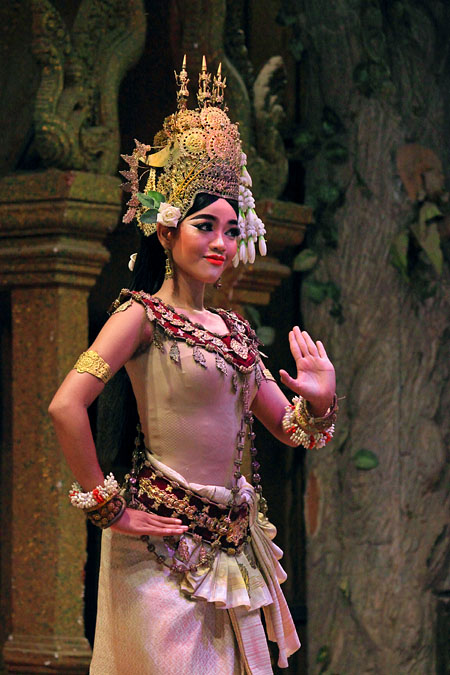
Apsara dancer reenactment
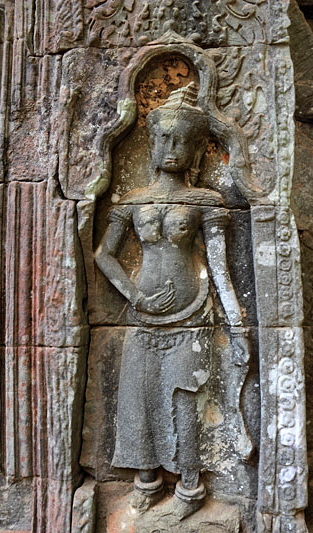
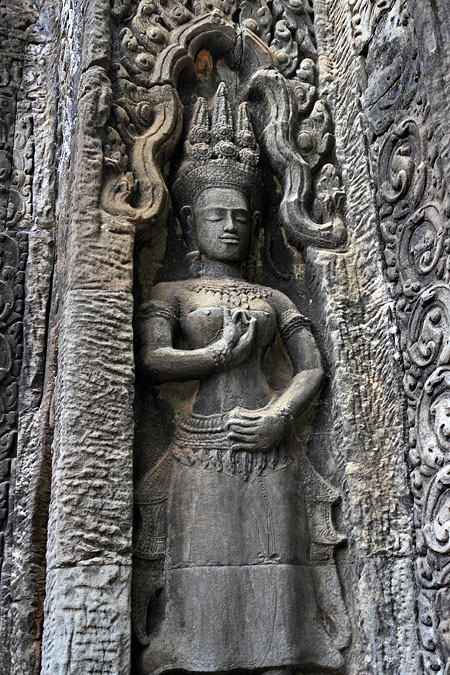
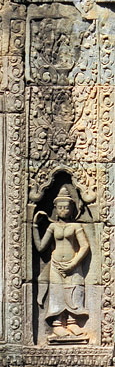
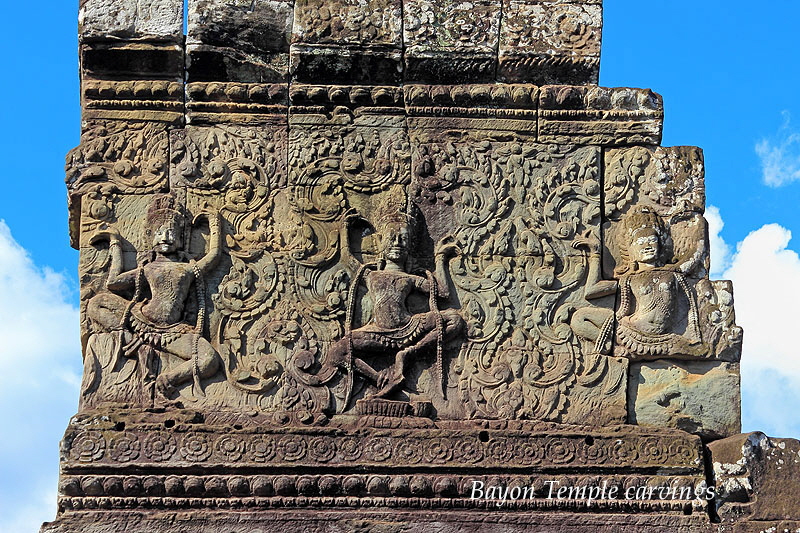
Apsara (female deity) carvings, a common sight in many temples
It was early November and officially the beginning of the dry season. Fully equipped with my guide book, map, camera, water bottle, phone, and as there was plenty of walking to do, made sure I also had good shoes. I was off early morning with Jai, driving along the dusty road towards our first stop to a different world altogether.
To avoid the crowds, Jai had carefully timed when and where I went. It was relaxing to be driven along tall forest-lined roads, with the morning cool breeze pleasantly hitting on you. Even by the side of some of the roads are ruins and carvings, shrouded by jungle foliage.
So, take a look at some of the sites I was privileged to visit, and hope it would inspire you and add Angkor to your bucket list.
Banteay Srei - like an outdoor art and sculpture gallery
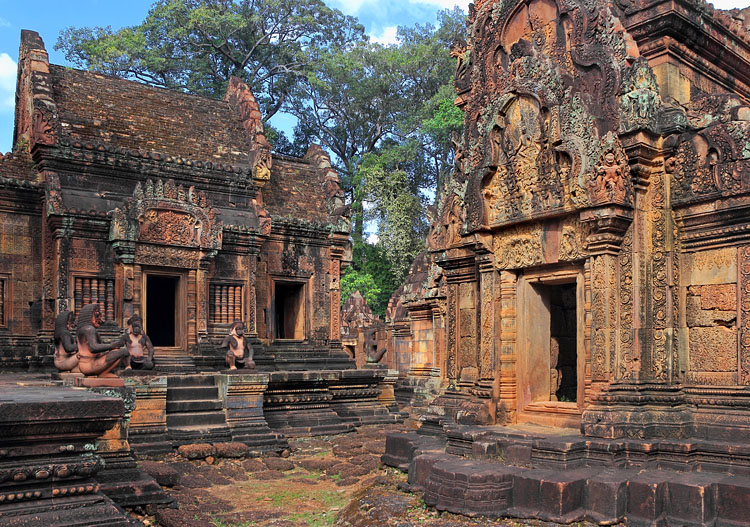
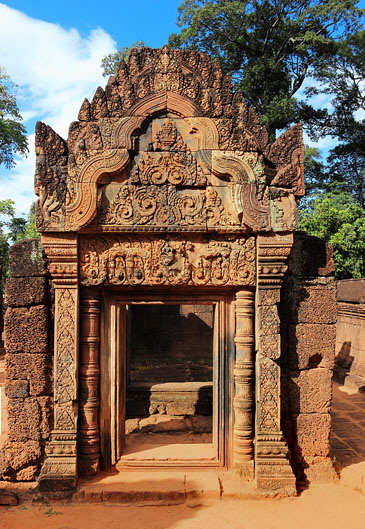
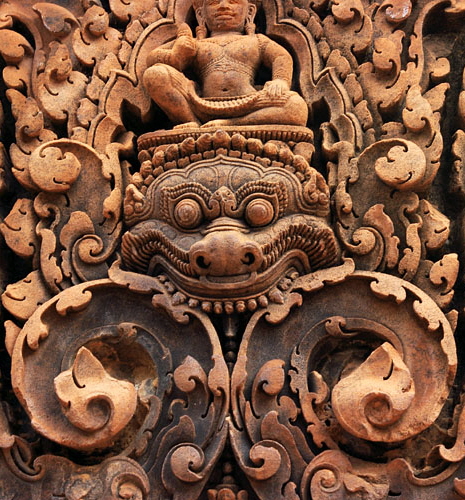
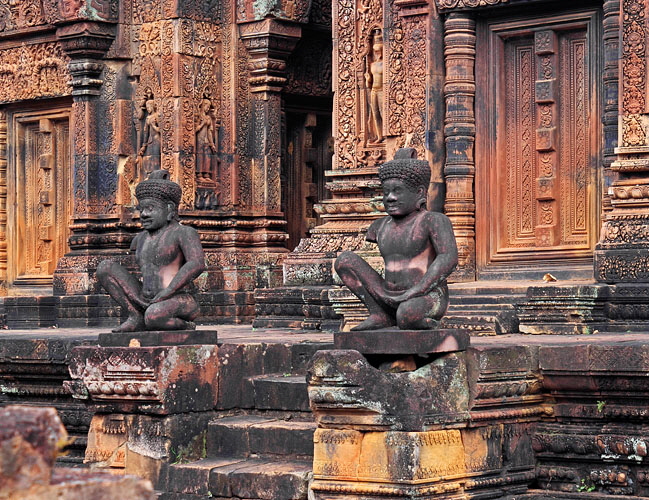
Banteay Srei - like an outdoor art and sculpture gallery
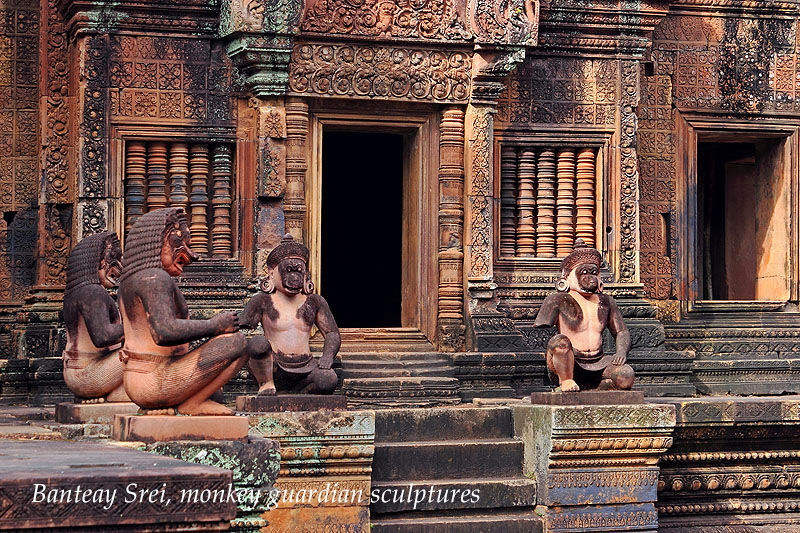
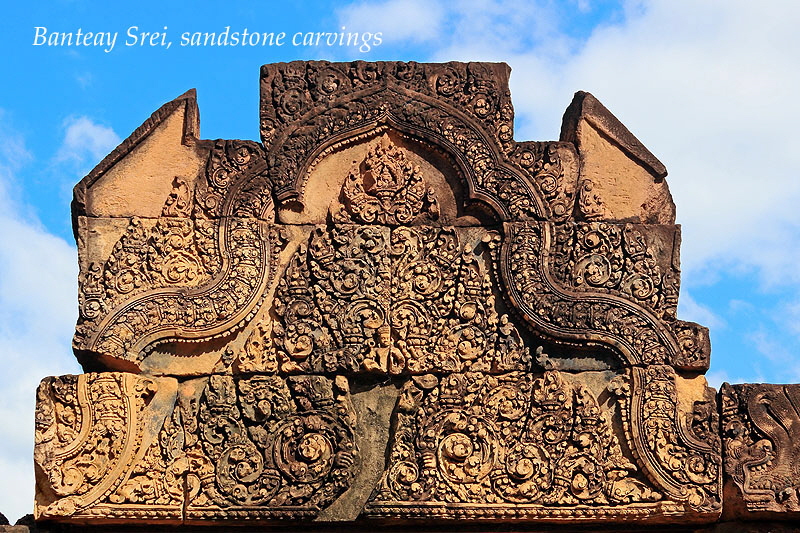
Banteay Srei: My first stop was not in Angkor itself, but one hour drive from Siem Reap. Also called the ‘ Citadel of the Women, Bateay Srei is a 10th century temple dedicated to the Hindu god Shiva. Built with red sandstone, it is one of the most beautiful, with amazing engravings, statues, and the finest of Khmer art. It felt like being in a vast outdoor art and sculpture gallery. Thankfully, a roped fence around has kept visitors from climbing onto the site, and is one of the best preserved.
Ta Prohm - temple swallowed up by the jungle
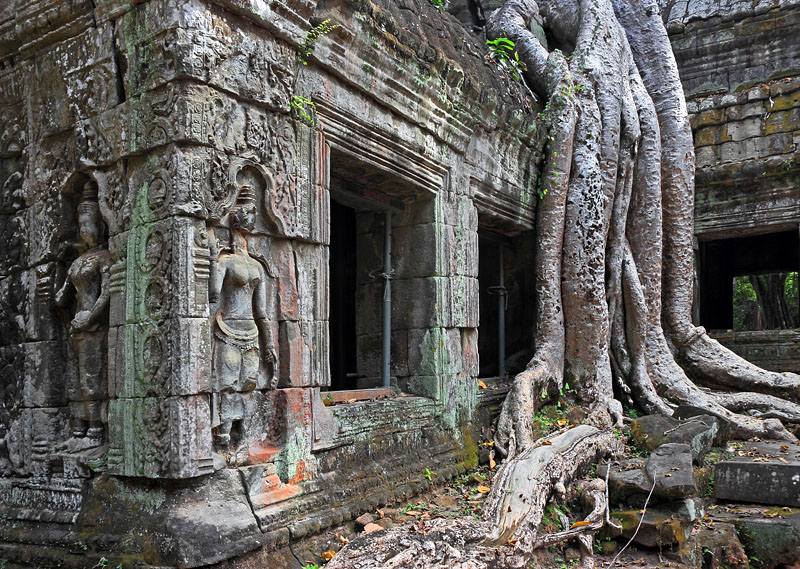
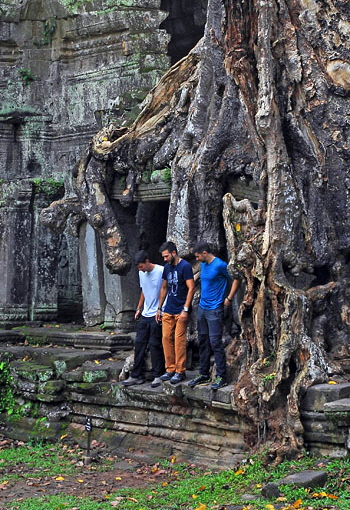
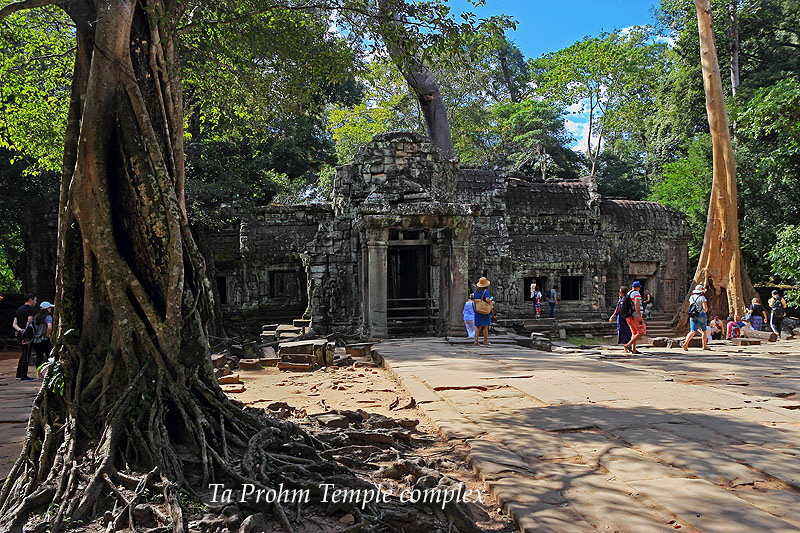
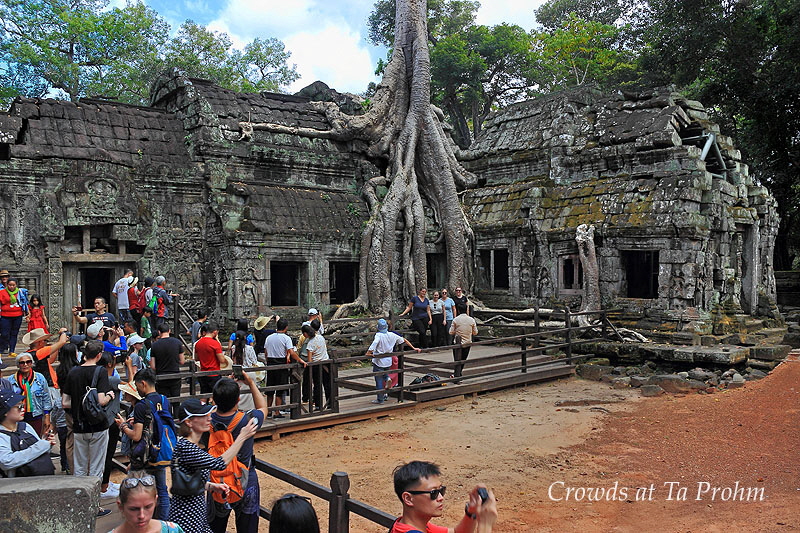
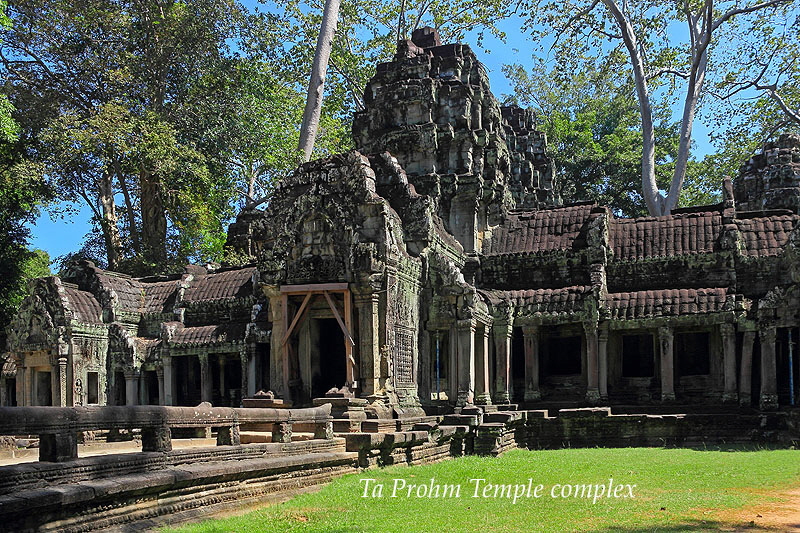
Ta Prohm Temple: Referred to as the temple swallowed up by the jungle, it is easy to see why. Rugged and wild, the atmosphere can even be haunting, but for the thousands of visitors who come each day to have their photos taken against the backdrop of a scene in the movie ‘Tomb Raider’. Shaded and shrouded by Strangler Fig and Banyan trees, their gigantic roots have spread and engulfed almost every part of the structures, and some roots twisting around stone pillars.
It’s a spectacular sight of towers, courtyards, dark narrow corridors covered in bas-reliefs. You’ll discover numerous nooks and crannies to explore among the fallen ruins, but do follow the guidelines - not to climb and cause damage. Archaeologists have left it untouched, leaving it in a state of beauty (except for the paths made to guide visitors along), which makes it one of the best sites in the whole of Angkor.
Strangler Fig trees
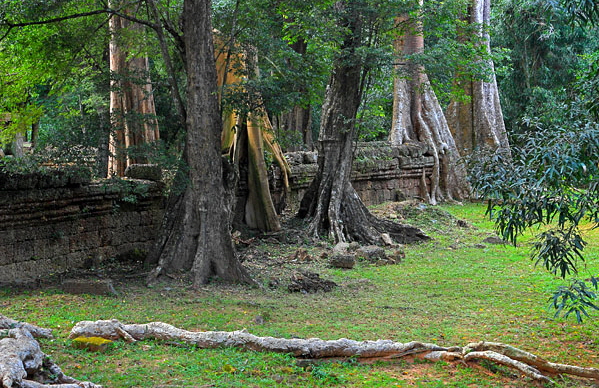
Ta Prohm - swallowed up by the jungle
Corridor after corridor - easy to get lost
A platform for the visitor who cannot resist a photo
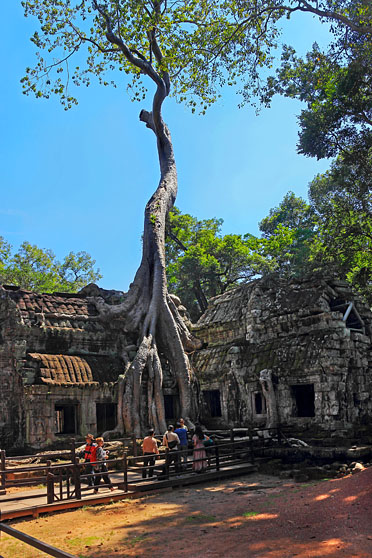
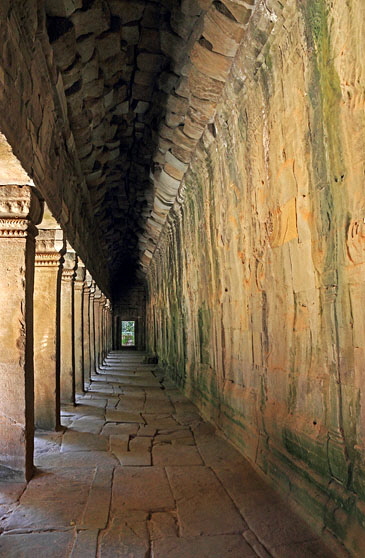
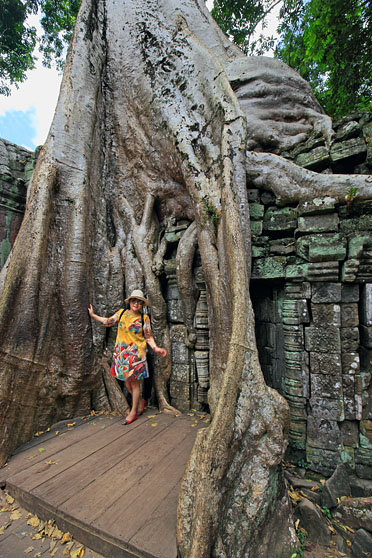
Ta Prohm is a large complex, and easy to get lost, so best adhere to the route set out for tourists. I visited it twice, once spending three hours in total bliss, and the other on a group tour that sadly whisked through in less than half an hour.
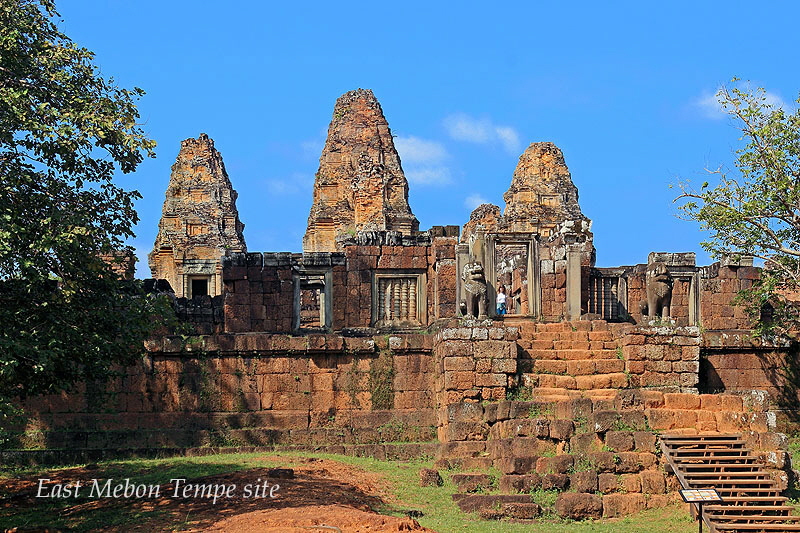
East Mebon temple, with five towers
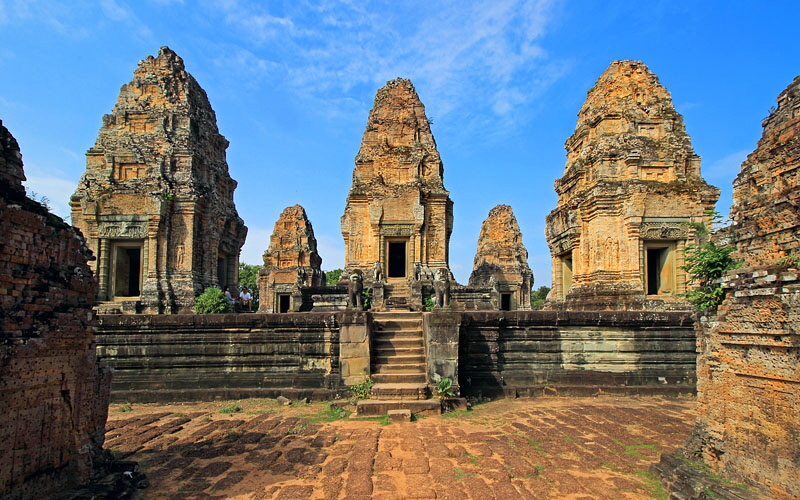
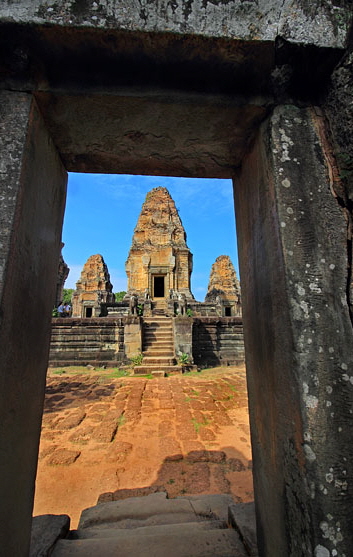
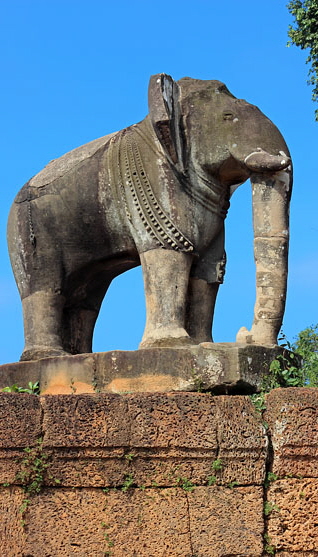
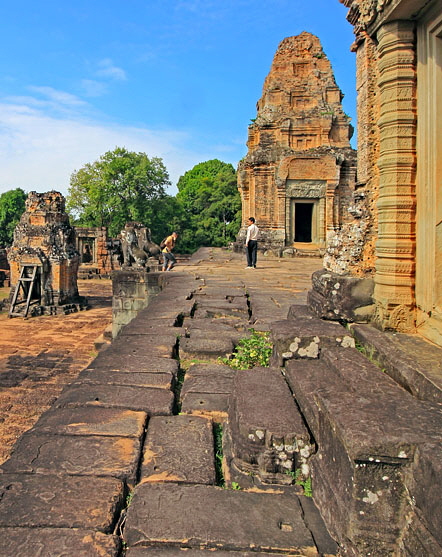
East Mebon, huge elephant sculpture
East Mebon: This lovely 10th century temple also dedicated to Shiva, is a three-tier structure, surrounded by an inner courtyard, and with five towers on the upper terrace. The towers built out of brick and sandstone have survived quite well. Along the first level are large guardian statues of lions and some beautiful elephant sculptures on the first two levels. The courtyard area also has many ruins.
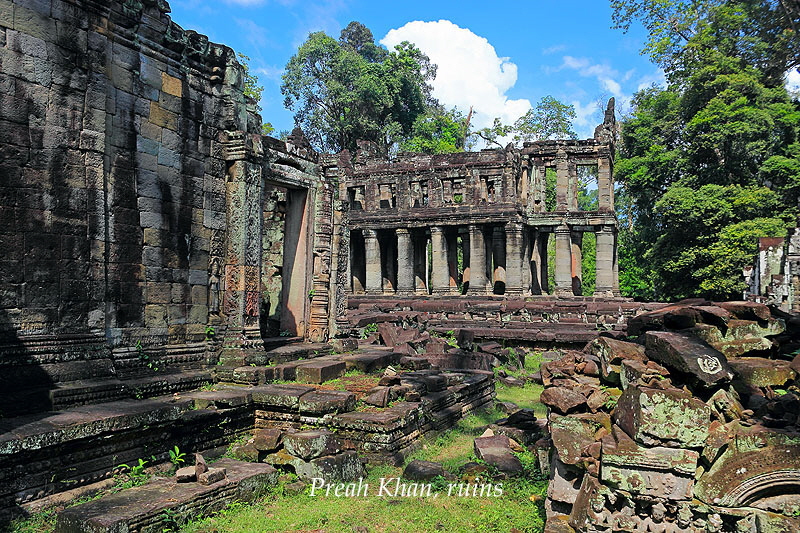
Preah Khan site, and two storey pavilion
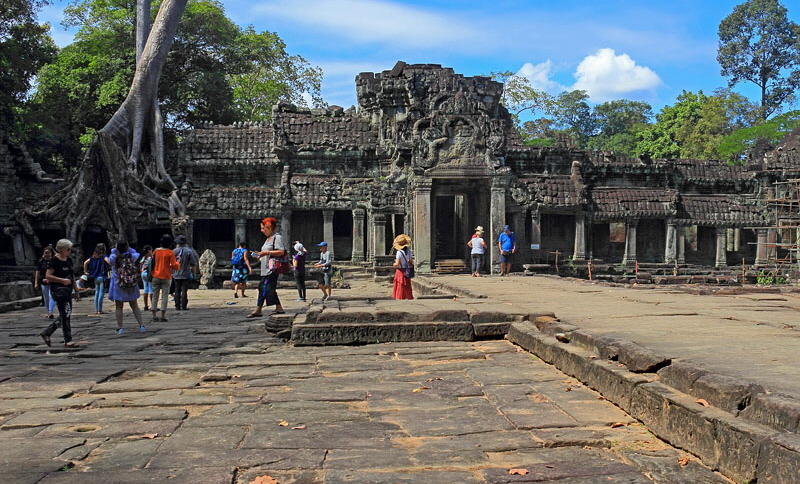
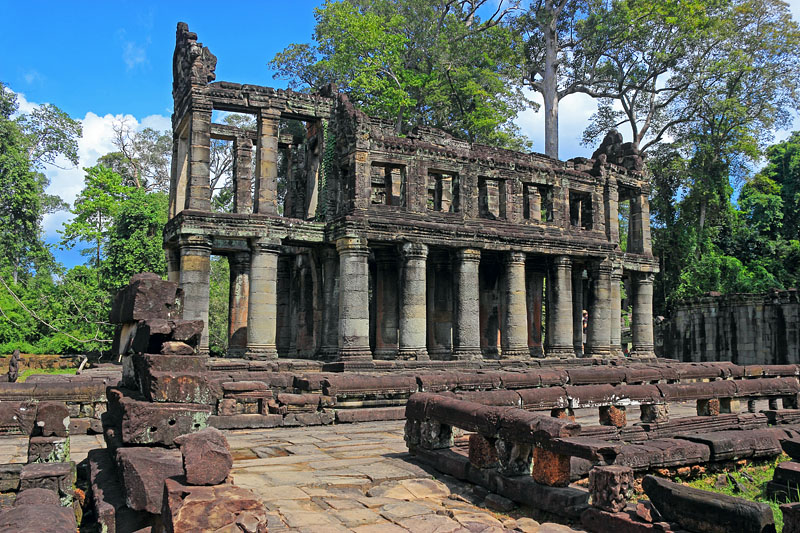
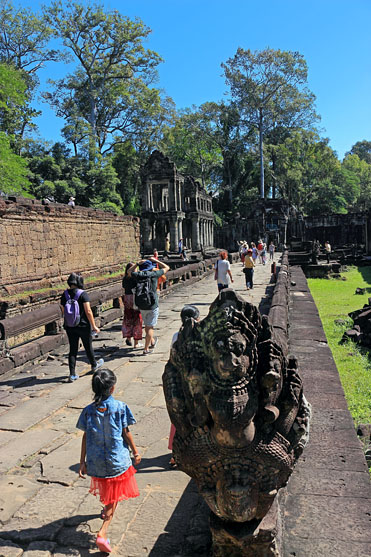
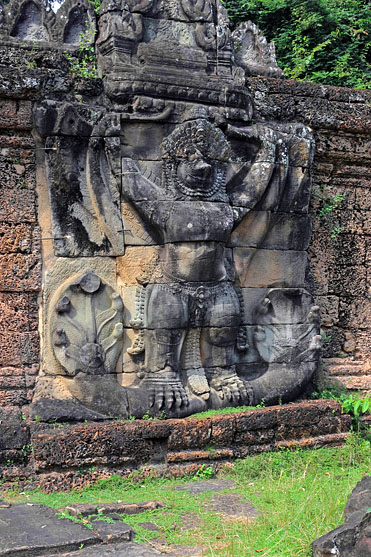
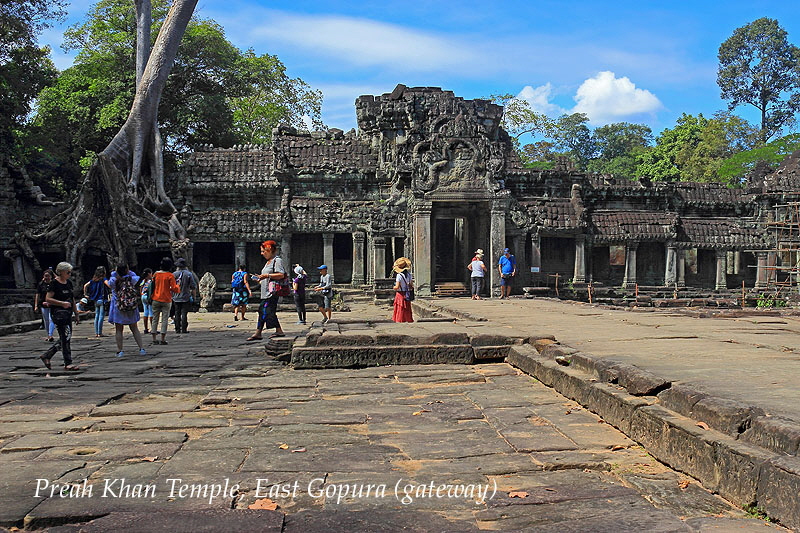
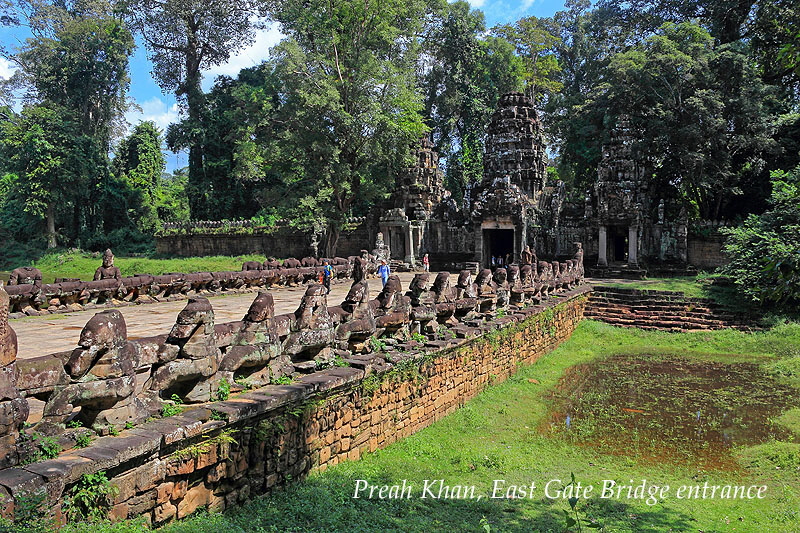
Preah Khan Temple: Similar in architectural style to Ta Prohm, and originally built as a Buddhist monastery, this is also a large complex covering an area of 140 acres. It was dedicated by King Jayavarman to his father and built from 1191 onwards. Enter the temple via a wide stone causeway that crosses the temple’s moat. The causeway itself is lined with sculptures of deities on one side and demons figures on the other. Not to be rushed, it’s another treasure-trove you should take your time to explore, in the network of chambers, dark corridors, green moss-covered structures, courtyards and a wealth of statues and carvings - so plenty to see and photograph. At one of the entrances are two huge garuda statues - mythical Hindu bird like creatures. The Hall of Dancers, is an open space with columns with bas relief celestial dancers. One of the most unusual is the ruins of a two storey pavilion.
Preah Khan site, garuda sculpture
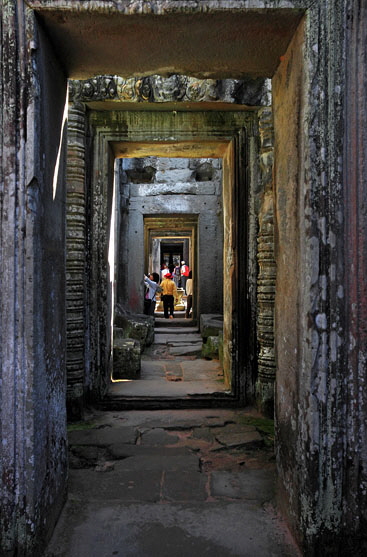
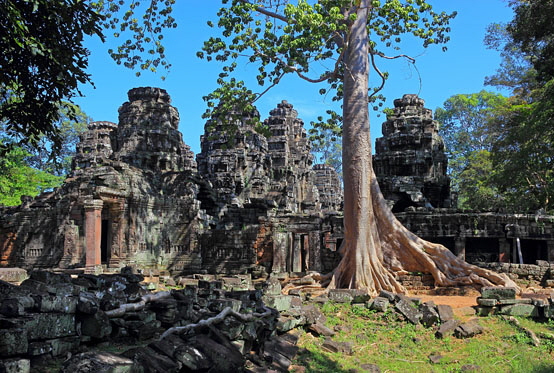
Elsewhere, in the more jungle like setting, you’ll find several buildings engulfed by giant fig trees, similar to Ta Prohm. The whole setting appears in just two colours - dark grey stone and green foliage.
Banteay Kdei Temple
Srah Srang reservoir
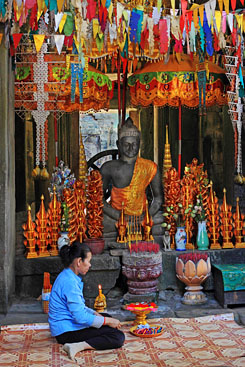
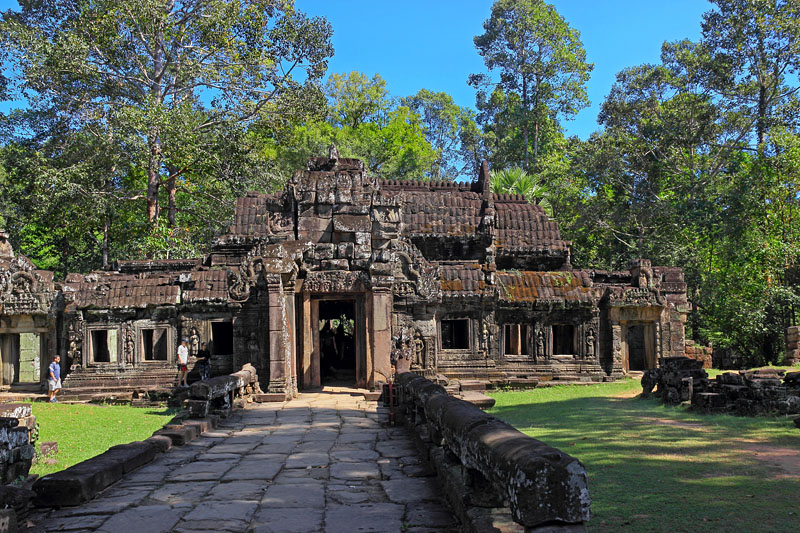
Banteay Kdei Temple: One of the least visited, and in contrast to other Angkorian ruins, it’s therefore, crowd free. It has also not been restored (although there are future renovation plans), except for the clearing of overgrown plants, you’ll experience it as when first discovered. When I visited, there were a few monks and worshippers meditating at a small shrine. I really enjoyed exploring this serene temple’s chambers, cloisters, and devata sculptures. It’s a peaceful, quiet place, except for the sounds of chirping cicada (a type of insect). However, do be aware of wild Macaque monkeys too, and should not be approached.
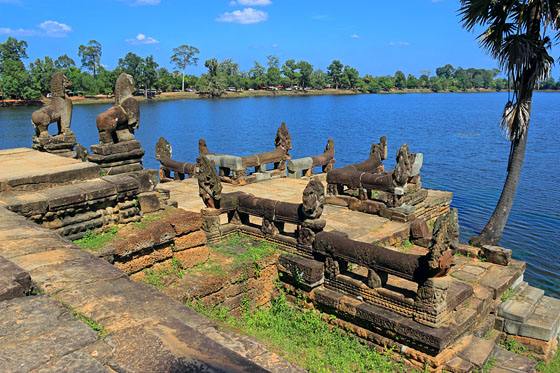
Right opposite Banteay Kdei is the Srah Srang baray (Khmer reservoir). It was constructed during King Jayavarman’s period, and is a picturesque spot to sit in the shade, by the lake and cool off. The boat landing nearby is decorated with stone cut guardian lion and naga (snake) sculptures.
_________________________________________________________________________________________________________________________________________________________
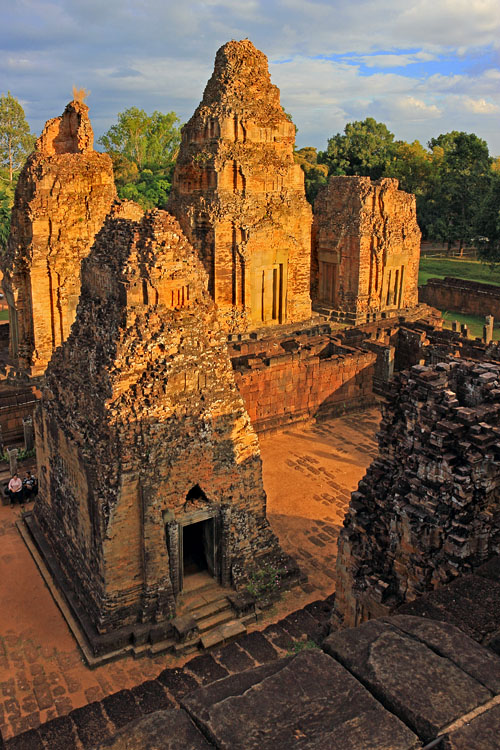
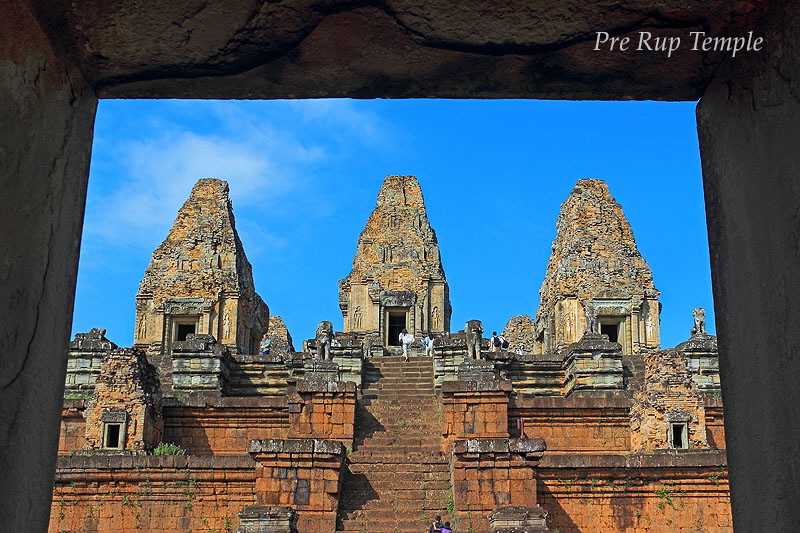
Pre Rup: This large pyramid style temple built in c961 was dedicated to the Hindu god Shiva. It is built with laterite and brick giving it a reddish look. I was told it’s best to visit in the evening, as the sunset on the structure begins to glow was an amazing sight to photograph. I did come back and caught a little bit of the evening light, before it unfortunately hid behind the clouds.
Beware of the steeps steps as you go up and down, as there are no handrails to hold onto. At the top, on the third tier, are the imposing giant towers, with an array of well preserved carvings and guardian lion statues. Even at ground level, walking around the temple site, you will see plenty of ruins, just laying there, unscathed for centuries.
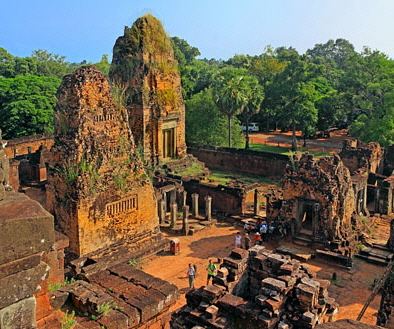
Pre Rup temple
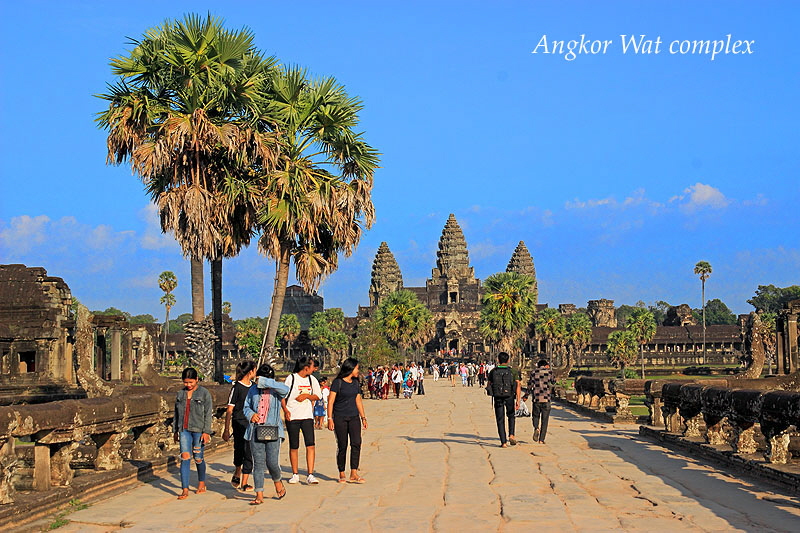
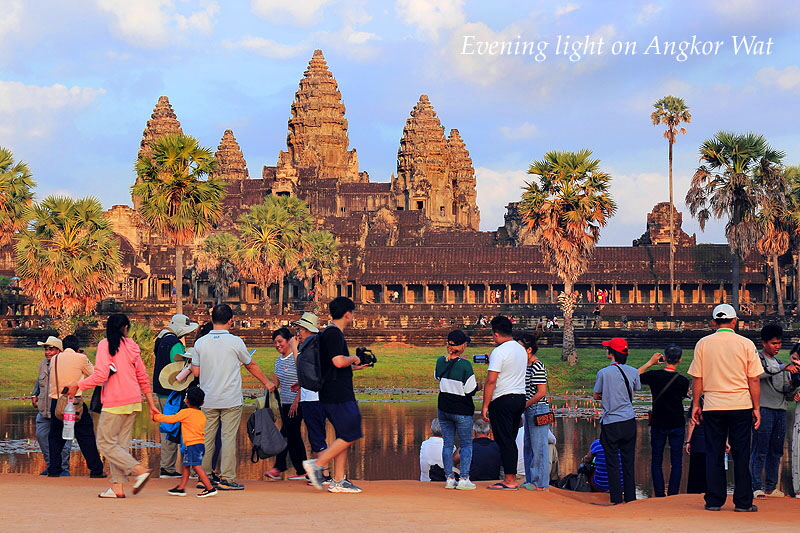
Angkor Wat...see it to believe it
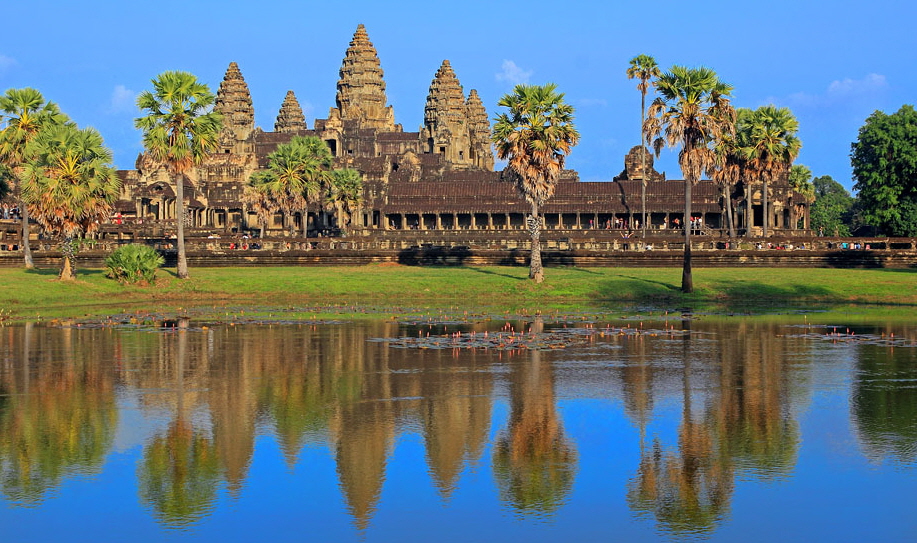
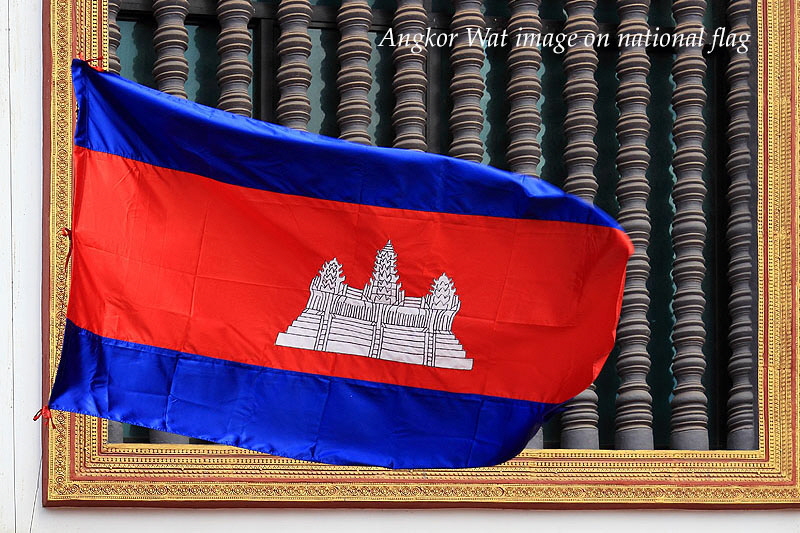
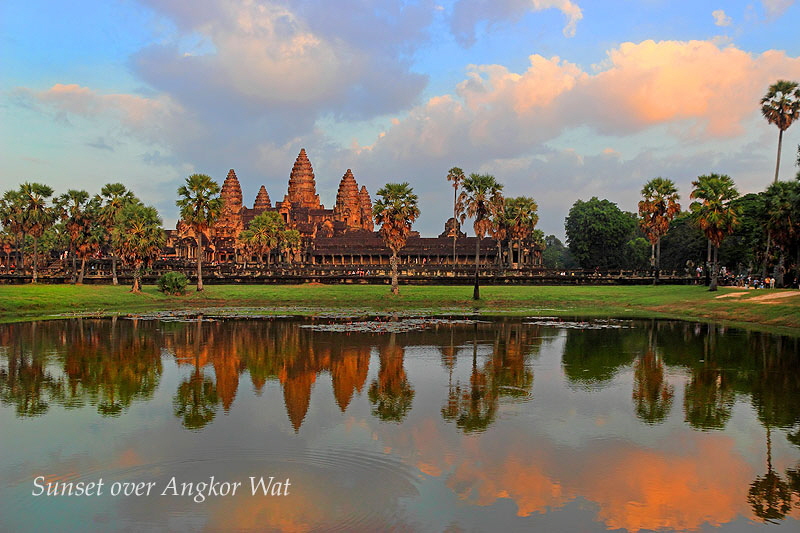
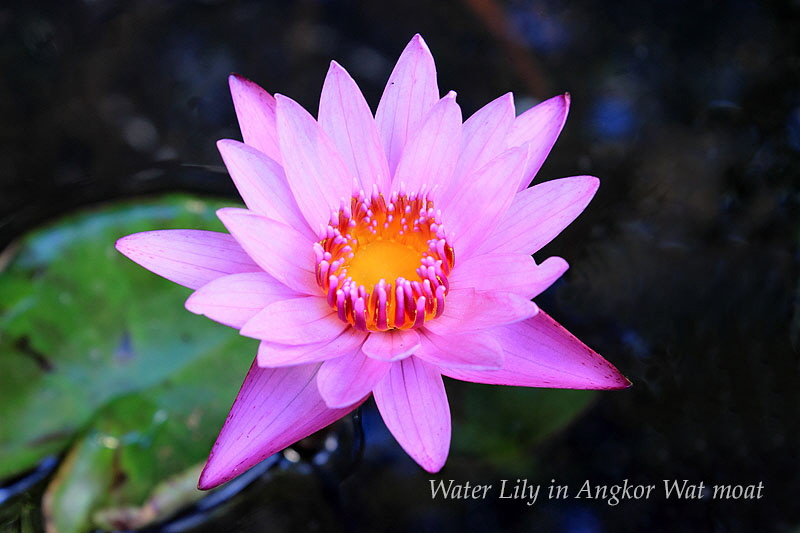
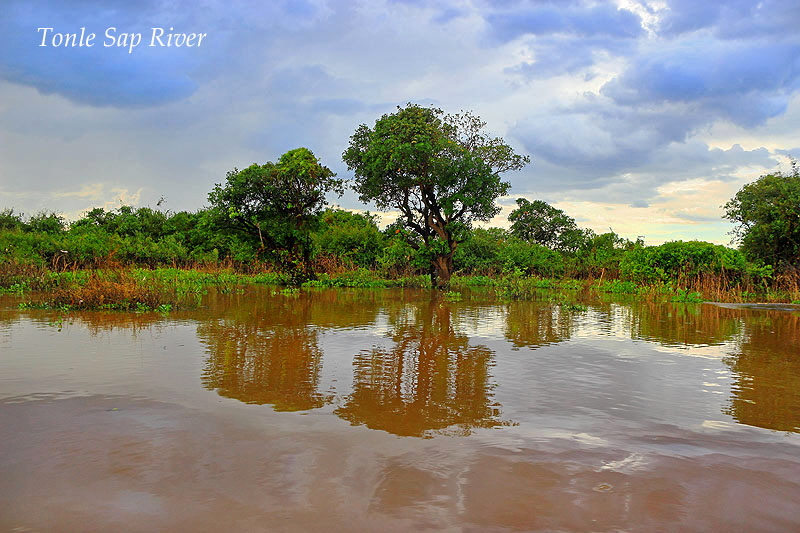
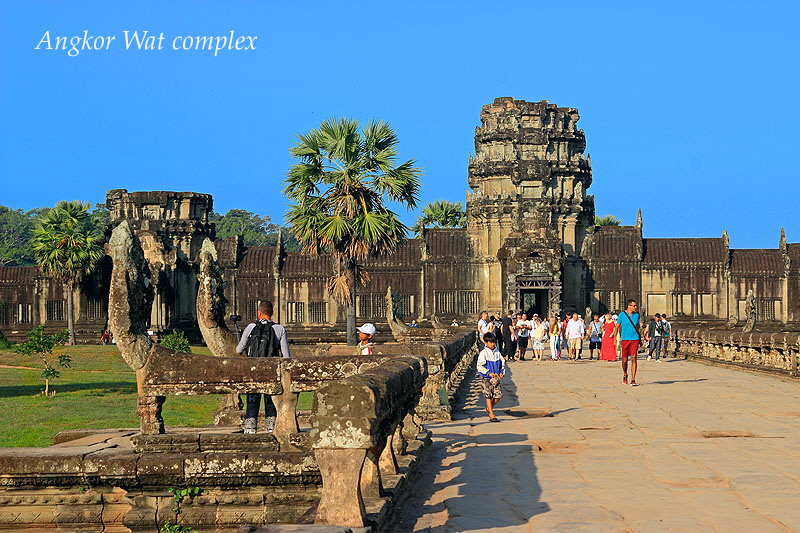
Angkor Wat: You may read plenty and watch videos, but it’s nothing like being there. To really appreciate the world’s largest religious building and iconic attraction, you need two visits as I did - one during the sunrise and the other in the afternoon until sunset. There is so much to admire, it’s easy to spend an entire day from sunrise to sunset. It was built using 300,000 workers, 6000 elephants and with sandstone and laterite stone quarried 50 kilometers away and transported along Tonle Sap river to Siem Reap. Today it is also a pilgrimage site for Buddhists from around the world, and its image even appears on the national flag. Surrounded by large a water lily covered moat, it is connected by a lengthy causeway.
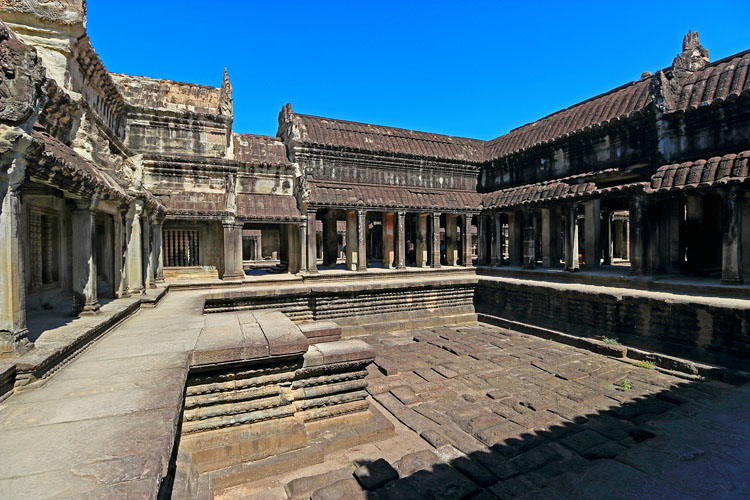
Angkor Wat, first level courtyards
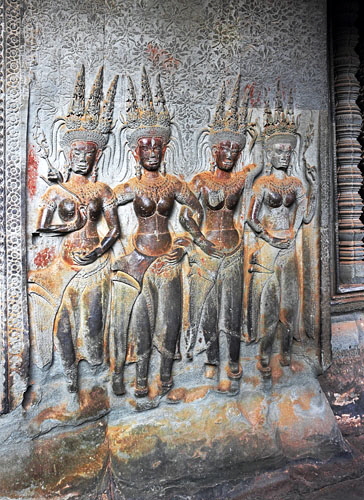
Beautiful Apsara bas-reliefs
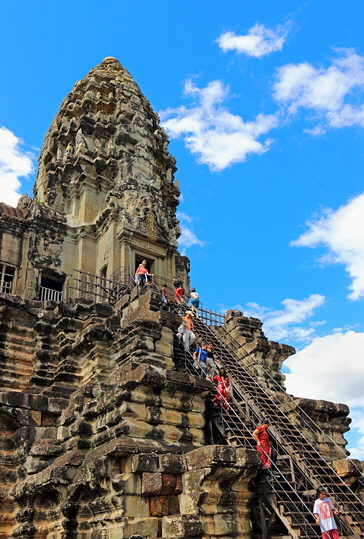
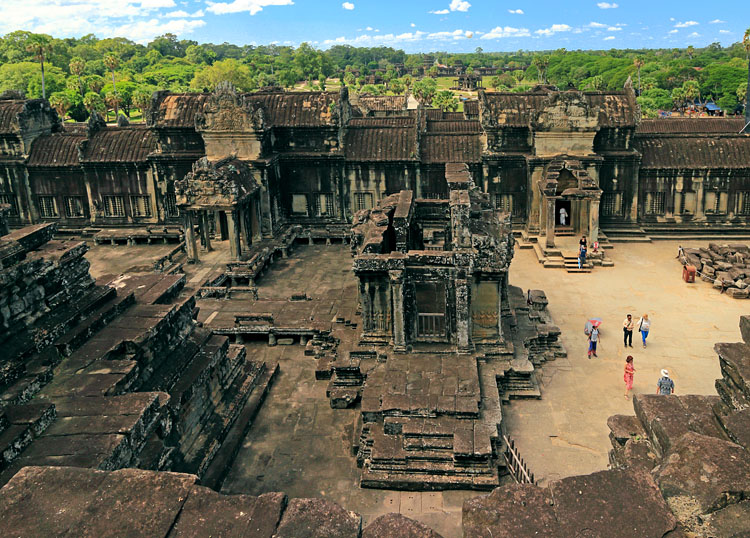
Visitors climbing to the uppermost level
View from the uppermost level
Once at the site, you cannot help but be stunned by the grandeur of the place. Corridor after corridor, the walls are covered with bas-reliefs depicting historical events and mythological stories. On the first level, the inner courtyard has some wonderful stone etchings of Apsara (female deities or dancer) figures. The stairs to the uppermost level (Bakan) are steep, and only a limited number at a time are allowed up. Here is also a courtyard, and towers surrounding it. Whether you look up, down, left or right, you’ll be strucked by the stunning Khmer architecture and accomplishment. Back on ground level, there are several small shrines within the compound, where monks are happy to usher a blessings upon you, and a small donation is appreciated. The 400 acre Angkor Wat complex has so much to see, it is too much to include in this short article.
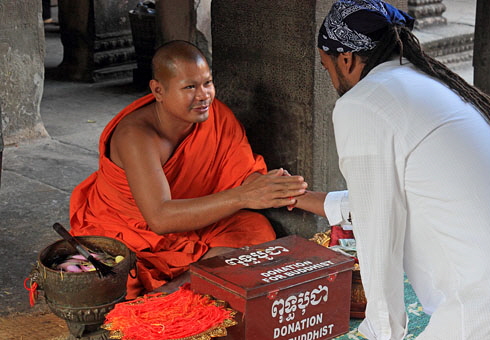
Visitor receives blessing from monk
_________________________________________________________________________________________________________________
Enter Angkor Thom - city within a city
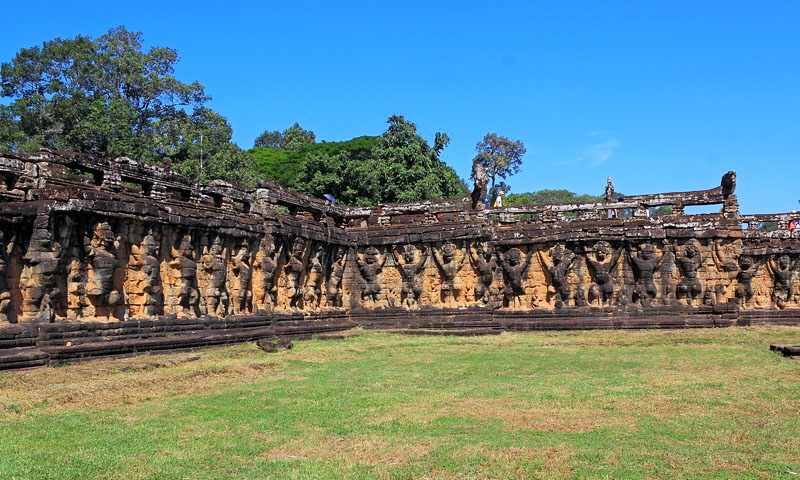
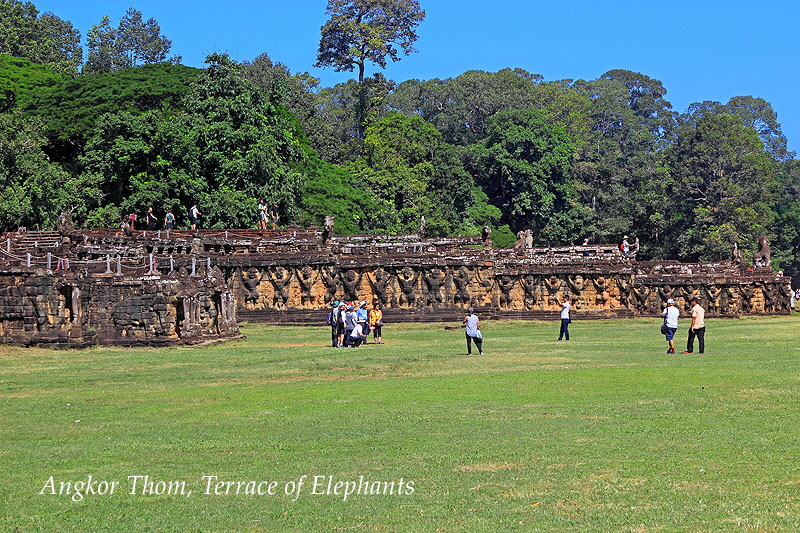
Angkor Thom, Elephant Terrace, garuda sculptures
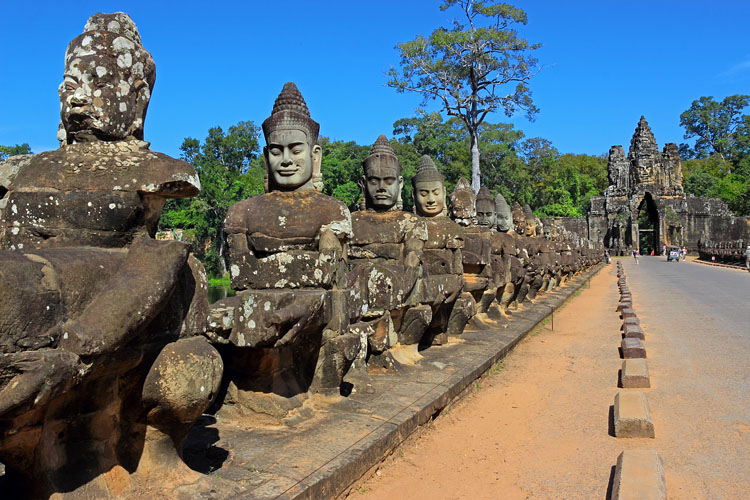
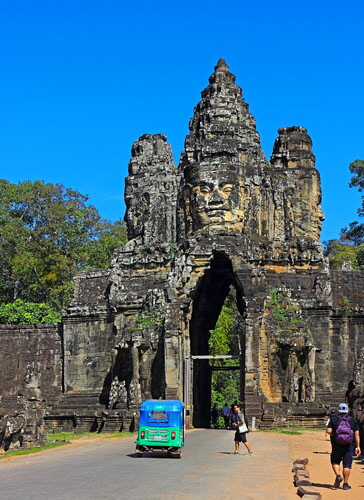
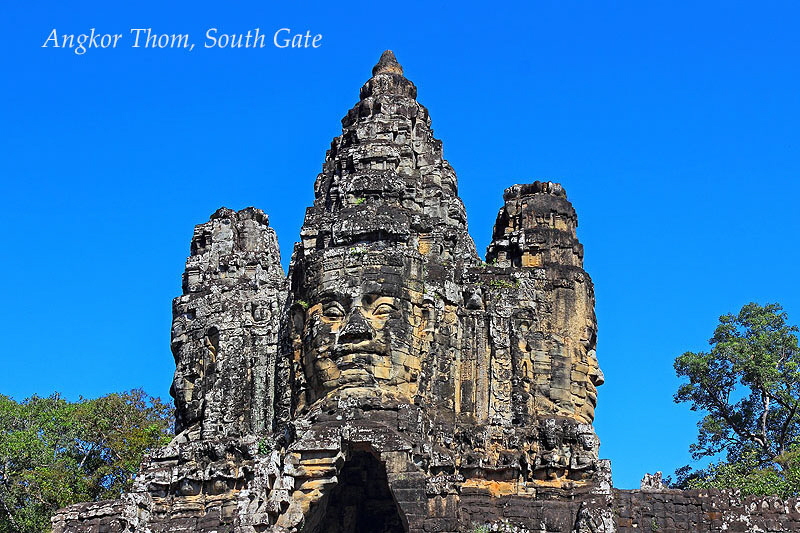
Angkor Thom, South Gate entrance
Gopura facade of goddess Avalokiteshvara
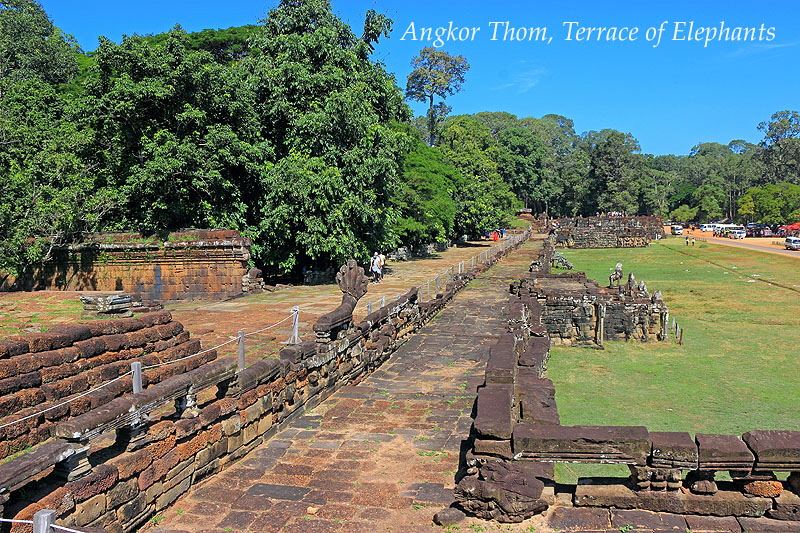
Angkor Thom & Bayon Temple: This quadrangle complex is enclosed by 12 kilometers of walls, and is best approached by the south gopura (tower), connected by the causeway across the moat. On each side of the causeway are stone figures of devas (guardian gods) on one side and demon figures on the other. The gopura facade is topped by the huge magnificent stone cut faces of goddess Avalokiteshvara (Buddhist deity). Once you enter, the open space has several areas to explore, like the ancient walls covered in elephant and garuda stone reliefs.
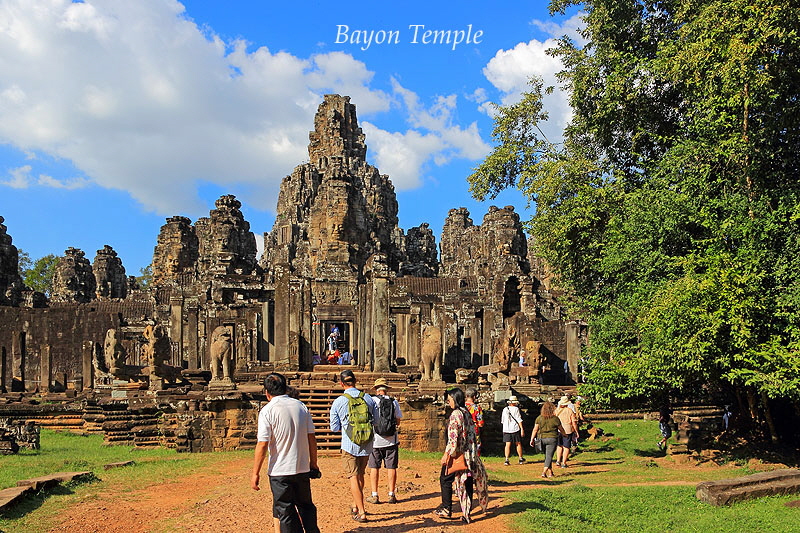
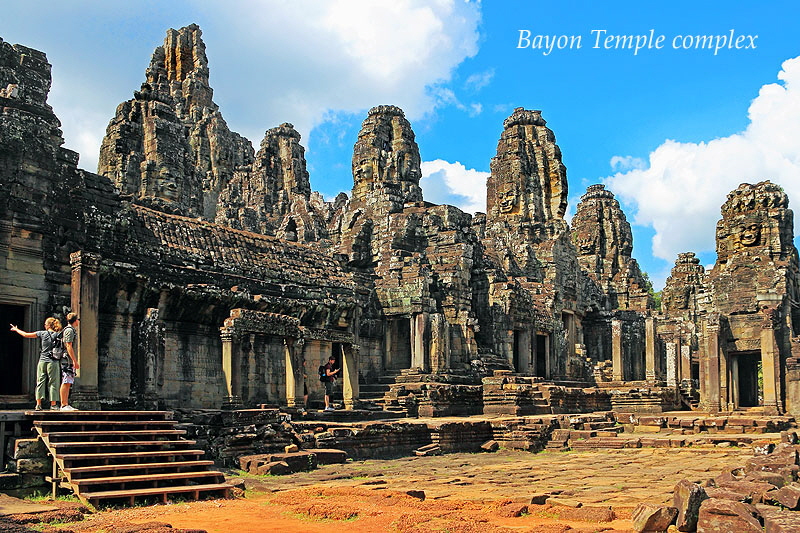
Bayon Temple
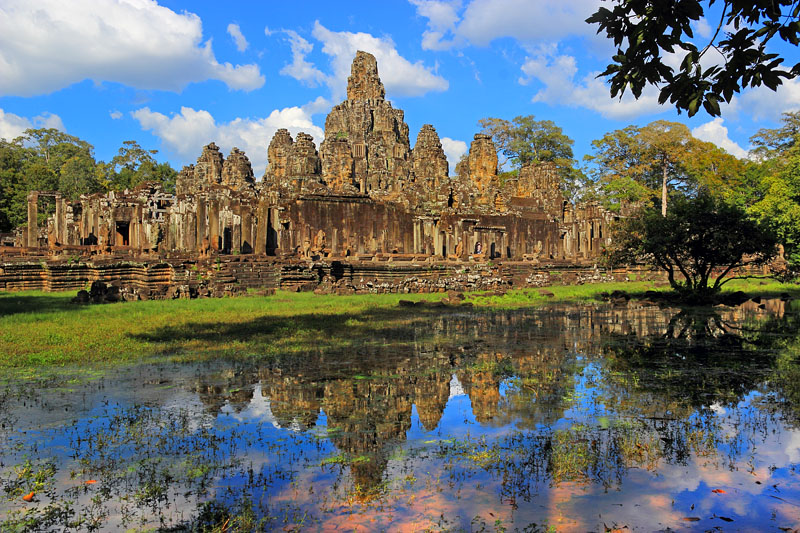
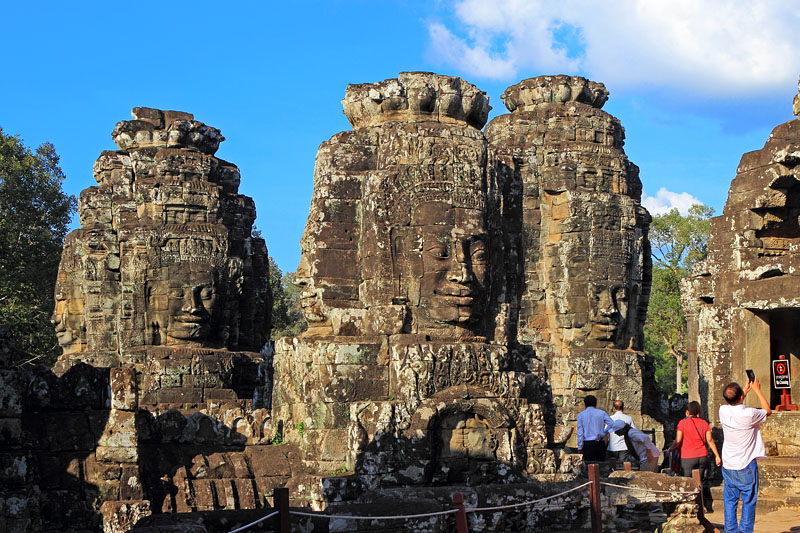
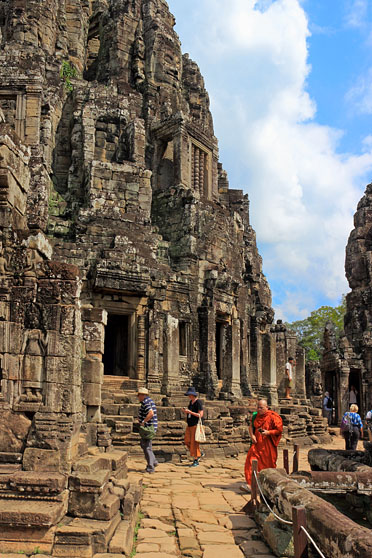
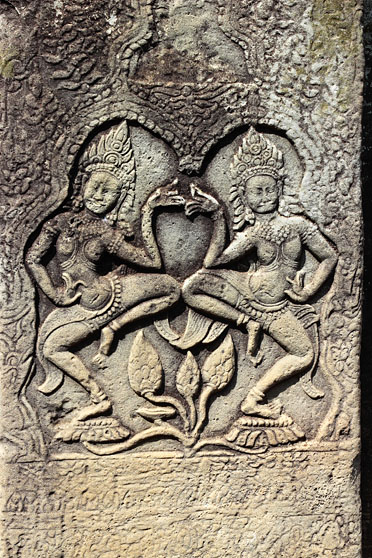
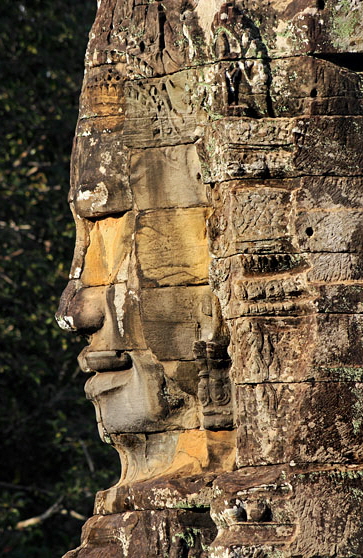
Bayon Temple, pillars with Apasara carvings,and giant face sculptures
Beyond in the centre of Angkor Thom, and the second most visited site (after Angkor Wat) is the mountain like Bayon Temple. Approaching it, you wonder how on earth were these extraordinary edifices ever built, and the pure genius and creative minds that put it all together. Famous for its gigantic face sculptures that depict a calm smiling expression, and adorn some 50 towers, is believed to be that of Bodhisattva Avalokitesvara. You have to be there upclose and be mesmerized by the sheer craftsmanship. The whole site is rich in decoration, with more than 11,000 figures - pillars with Apsara engravings and statues, from ground level, right to the top.
________________________________________________________________________________________________________________________
Neak Pean Temple
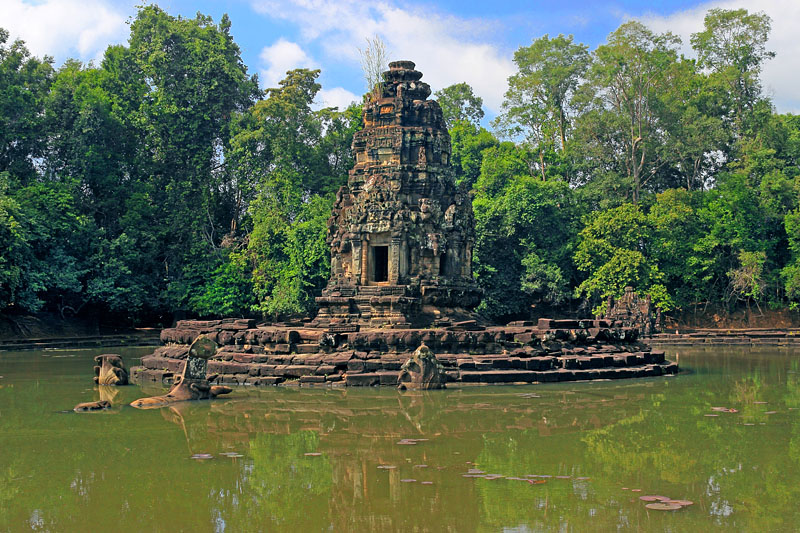
Neak Pean Temple: This small Buddhist temple, built during the reign of king Jayavaman VII, was built on an island in the centre of a 12th century large man made reservoir. The reservoir itself was built to irrigate the surrounding rice fields. A walk along the narrow stretched wooden platform across the waters brings you to the temple location, which has four small pools surrounding the fifth central pool. In the central pond is a small island with a single tower, which is picturesque against the water and jungle backdrop.
Walkway to temple site
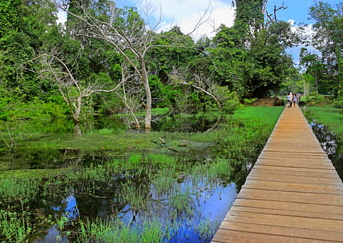
Ta Som temple site
Ta Som temple, Strangler Fig Tree roots
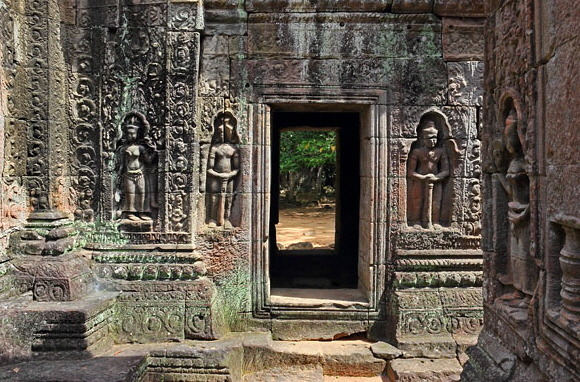
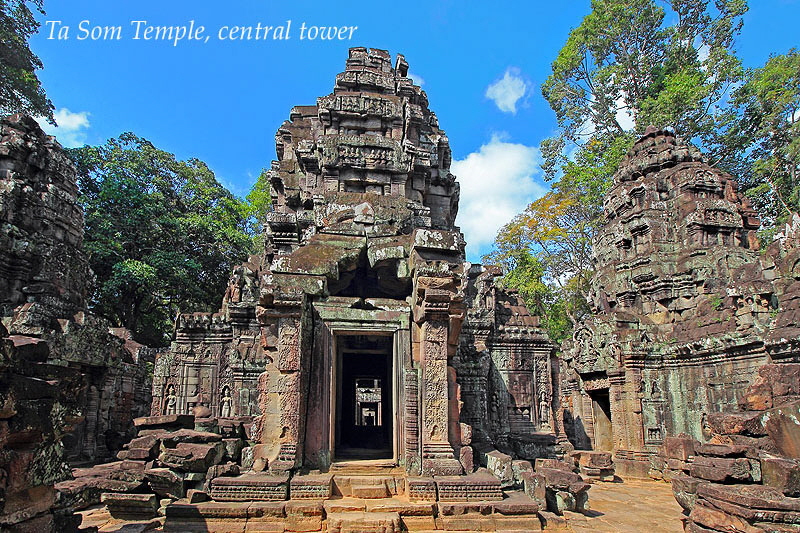
Ta Som Temple: It is one of the smaller temples built in the late 12th century. This is also one of the less restored, and therefore looks or more ‘wild’ with trees and vegetation growing among the ruins. The inner rectangular courtyard has four corner towers and a central tower. There are also some well preserved beautifully carved bas-relief sculptures of ‘Sacred Devatas' or 'Apsara' (female deities or dancers). And you won’t miss the huge Strangler Fig tree that engulfs almost all of the eastern facade of the gopura.
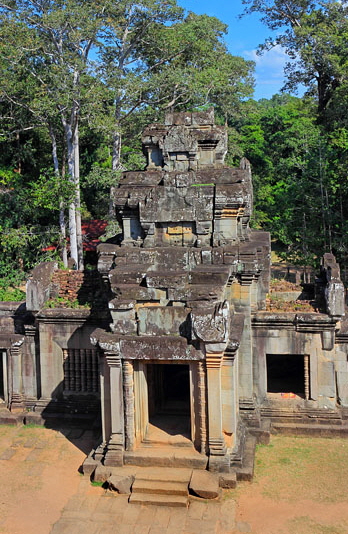
Ta Keo Temple: Built entirely in sandstone in the 10th century, and before Angkor Wat, this is one of the largest temples and one of the tallest buildings in Angkor. The pyramid-like structure has extremely steep stairways to the top which gave me a touch of vertigo and had to make a very slow climb and descent. However, it was compensated by the view from the top, of the surrounding greenery canopy. It was considered an unfinished temple, thereby lacking in lots of sculptures and Khmer artistry.
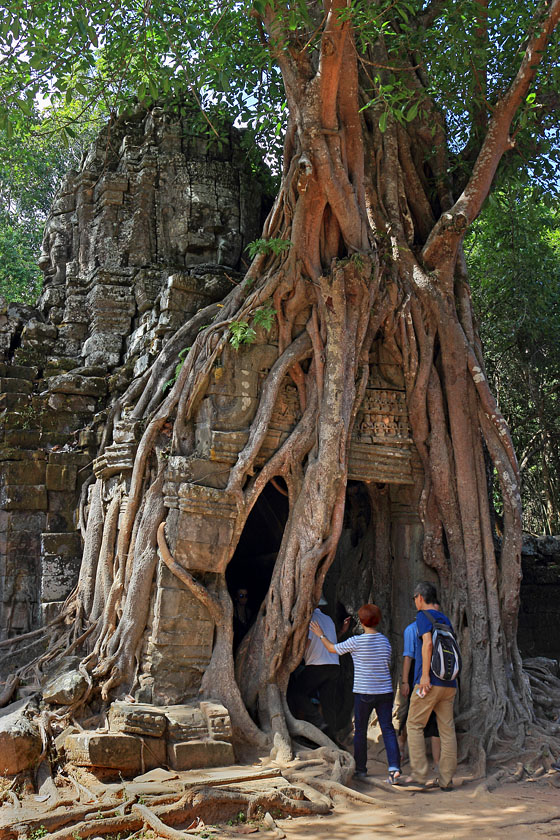
Ta Keo temple site
Ta Keo temple, gopura (main entrance)
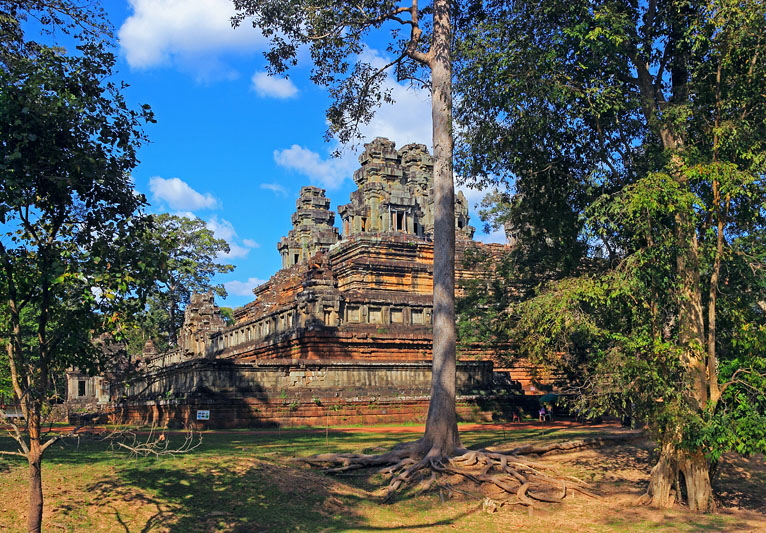
Protect these sites by being a responsible traveller...
Over tourism and destructive tourism: Angkor draws millions of visitors every year. And the local authorities are walking a tightrope between the need of tourism income, and the preservation of its historic monuments. Through much persuasion and conservationists intervention, many sites have had restricted areas imposed, deterring tourists from climbing and causing damage. In addition, to make the visitor enjoy the experience, many temples have platforms and walkways built - to look and not touch.
Do remember that temples although in ruins, are still sacred places of Buddhism, and must be respected. Despite guides asking them not to, sadly there are still a few who are determined to climb up statues and structures, to have their photos taken.
Temple etiquette: At all entrances are placards with a ‘code of conduct’ guidelines, encouraging you to be appropriately dressed, and reminding visitors not to touch, sit on or climb structures. Be respectful of monks (get permission to photograph), and do not photograph yourself alongside a Buddha statue.
Destructive tourism. It’s easy to cause damage
by climbing onto ruins, for the sake of photos
Getting around: If you decide on a tuk-tuk, suggest your itinerary to the driver and he will decide the route. Allocate 2 sites per day (three at most), if you want to leisurely enjoy it. I was picked up at 8 in the morning and returned by 6 pm, except on one day when I started at 4am to see the sunrise over Angkor Wat.
Costs: While you should agree to a daily rate, bear in mind that the majority of the population earns little and it would be unethical and disrespectful to force down a price. I arranged for US$35 per day (low compared to European prices), which the driver was happy with. Although they don’t expect a tip, an extra day’s pay after a week, would be appreciated.
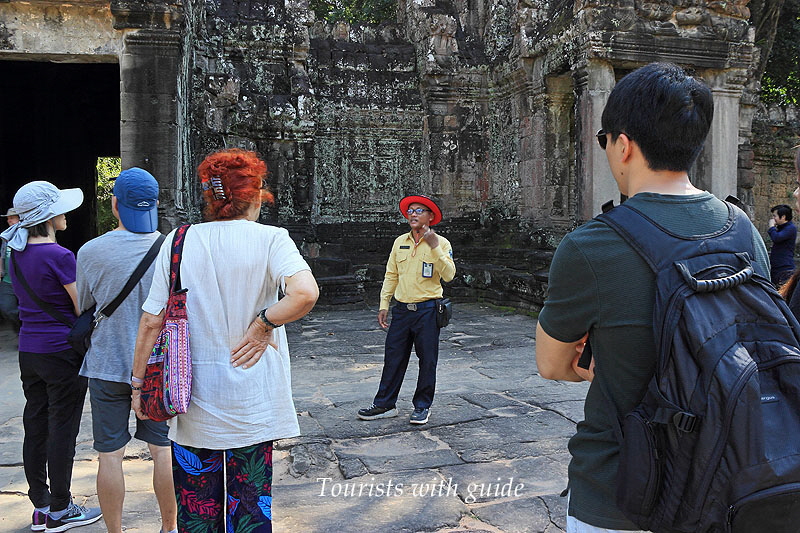
Escorted tours: If time is limited, day trips would give you an overview of Angkor. I did a couple too revisiting some of the sites. But they were rushed, and found the lengthy explanations rather tedious with too much information to take in.
30 images here ©JAYTRAVELPHOTOS
© COPYRIGHT notice. The images on this site are for viewing only.
To purchase any, for personal or commercial use, please contact us at jaytravelphotos@aol.com