Bula...Fiji
The best time to arrive in Fiji is after a tropical shower, when the lush greenness is intensified and the steamy atmosphere is broken briefly by a cool and invigorating freshness.
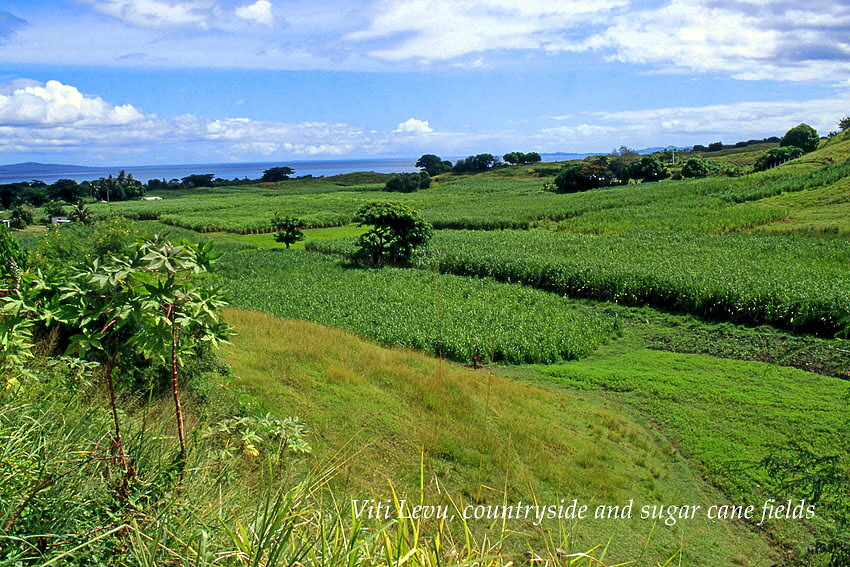
From January to March such welcome downpours are frequent, yet disappearing as suddenly and unexpectedly as they arrive. Driving from Nadi airport on Viti Levu, Fiji’s main island, bleary-eyed after a sleepless night flight, I was struck by the beauty of the island’s gently rolling hills, neat farms and pine forests. But for the coconut palms and sugarcane fields, it could almost be England.
Arriving at my hotel, The Westin Resort at Denarau Island, the welcome is warm. Staff dressed in wrap-around sulus greet me with wide grins accompanied by a heartfelt ‘Bula’ (an all purpose greeting as well as wishing happiness, essential to every visitor’s vocabulary). The facilities are much as you might expect in a top class hotel, but the atmosphere and decor are unmistakably Fijian.
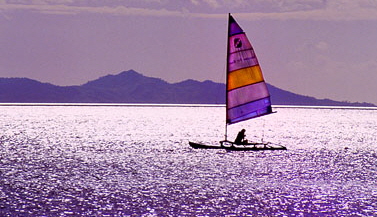
Outside in the hotel’s extensive gardens, jungle plants thrive in the tropical heat. On the beach, most guests prefer the shade of a coconut tree, while the energetic ones try their skill at wind surfing.
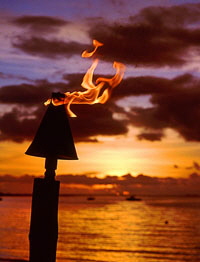
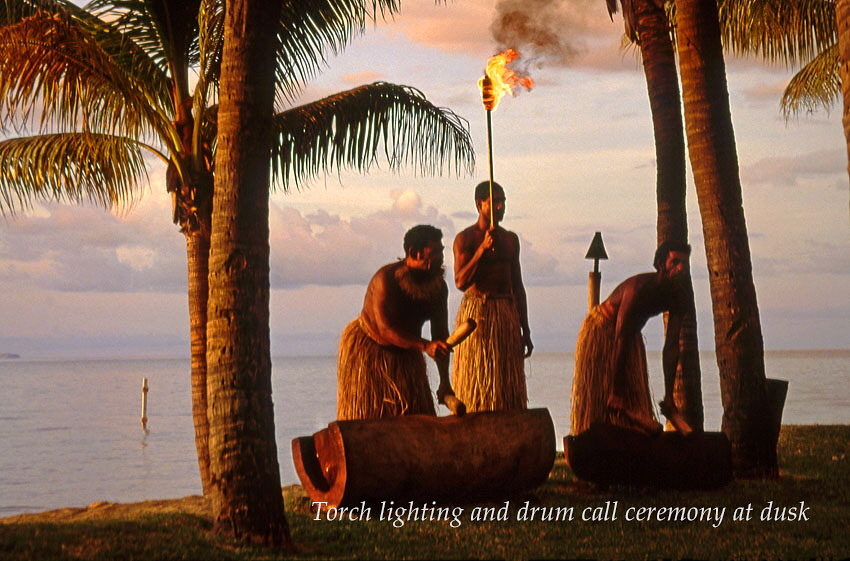
Traditional Torch Lighting ceremony
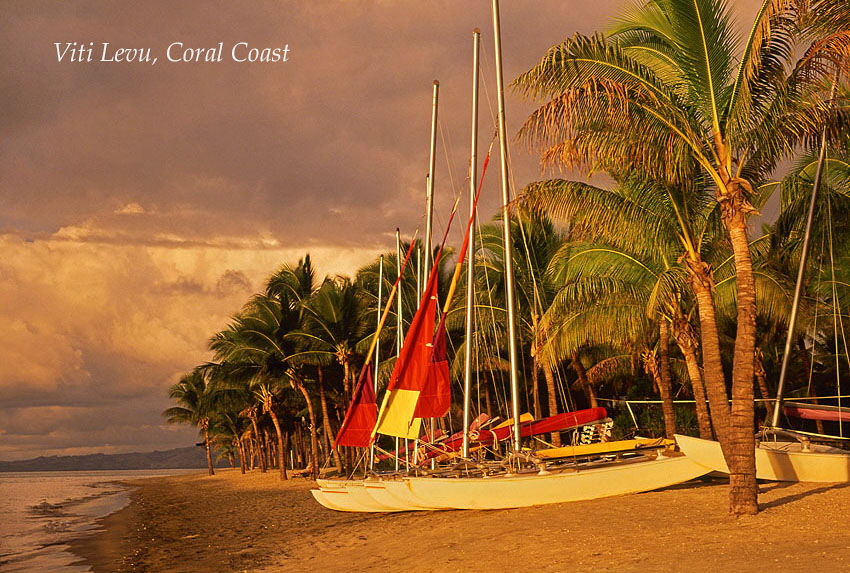
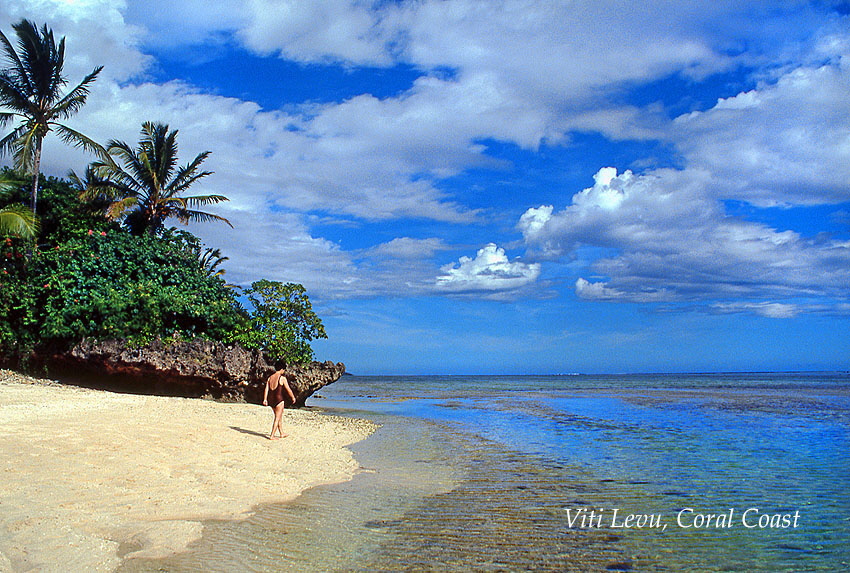
Coral Coast
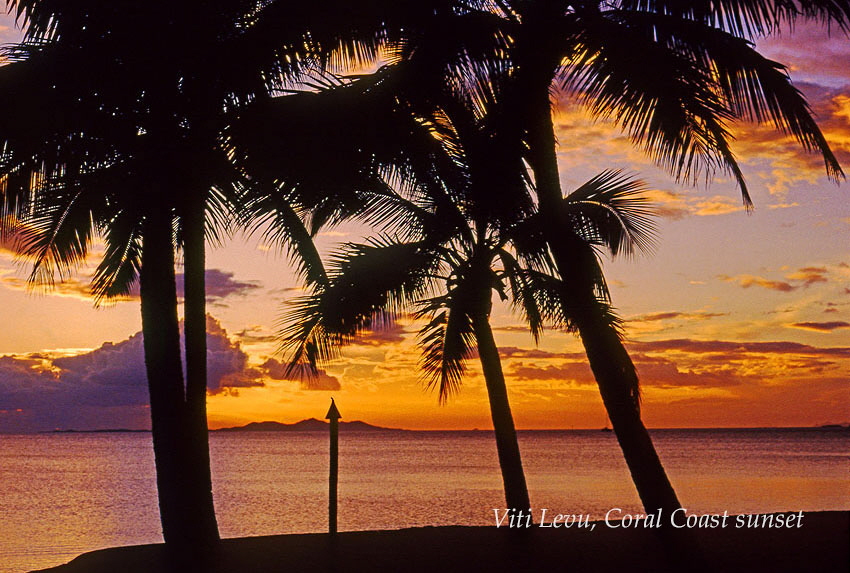
Coral Coast
Dinner time - traditional drum call
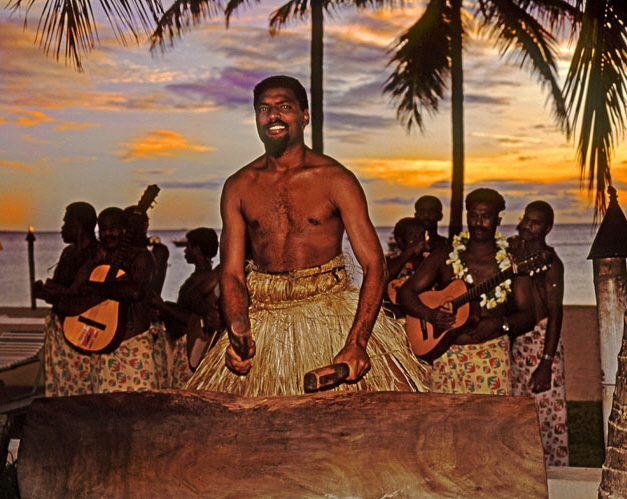
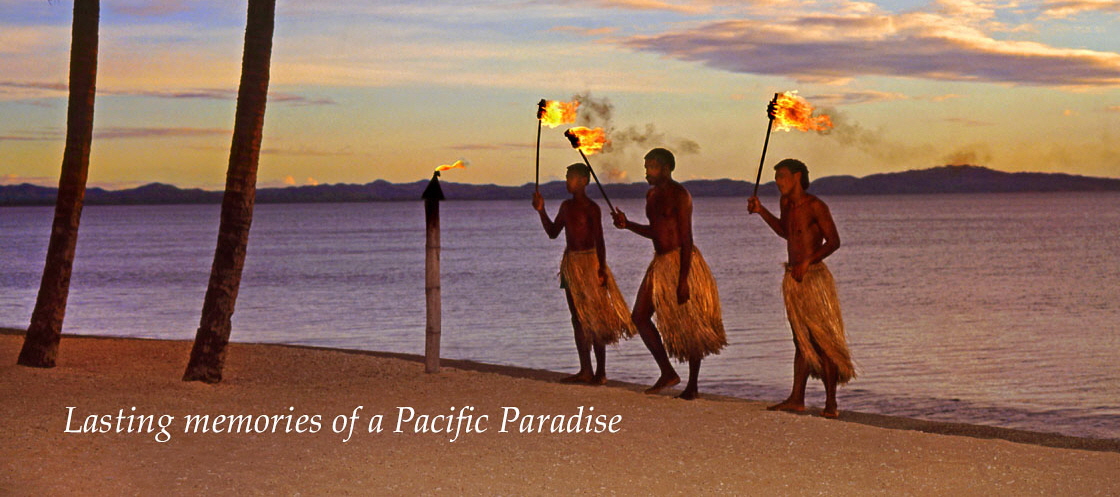
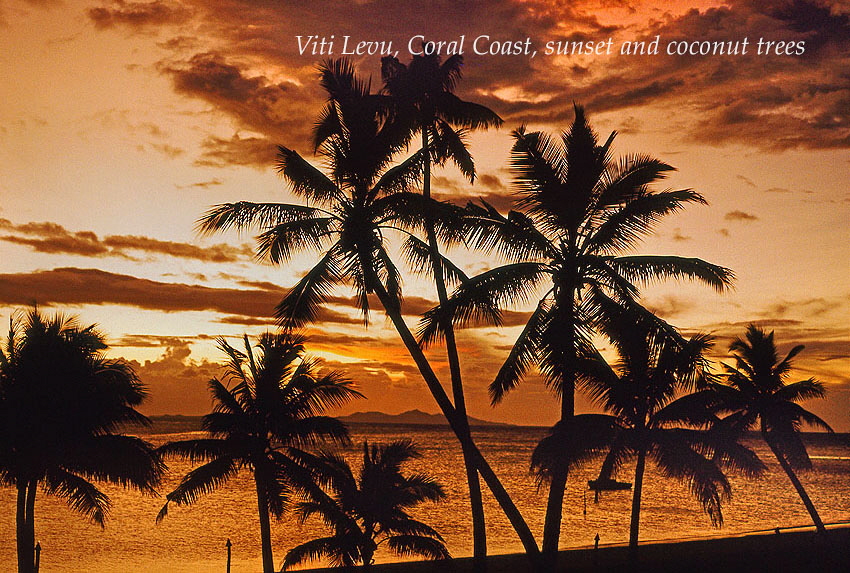
At 6pm, as the sun is sinking low over the sea, there is a nightly torch lighting ceremony. Traditional throughout the Pacific, it is accompanied by the pulsating rhythm of drumbeats hammered out on a hollow, canoe-shaped drum, originally used as a signal to call fishermen home from the sea. Runners, naked but for grass skirts, light torches along the coast as far as the eye can see. By the time the drummers strike their last note, the coconut palms are silhouetted against the sky and is almost dark except the burning torches. As soon as the sun has set, and the guests have dispersed, hundreds of tiny frogs invade the deserted beach, croaking to each other and scurrying over the sand in search of supper.
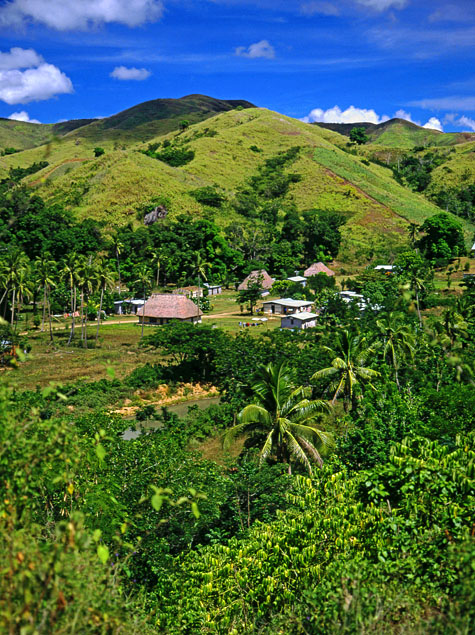
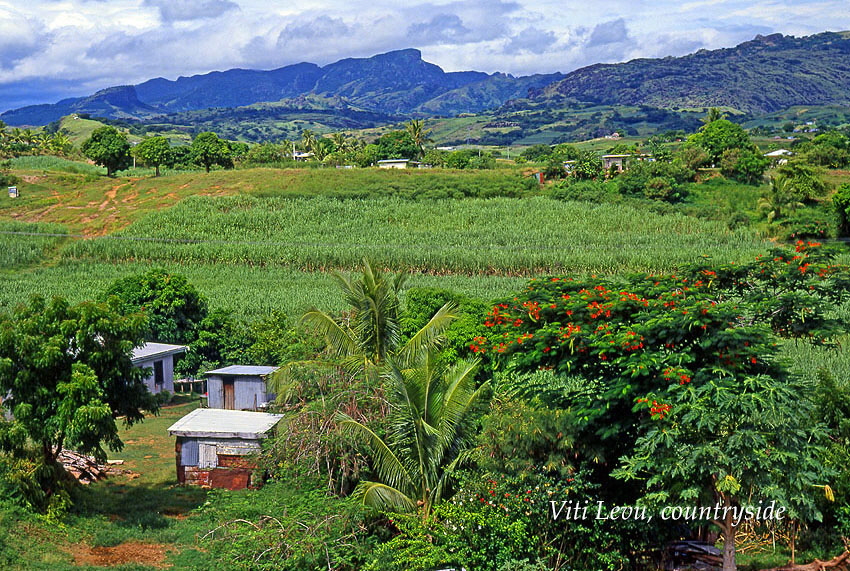
Countryside, and Sigatoka Valley
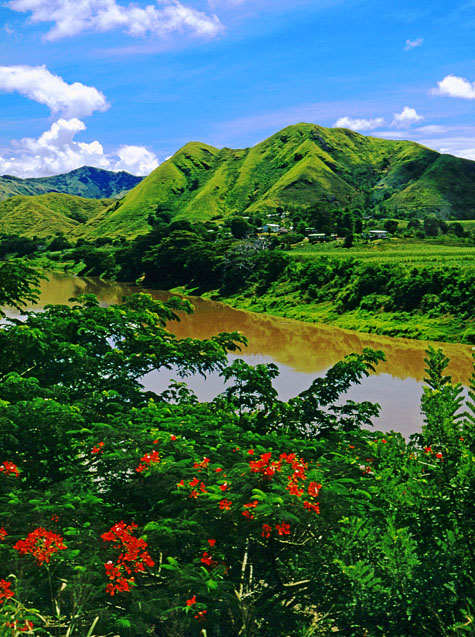
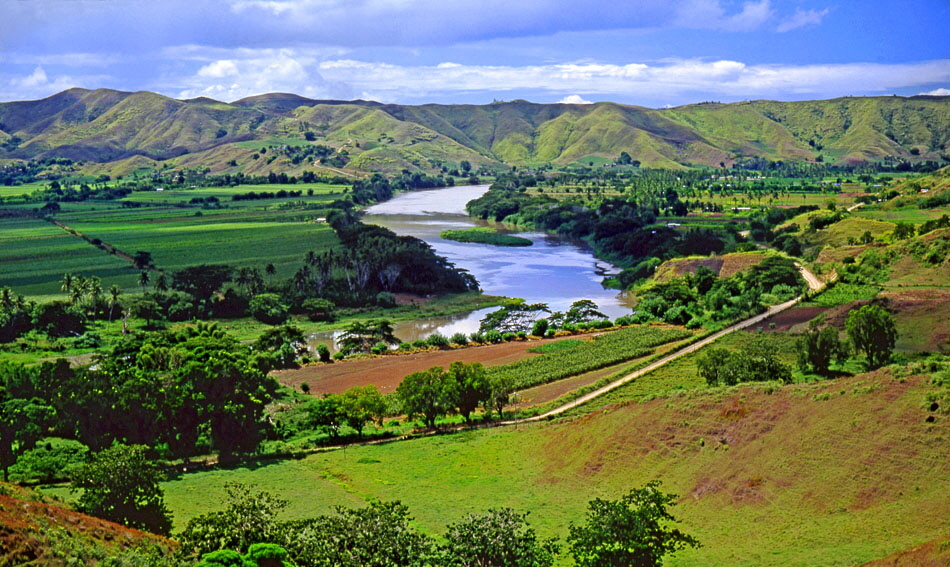
Garden of the Sleeping Giant
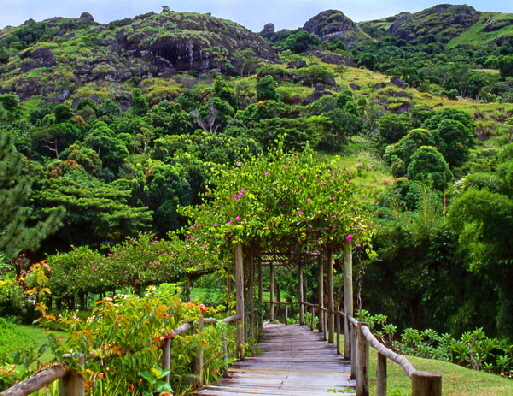
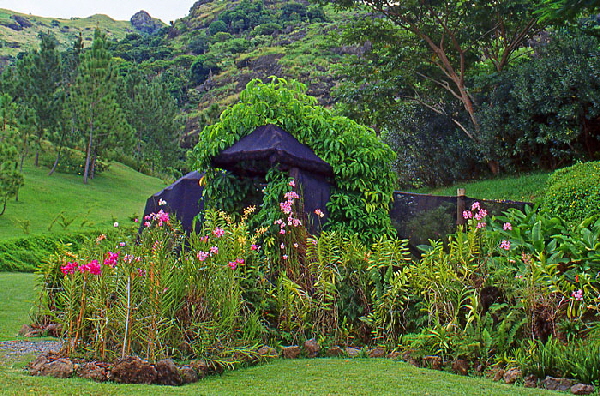
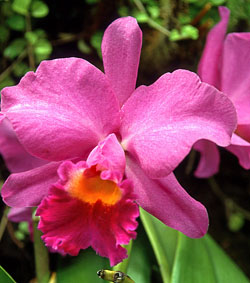
Cattleya Orchid
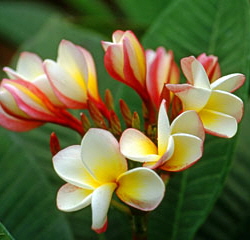
Garden of the Sleeping Giant
Frangipani flowers
By far the best way to explore the island is by car and since there is only one main road, it is almost impossible to get lost.
I toss a coin and head north. After 20 minutes of pleasant driving surrounded by sugar cane fields and distant green hills, I come to the Mountain of the Sleeping Giant. It is easy to see how it got its name. The huge, long rock really does resemble the sleeping form of a man lying belly up with his mouth open. In the fertile valley below is the Garden of the Sleeping Giant, an orchid farm, founded by the actor, Raymond Burr. In addition to more than 30 varieties of Asian orchids, including Cattleyas, the garden exhibits lily ponds and a large number of tropical shrubs and flowers. The mountain backdrop gives it a secluded and peaceful air, enhanced by the sound of birds singing and the bleating of goats, grazing on nearby slopes.
On to Lautoka, overshadowed by the huge sugar refinery that has given it the title ‘Sugar City’. It is March, and the mill stands shuttered and eerily silent since it operates for only six months of the year. Come June, the sugarcane will be ready to be cut, transported to be processed, then dispatched to the docks for export.
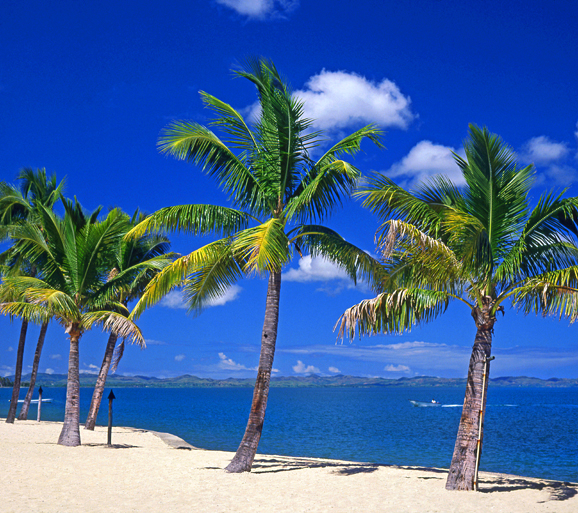
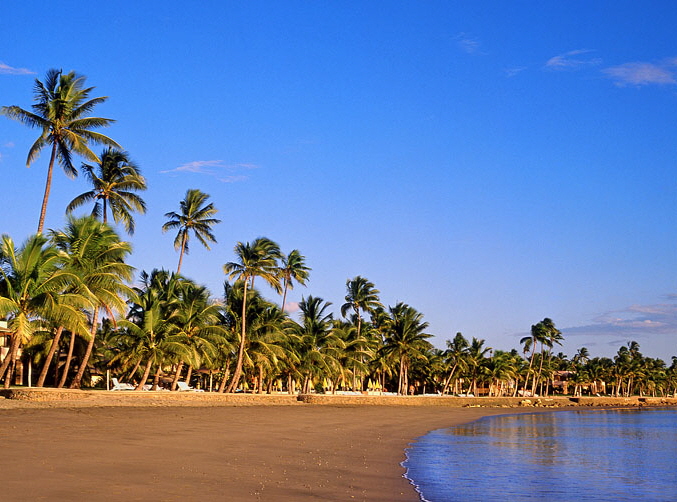
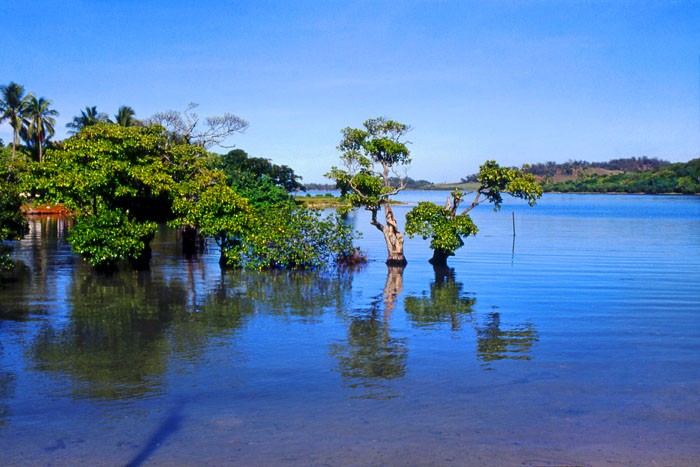
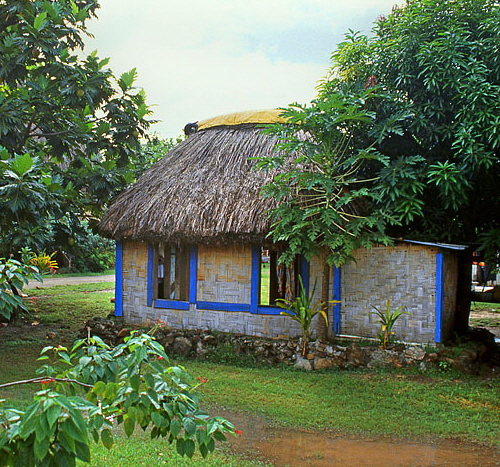
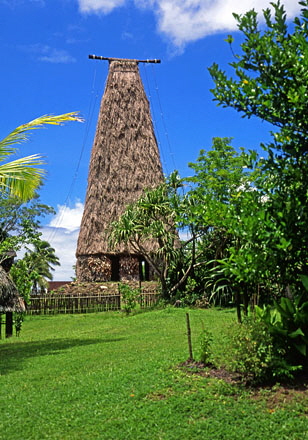
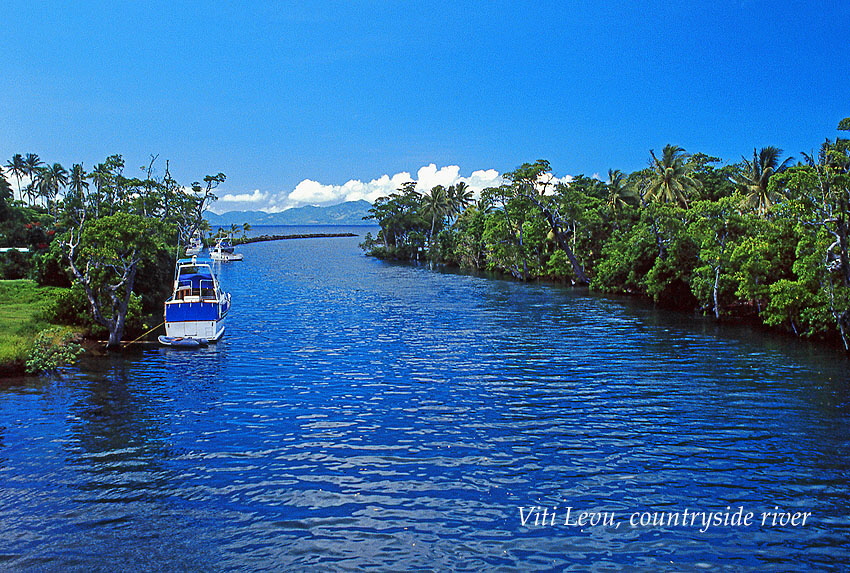
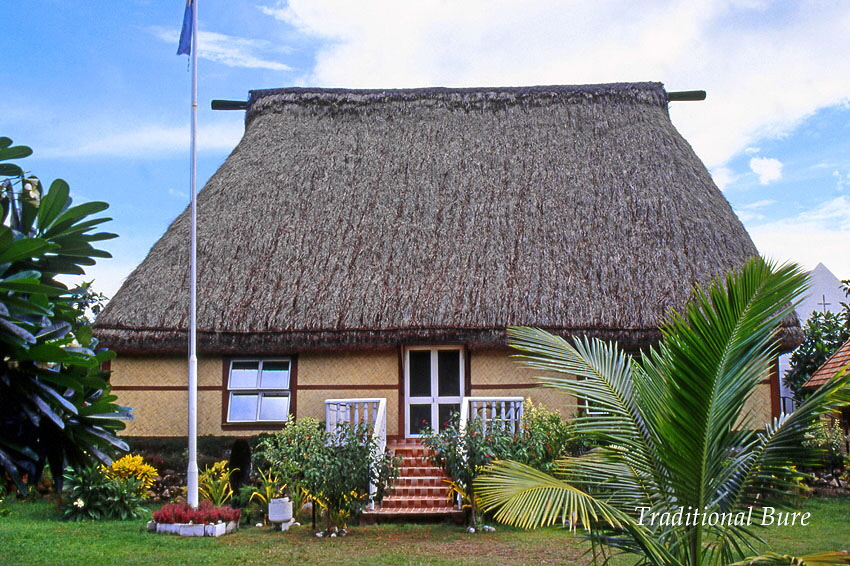
The following day, I drove south en route to Suva, Fiji’s capital. The journey takes me though Sigatoka Valley, and some of the loveliest scenery on the island, leaning coconut palms, mangrove swamps and crystal clear seas on one side, rain forest jungles and distant hills on the other. Fertile farmland gives way to meandering rivers and every now and then there is a clearing with a tiny village consisting of a church and a small cluster of thatched bures.
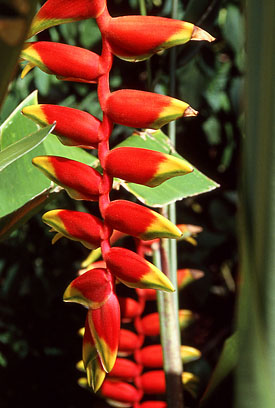
Garden of the Sleeping Giant
Crab Claw flowers
Mangrove swamp
Typical Bure
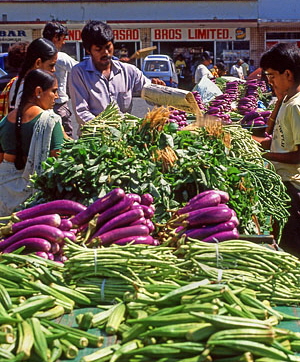
From a vantage point high above the valley, the reason for Sigatoka’s nickname - ‘Fiji’s salad bowl’ - becomes obvious: fat juicy watermelons, papayas and pineapples all ready for picking. In Sigatoka Town, there is more evidence of the island’s diversity of fruit and vegetables in the neat piles of aubergines, carrots, yams and pumpkins for sale in the marketplace.
Leaving the main road briefly to climb above the town, I come to the small village of Nandruri, where the villages still make pottery in the traditional way, from the mud of the Sigatoka River. After the pots have been shaped, they are dried in the sun, then cooked over an open fire. Later they are glazed with sap taken from nearby trees.
Further along the ‘Coral Coast’, Kula Eco Park takes its name from one of Fiji’s most colourful native birds. The park, which occupies 10 acres of rain forest jungle, is part tourist attraction, part conservation project. The aim is to bring together and conserve as many indigenous birds and flora as possible.
Sigatoka market
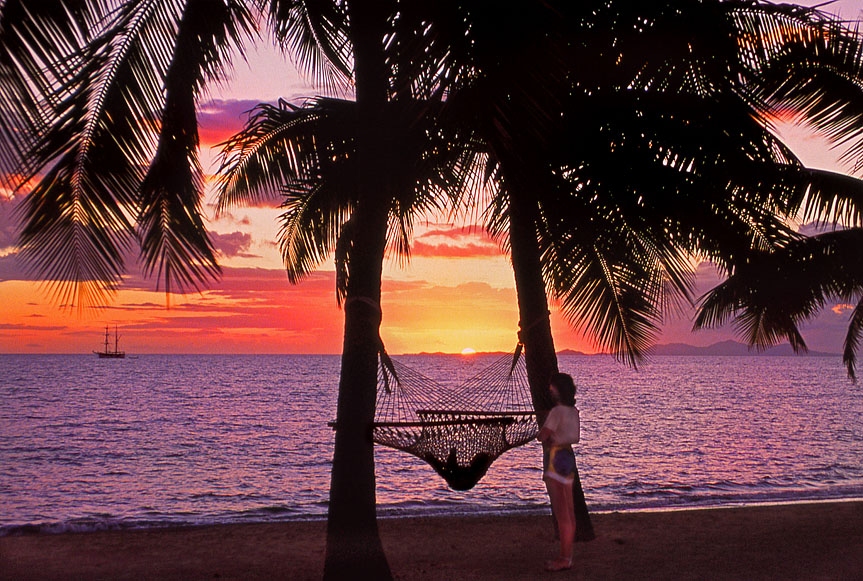
Coral Coast, sunset
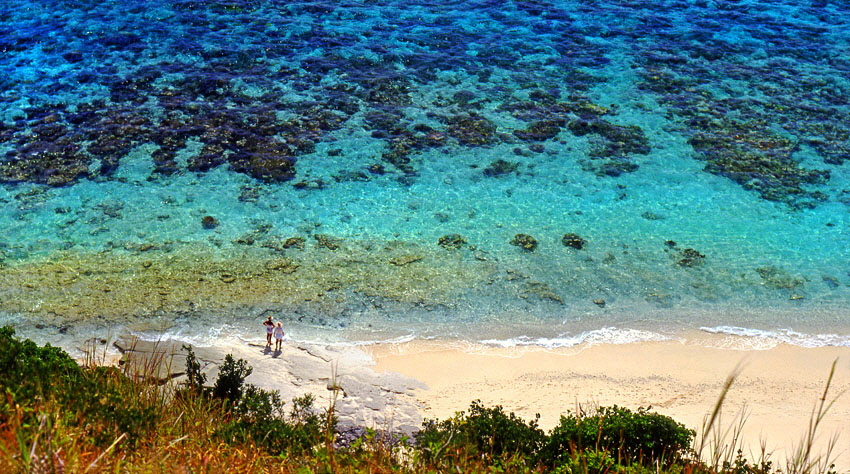
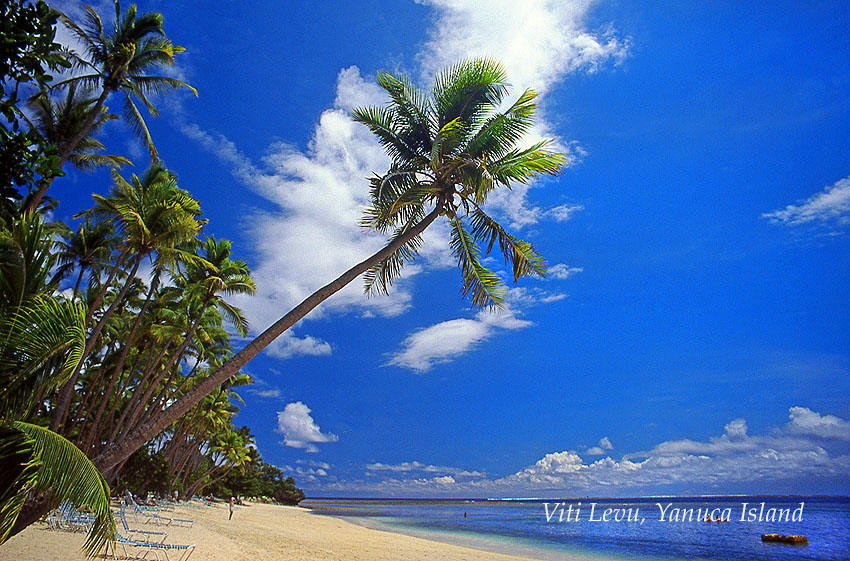
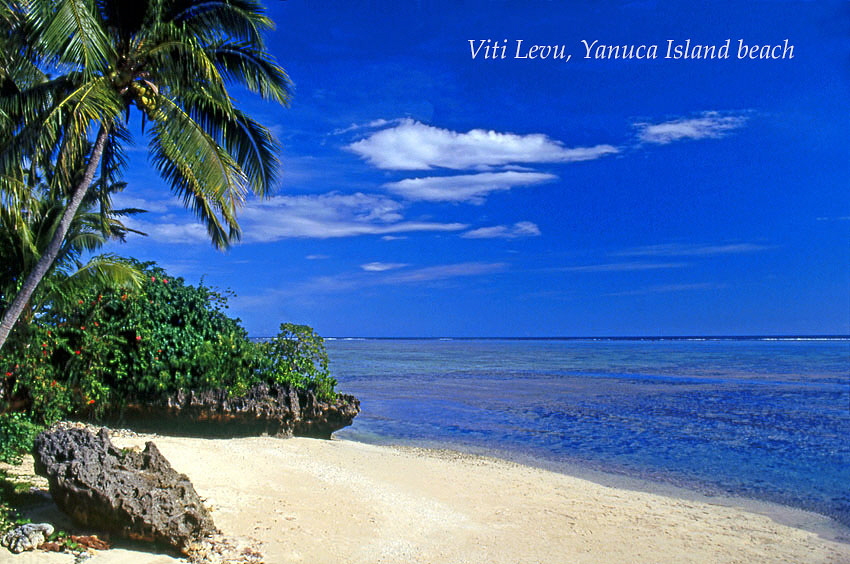
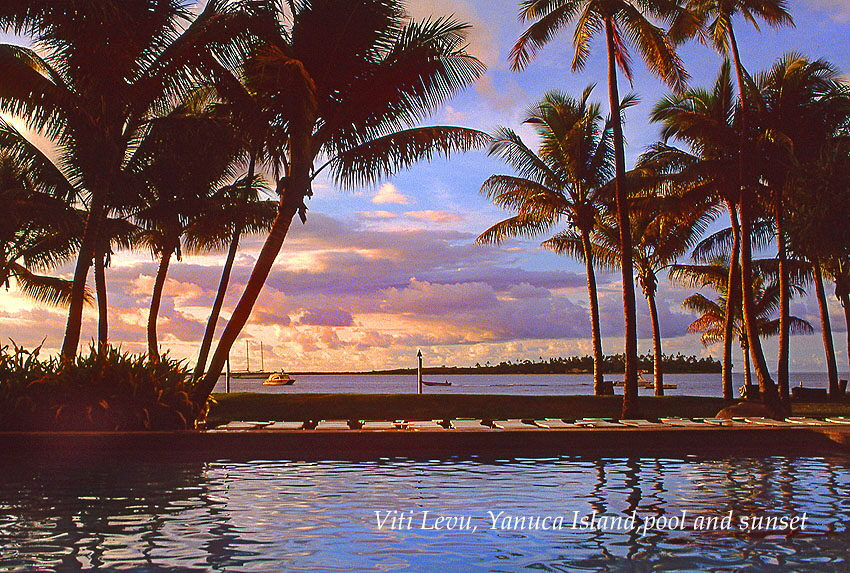
Lying just off the north coast of Viti Levu, connected by a causeway, the tiny Yanuca Island has been developed into one of Fiji’s most prestigious resorts, the Shangri-La Fijian Resort. A beach of powdery white sand stretches undisturbed for a mile or more and at low tide you can walk out onto the surrounding coral reef to observe the profusion of marine life. The resort provides all the comforts you would expect from a five star property, as well as sailing, diving and other ocean activities.
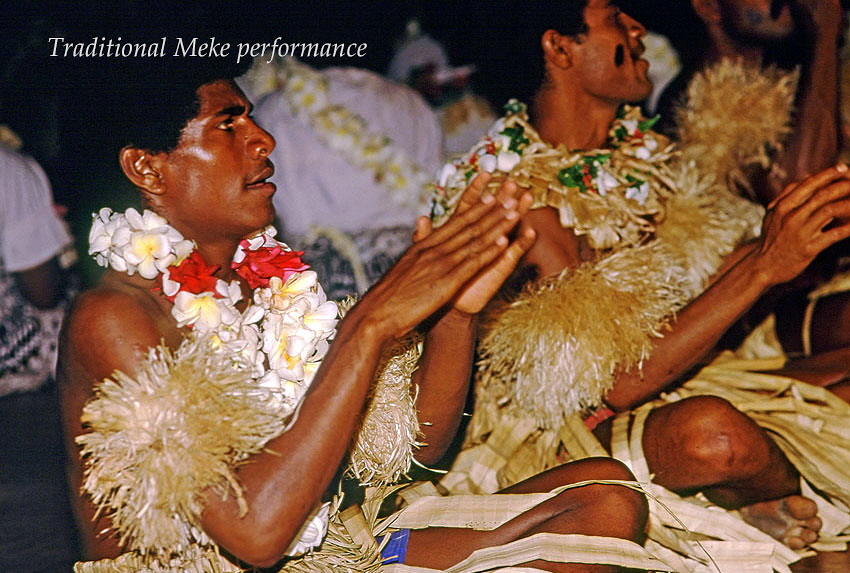
Traditional Meke performance
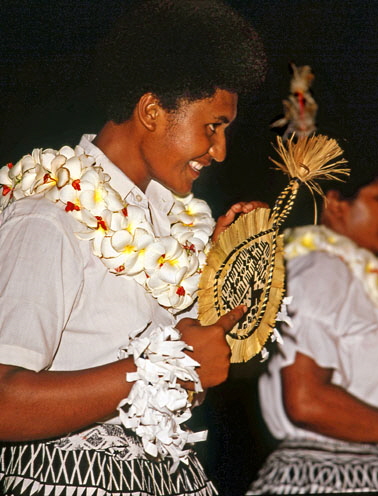
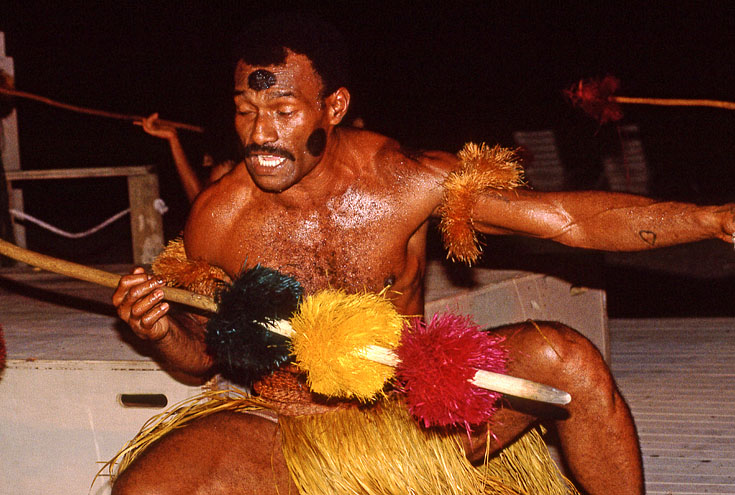
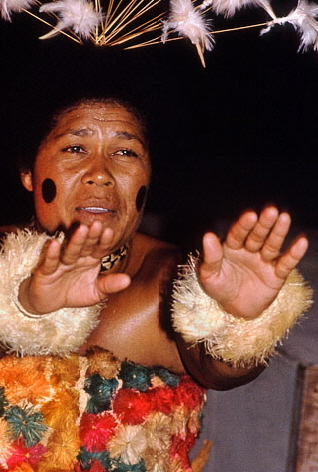
Meke dancer
After an excellent seafood dinner, I settle down to watch a Meke of traditional Fijian songs and dances, performed by local women dressed in flower leis and elaborate costumes made from feathers and leaves. Their graceful movements are in complete contrast to the jerky actions performed by the men in their war dance, who wield their spears with such drama and humour it is hard to believe they are only acting.
The following couple of days are spent idling away, simply beach combing looking out for little sea creatures in the shallow waters, absorbing some of the tropical sun and the fragrances of the resorts garden flora.
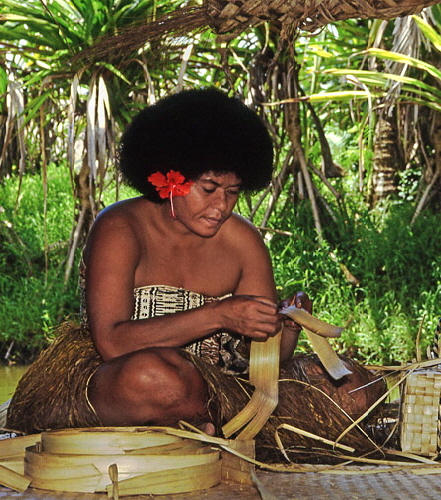
Leaving Yanuca Island, I resume my leisurely drive to Suva, via the Arts Village in Pacific Harbour, where an authentic Fijian village has been constructed on a series of little islands in a man made lagoon. Visitors are transported from one island to the next by canoe for demonstrations of local crafts - wood carving, mat weaving, and the making of masi cloth from the bark of the paper mulberry tree. Other aspects of traditional Fijian lifestyle, such as fire making and diverse uses of the coconut tree, are also explained. The tour included re-enactments of Ancient Fijian legends, culminating in a traditional Meke show.
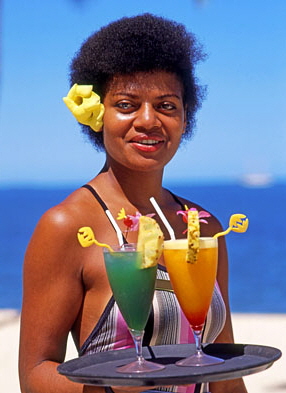
Arts Village, Pacific Harbour
Arts Village, re-enacting ancient legends
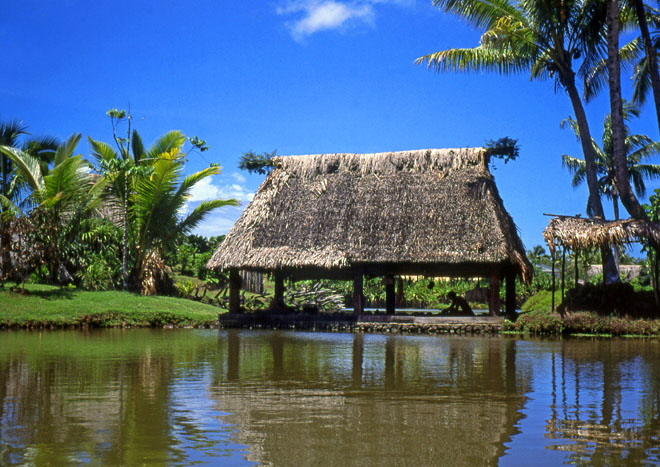
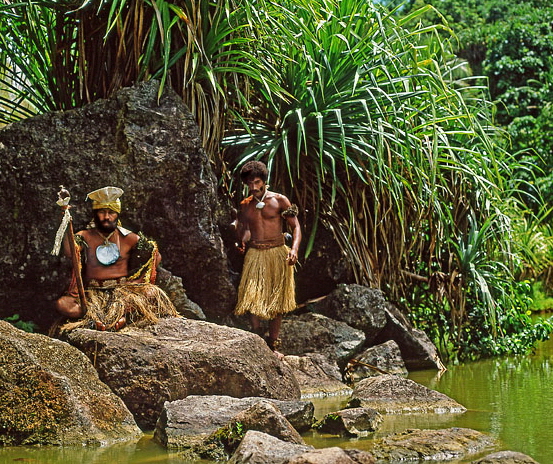
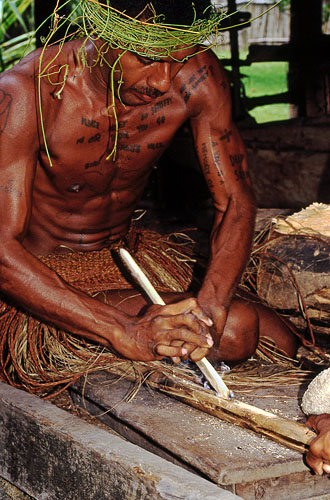
Arts Village, Fire Making, Mat Weaving
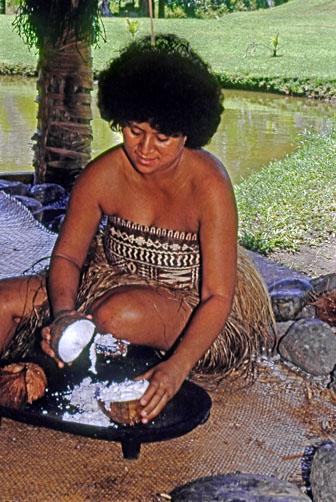
Arts Village, coconut scraping
By the time I reached the capital, it was already late afternoon. After days spent in the peace and tranquillity of the coast and countryside, the city seems noisy and crowded, full of dust, people, taxis, cars and buses. And yet there is still no sense of urgency. Friends chat to one another in the street, straddling the pavement unaware of the obstruction they are causing. School girls amble home arm in arm in the hot afternoon sun, giggling to one another and licking melting ice-creams.
Without warning it begins to rain, sending people dashing for cover as huge raindrops beat down onto the pavement. Just as swiftly, the sun breaks through the clouds. The oppressive heat has been lifted, the air smells fresh and clean, and suddenly the city does not seem crowded after all.
While exploring Viti Levu’s gorgeous scenery, enjoying the hospitality and cultural delights would leave long-lasting memories, I could not leave Fiji without visiting at least one outer island.
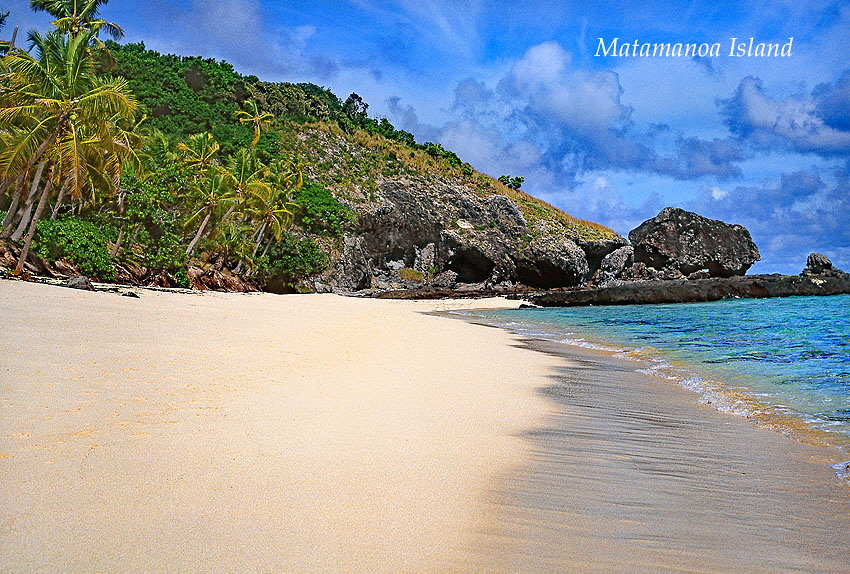
Matamanoa Island
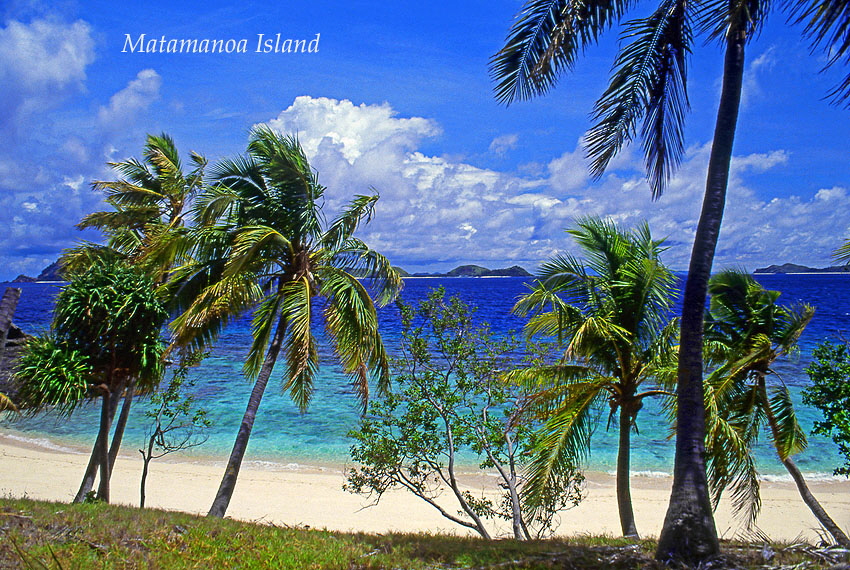
Matamanoa Island
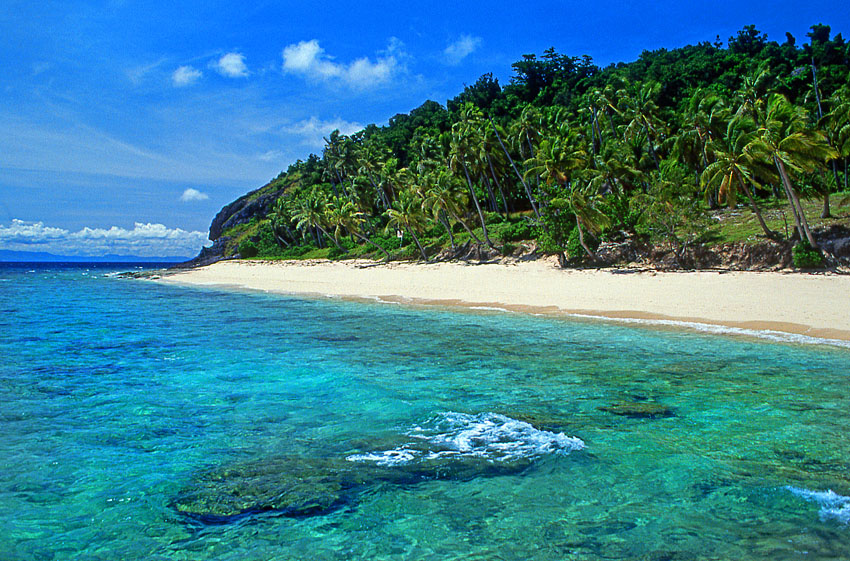
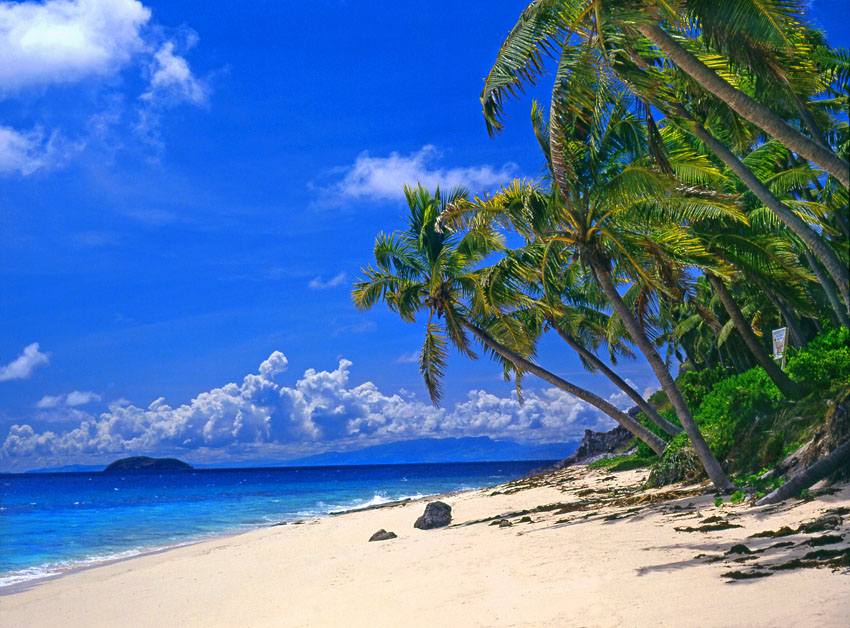
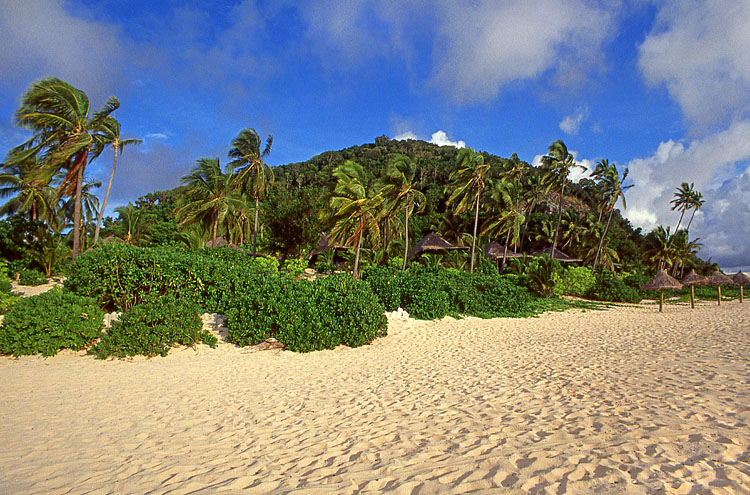
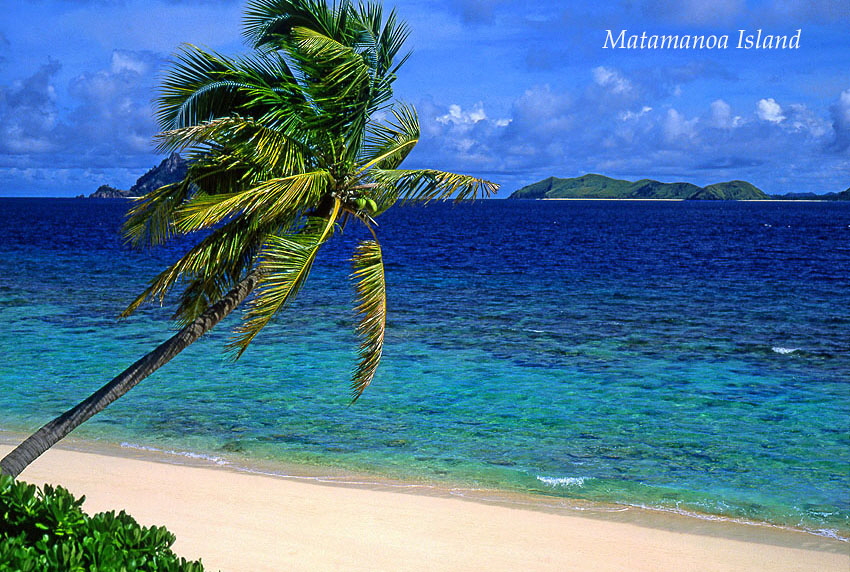
Matamanoa is a tiny private resort island about 30km from the west coast. Getting there is by high-speed catamaran, speedboat or even helicopter. I opted for the speedboat, as we sped over the azure seas passing other tiny islets. Just approaching the Matamanoa from the sea is magical - white sand, brilliant greenery, and blue sky. The islands interior, which is a volcanic hill is dense, teeming with a plethora of plants from ferns to coconut trees, and feels like a mini rain forest. Bird calls could be heard all around, as I took a leisurely walk up hill and around the island. At the top of the hill the scenery was dramatic, with shallow crystal clear sea below.
Matamanoa Island
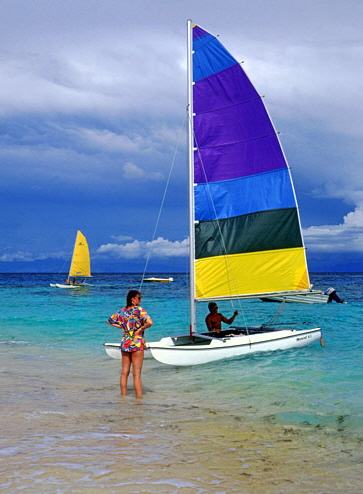
Relaxing outside my beachfront bure each evening, sipping a cocktail, and enjoying the vista of the clean empty beach (except for a couple sailboats), and gentle sound of breaking waves was pure escapism. After three more days of sheer bliss and gracious Fijian hospitality, it was time to head back to Veti Levu and onto Nadi Airport for my flight back.
Matamanoa Island, hill top view
FACT FILE:
There are no direct flights from the UK to Fiji. You can fly directly with many Asian airlines from major Far East destinations, as well as with Qantas or Air New Zealand via Australia and New Zealand. Flying time with one stop is 24-26 hours, depending on the route taken. Time difference is GMT+12 hours.
Several tour operators including Kuoni, Audley and Trailfinders, have package tours. If you plan to travel independently, Fiji has an excellent selection of quality hotels but should be booked well in advance. Car hire is essential if you plan to explore the island. Kayak or Europecar have a variety of vehicles, and ready for you on arrival at Nadi airport.
The Fijian archipelago consists of some 333 islands (about 100 or so inhabited) but most visitors remain on Viti Levu and nearby resort islands. The main islands can be visited by air, but most visitors go by sea, especially when visiting the smaller private resort islands.
For a vast list of things to see and do in Fiji, check out their site
at: www.fiji.travel
16 images here ©JAYTRAVELPHOTOS
© COPYRIGHT notice. The images on this site are for viewing only.
To purchase any, for personal or commercial use, please contact us at jaytravelphotos@aol.com