Echoing peace, quiet and respect
Laos is one of the few Far East countries that, until a decade ago, was ignored by most travellers, who instead headed to popular places like Thailand, Vietnam, and Malaysia.
I had visited Laos in the UNESCO-recognised town of Luang Prabang a couple of years ago. Its laid-back lifestyle and gorgeous temples were a cultural feast. And I couldn’t wait for another visit, this time to its capital, Vientiane.
Vientiane does not feel like an inevitable capital city. Comparing it to other major hubs in Asia and the Far East would be a mistake. No glittering edifices, skylines by night, traffic jams, and noisy crowds (well, for the time being anyway). Most visitors here would race through to see a few of the main attractions before transiting to their main holiday destination.
I came here, however, to simply relax and enjoy the calm atmosphere it claimed to maintain. At the end of my stay, I appreciated all that was both charming and enticing about this place. Being a temple enthusiast also, much of my time was spent lingering longer and enjoying some wonderful sites. Apart from the main temples on the tourist circuit, it was a delight not to be overwhelmed by droves. While the mandatory tourism income helps, my wish is that overtourism will be curtailed. In addition, I hope that disrespectful visitors (whom I came across plenty in Luang Prabang) will not continue to be tolerated by Laotians.
Located by the banks of the Mekong River, it’s a small urban area, and the vibe is akin to a town. Scenically, there isn’t much to see, but that isn’t a detraction. A couple of main streets and a few tree-lined boulevards connected by narrow residential streets make it a very walkable city. Having done some research and planned my daily routine, I stayed right in the central part of the city, within a short walk to some of the places I wanted to be.
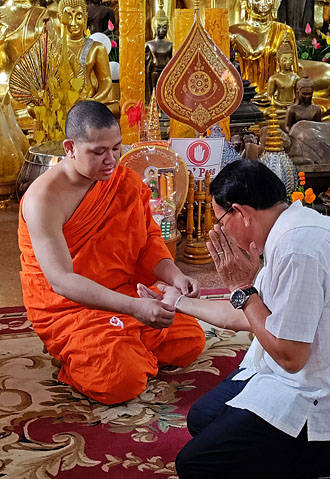
Remember to ask permission to photograph monks
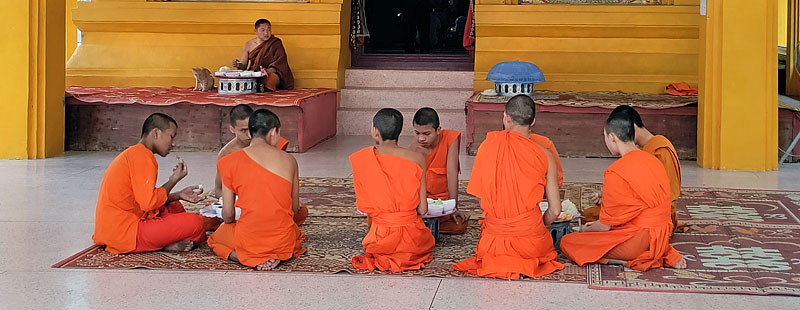
Most days, I began early morning with a stroll, pausing at temples, cutting through green spaces, and returning to my hotel for a hearty late breakfast. The greeting ‘Sabaidee’ (used for hello, good morning/afternoon) came in useful as I passed by a few residents, and monks at temple grounds.
If, like me, your preference is culture over contrived attractions, Vientiane is idyllic. I urge you to stay a week (I stayed two) and not be in a hurry to relish the sights, markets, and excellent dining. And as for temples, these are some of those you should not miss. Many of the 20 or so temples are in the heart of the city, except perhaps Pha That Luang, and a few others. And they are not merely for worshipping. They are a centre for spiritual learning and meditation.
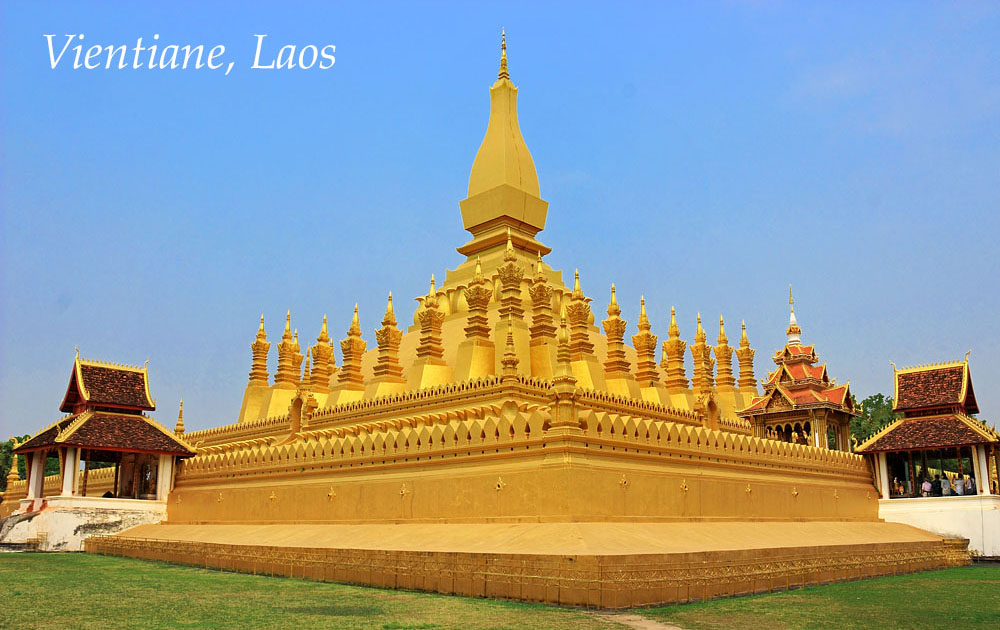
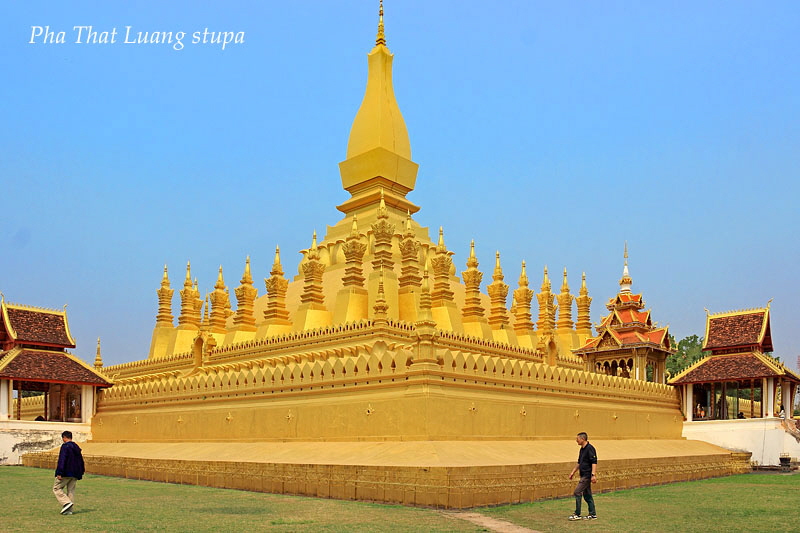
The National Monument - Pha That Luang - the magnificent stupa
This is both the national monument and the most important sacred site in Laos. It has survived tumultuous periods with invasions and distructions and gone through several stages of reconstruction. Both historic fact and legend make it difficult to ascertain the precise background of its construction. The most reliable sources claim it was built in 1566 CE and reconstructed in the 1930s during French occupation. Originally covered in gold leaf, it was plundered, especially as much of the city itself was destroyed.
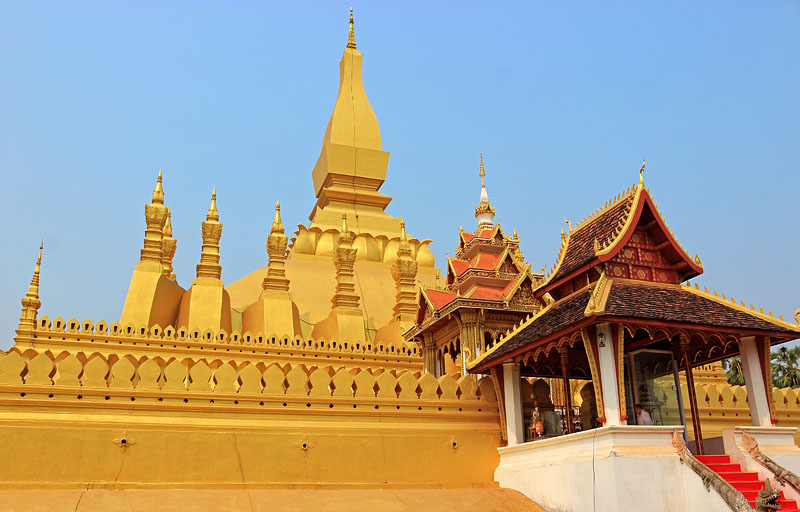
45 metre high golden pinnacle
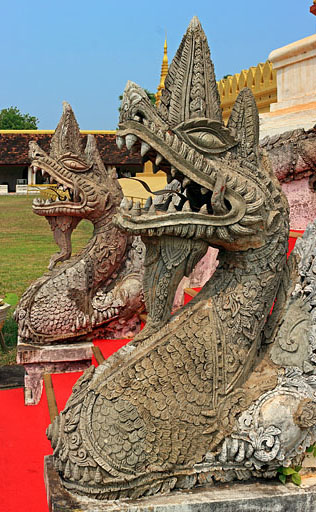
Naga statues at stairways
Today, the entire beautiful structure is painted in a gold colour, except for the pinnacle, which is real gold. Forming three levels, the central spire is 45 metres tall and resembles a lotus flower bud. It is not possible to enter the entire temple, except through steps to the first level on all four sides to the small prayer halls of worship. The short stairways are adorned on each side with Naga (serpent) statues.
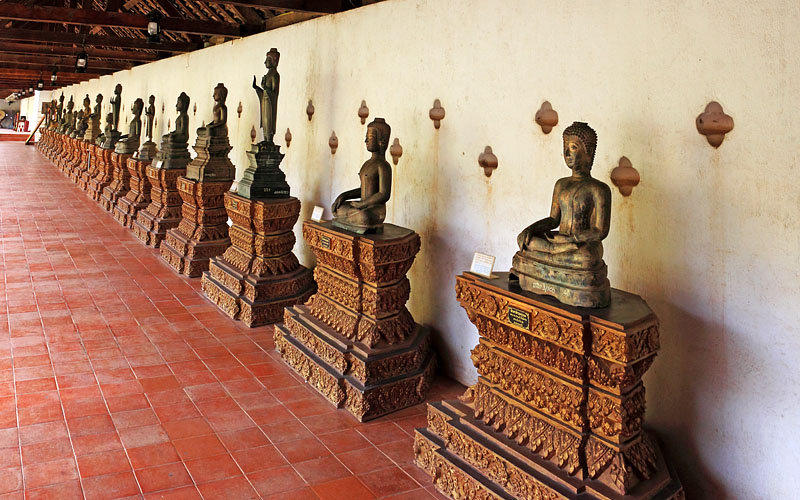
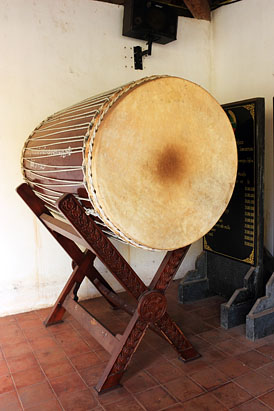
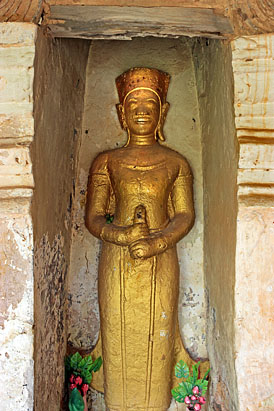
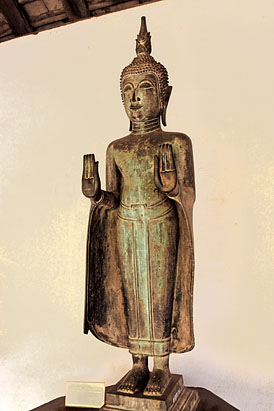
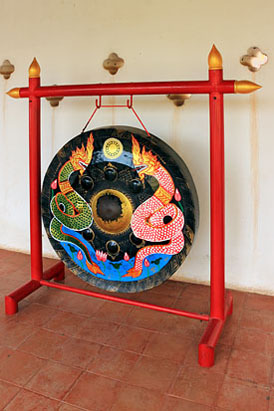
The cloisters, with statues, huge drums and gongs
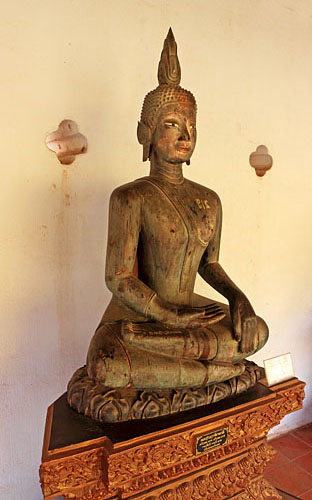
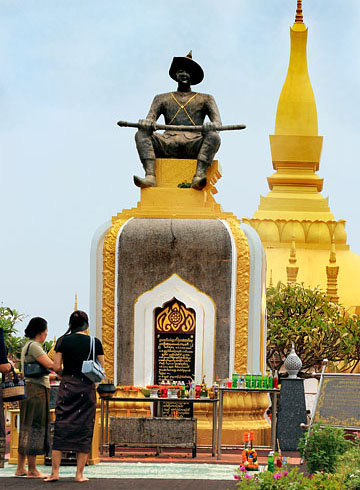
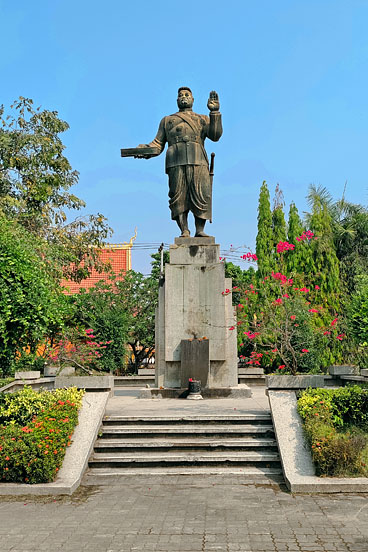
King Setthathirath statue at main entrance
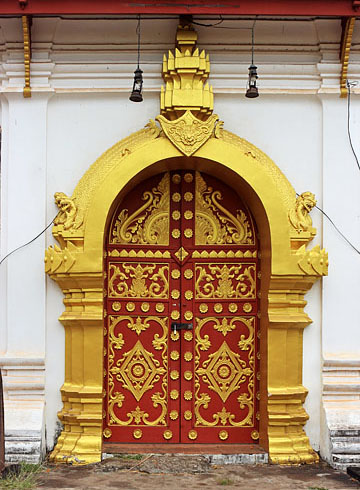
The walled cloisters surrounding all four sides contain rows of Buddha statues, artefacts, and religious objects that draw you to enjoy and walk around several times. This is a magnificent site and needs as much time as you can afford before moving on.
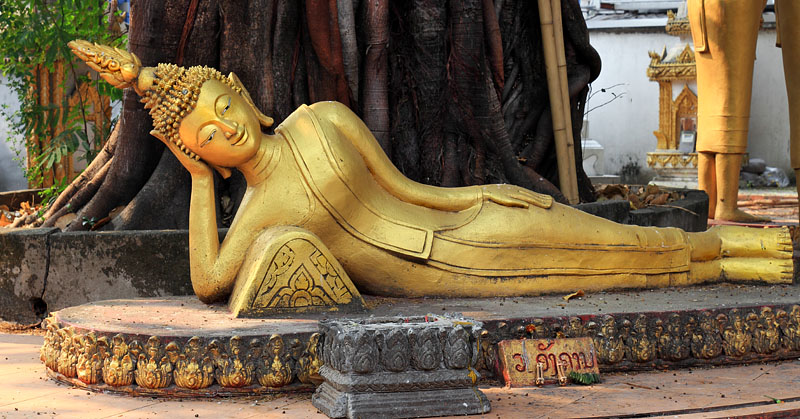
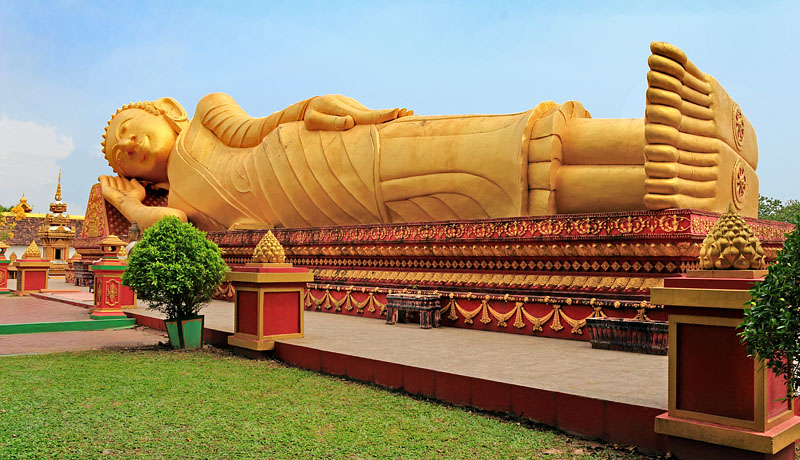
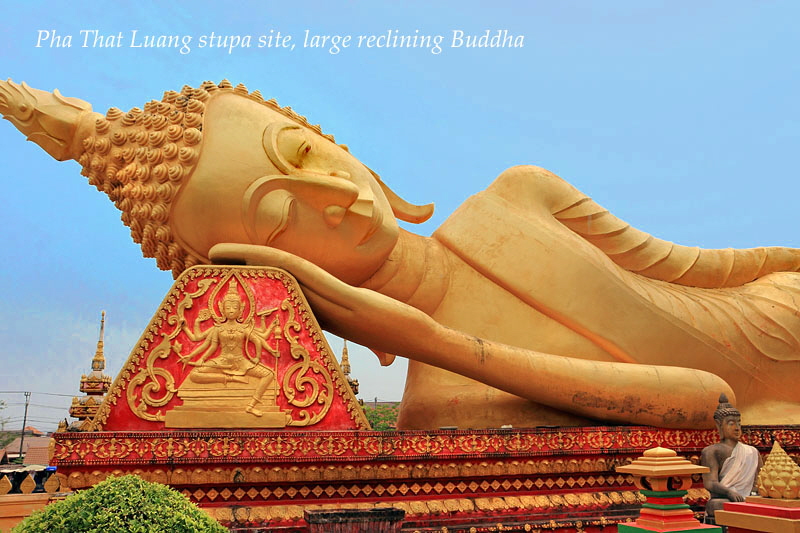
I spent nearly a full day here, as there were several other religious sites adjacent to the main stupa. Walking around the outer perimeter and nearby gardens, there are lots more lovely places to see. In the outer compound, there is a huge reclining golden Buddha statue and a beautifully cultivated garden with statues and mythological figures. Adjoining it is also a burial ground with rows of small chedis. From the main entrance side is the majestic statue of King Setthathirath, founder of Vientiane as the capital and builder of several temples, including Pha That Luang.
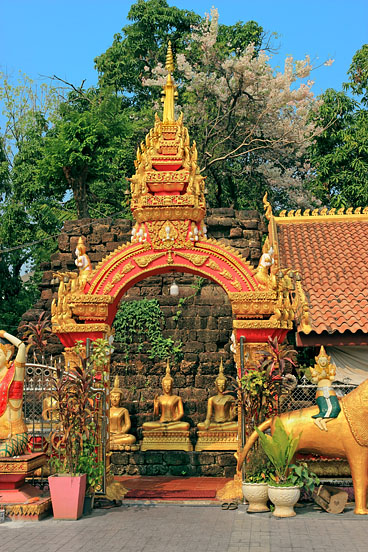
Elaborate doorways to cloisters
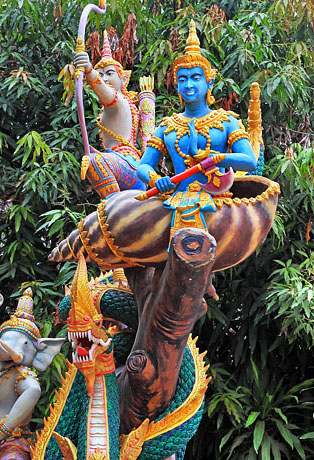
Outer compound gardens with reclining Buddha and mythological figures
Wat That Luang Neua
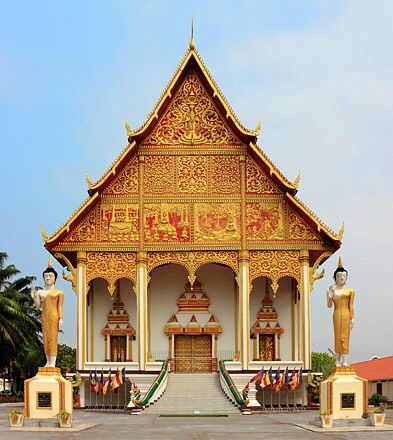
Exploring the gardens further is Wat That Luang Neua. At the entrance of this classic Lao-style temple are two standing Buddha statues on either side. The entrance facade and gable are covered with golden relief work depicting Buddhist scenes. Unfortunately, the temple was closed on the day I visited.
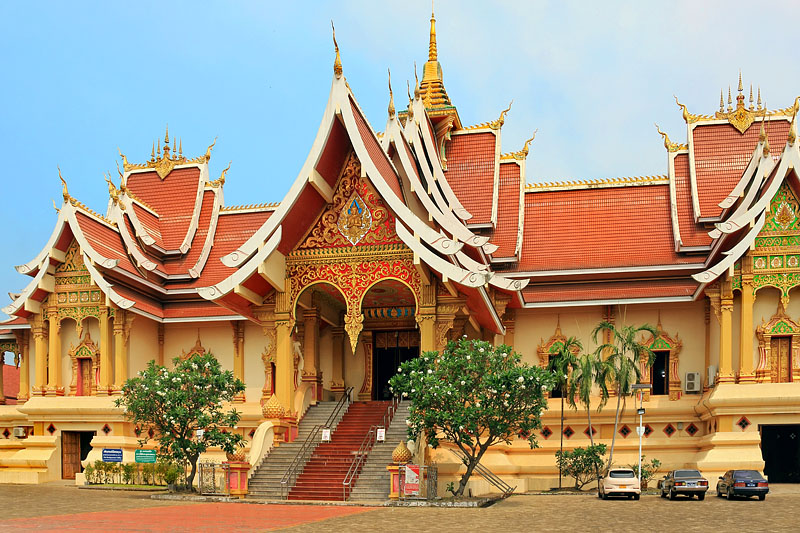
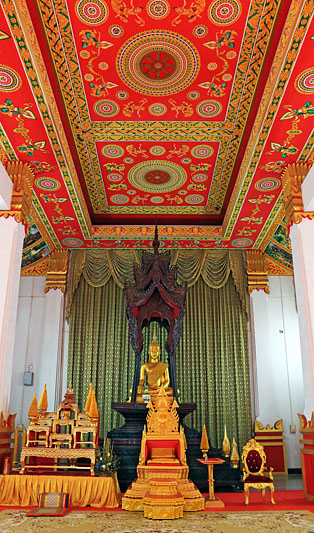
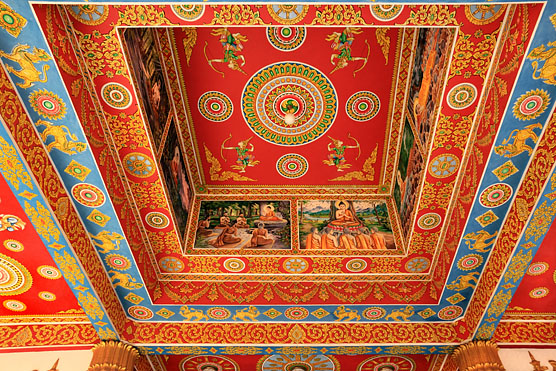
The Ho Thammasapha is a grand building surrounded by gardens with frangipani trees. One of the most impressive edifices of Laos, it is the National Assembly Hall, a Buddhist temple and conference centre. The elaborate interior has a beautiful painted ceiling, statues of monks and shrines with Buddha statues.
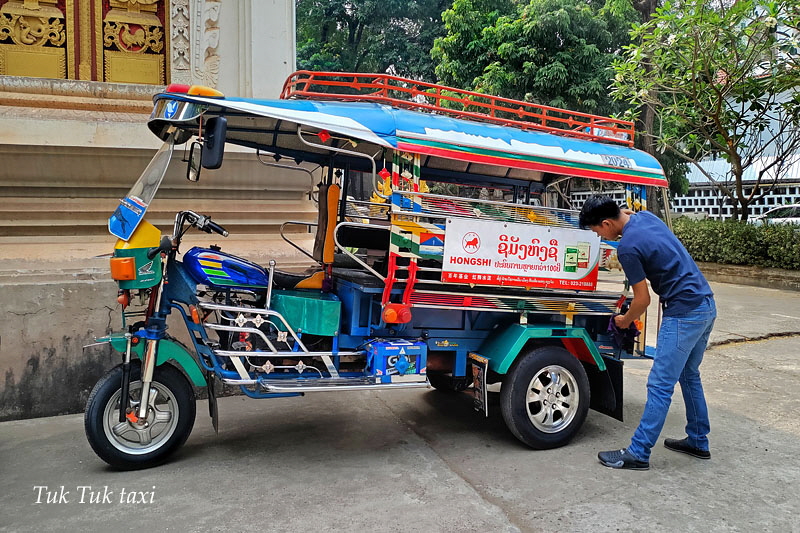
Wat That Luang complex is quintessential viewing. Located about 3 km north of the city centre, a tuk-tuk is the easiest way to get there. However, I preferred the leisurely walk using Google Maps (took me about 70 minutes).
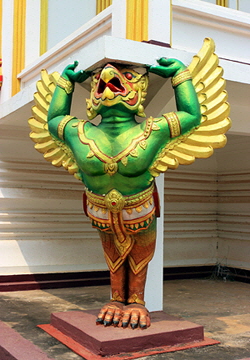
Wat That Luang Neua, Garuda figure
Grand Ho Thammasapha building
Elaborate interior
____________________________________________________________________________________________________________________________________________
Wat Sisaket - second most visited site
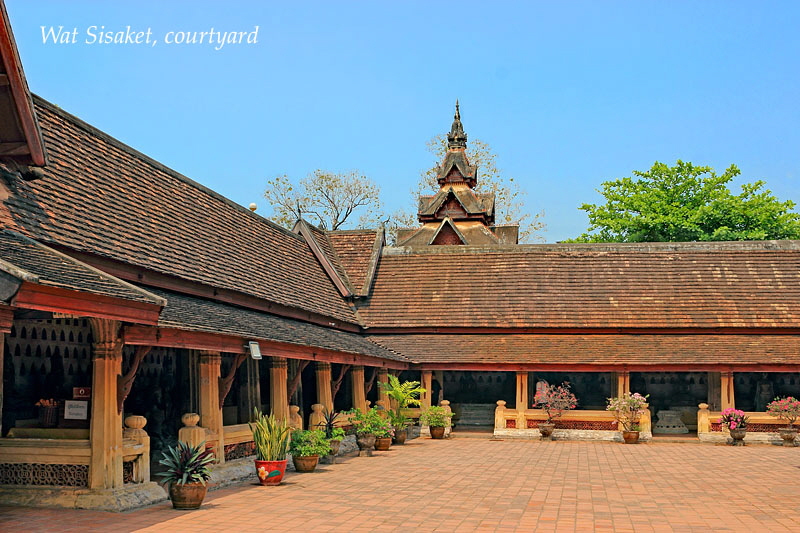
Taking second pride of place is Wat Sisaket. It was built between 1818-1828, during the reign of King Anouvon. It is considered the oldest surviving wat in Vientiane, as it was spared during the Siamese invasion. The main feature is the Thai- style five-tier roof of the Sim (ordination hall). The interior contains a large seated Buddha figure, and the walls are covered in murals depicting Buddhist stories. No photography is allowed inside.
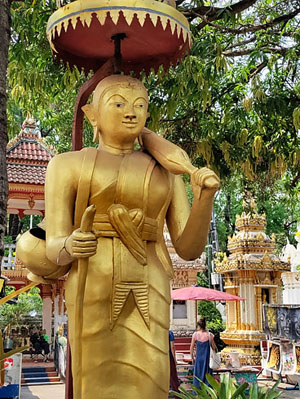
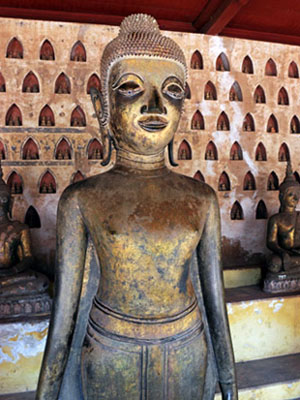
Surrounding the four sides is a wide courtyard and cloisters. The potted bougainvillea flowers all around the compound add to the beauty and calmness of the place. The cloisters contain an extensive variety of Buddha statue galleries. Unusually, in the walls of the cloisters are also hundreds of niches with small Buddha statues placed in them.
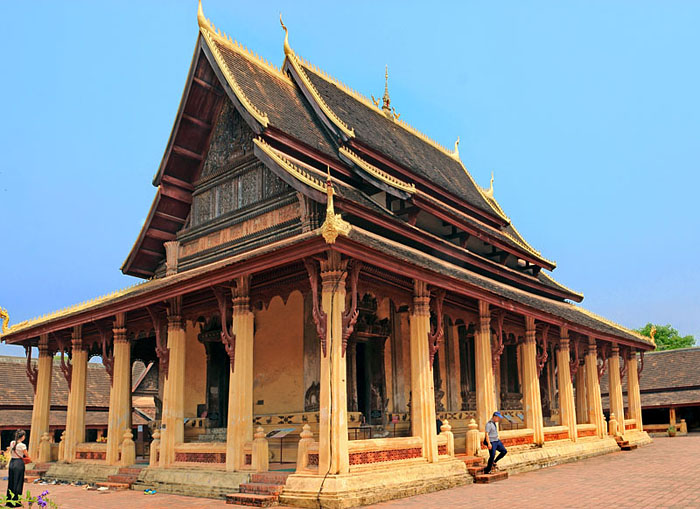
Cloisters with hundreds of Buddha statues
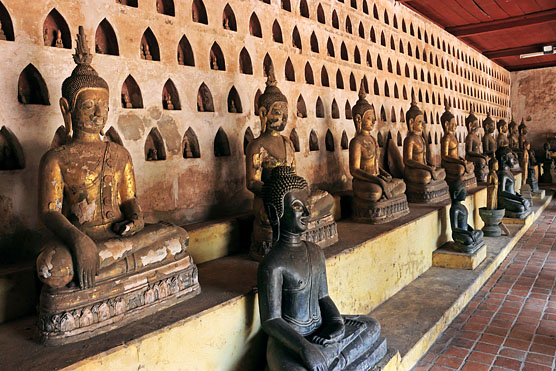
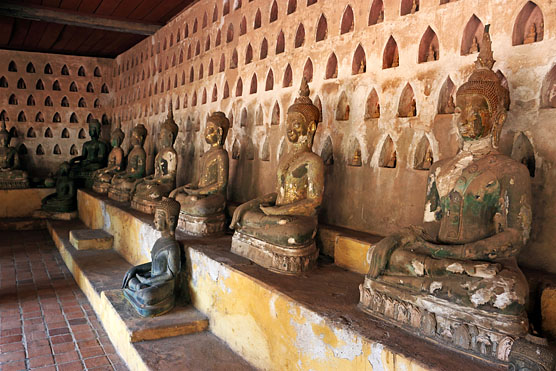
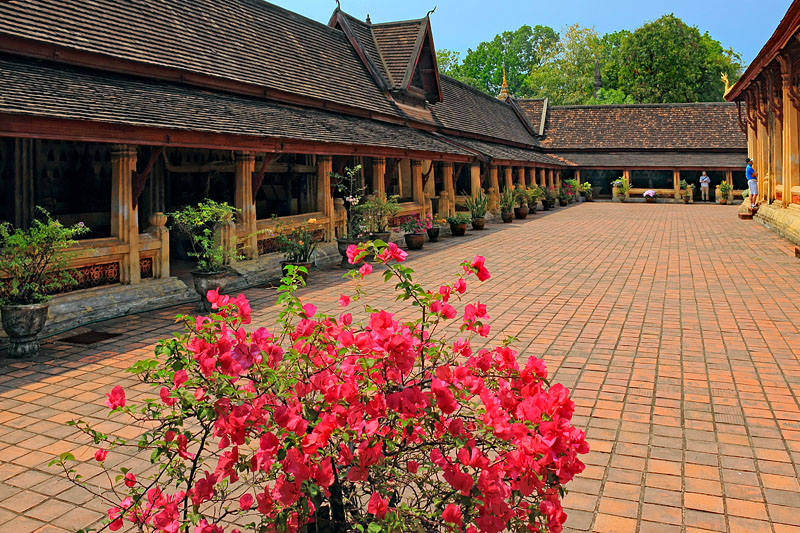
Beautiful courtyard
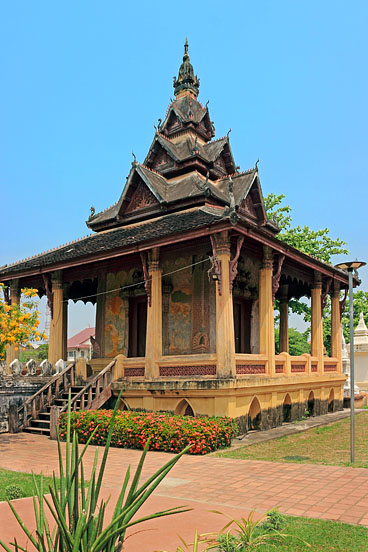
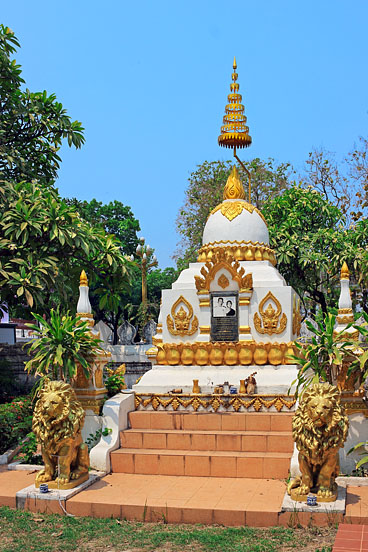
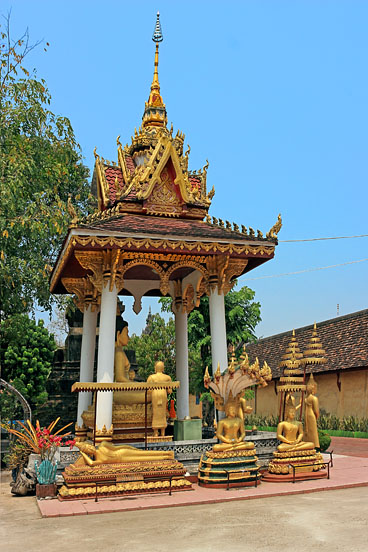
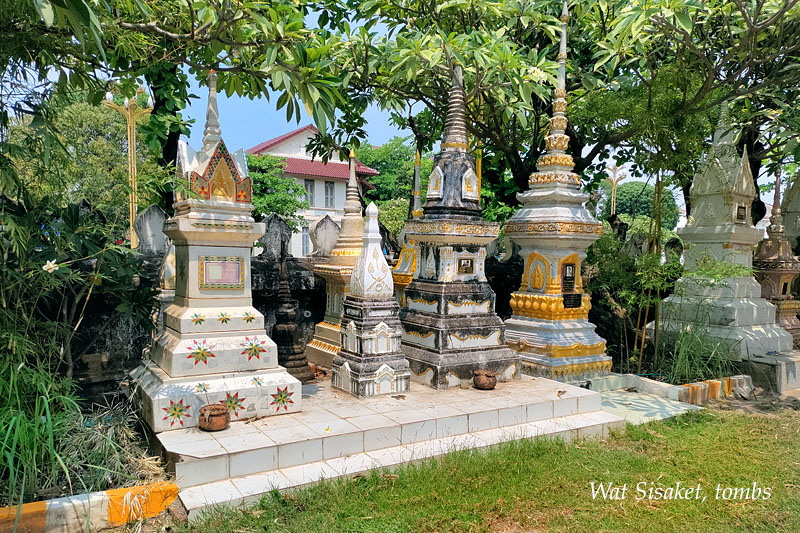
Outside the walls, in the outer complex, take time to wander about in the lovely gardens. There are several small shrines and pavilions, Buddha statues, a drum tower, library building (hor tai) and a cemetery area with rows of small chedis. With several small green spaces and landscaped gardens, it’s a perfect spot to sit and relax in the shade.
Library building
Cemetery area with chedis
Elaborate pavilion with Buddha statues
 |
|
____________________________________________________________________________________________________________________________________________
Wat Si Muang - less tranquil, more active
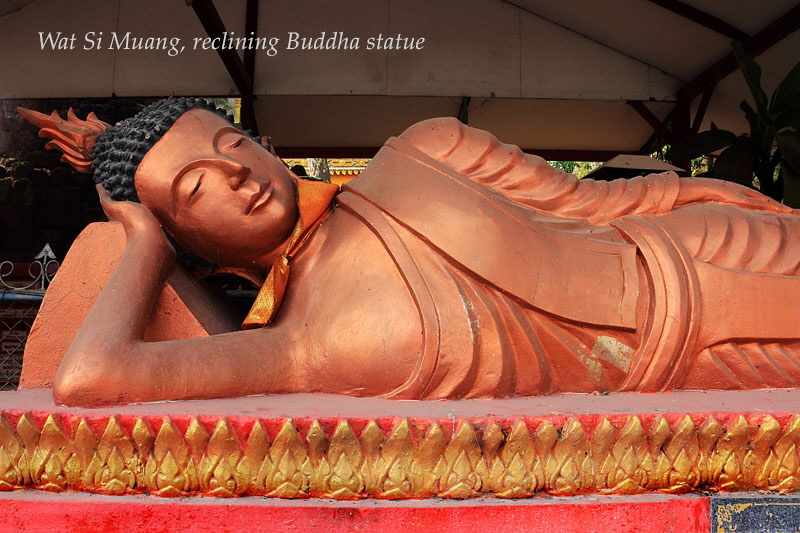
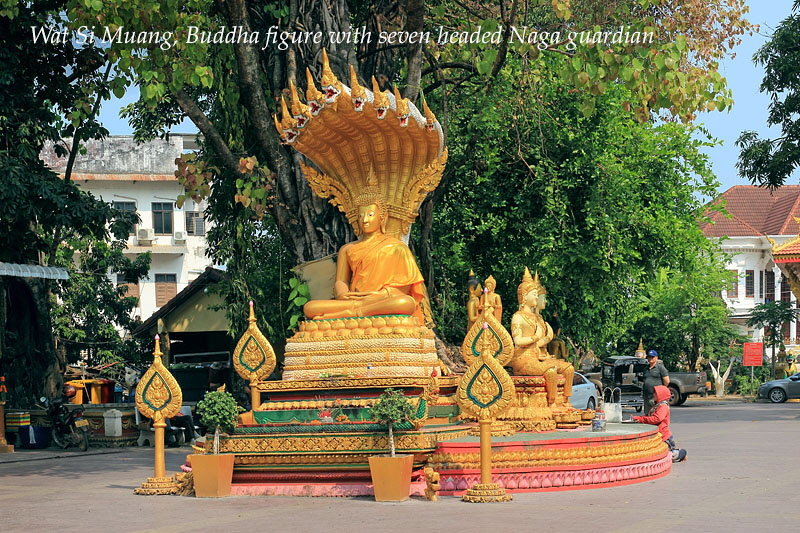
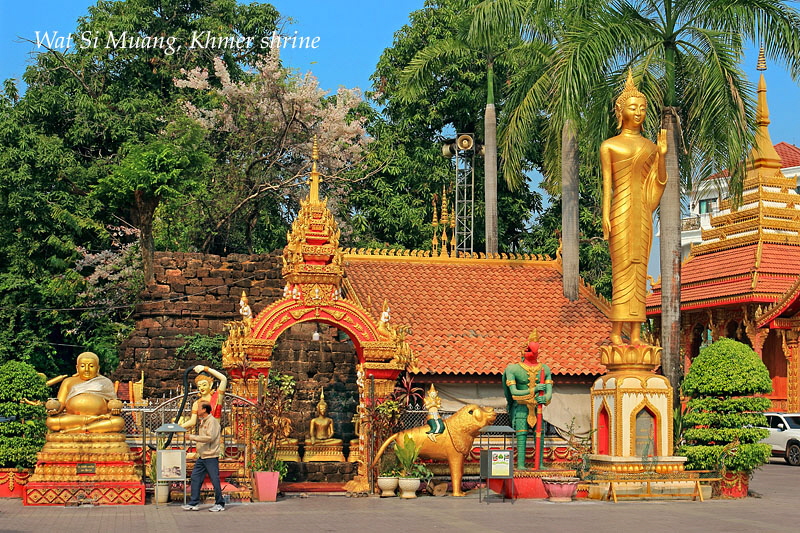
Unlike Wat Sisaket, which has a tranquil atmosphere, Wat Si Muang draws in both locals and visitors as a well attended place of worship. It’s a large, colourful temple site, with a main Sim and several smaller shrines and a plethora of Buddha statues and other images. Legend, animist faiths and Theravada Buddhism blend in this popular Wat. It reflects the fine variety of mystical figures, objects and deity statures spread around the temple compound.
The colourful, beautiful Sim
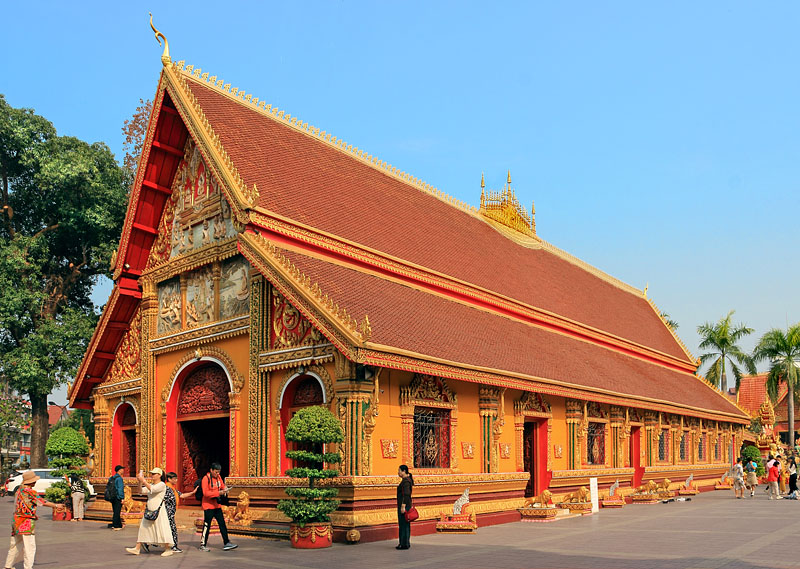
Built in 1563, it was destroyed by wars, and the present site’s construction began around 1915. The temple, according to legend, is named after a pregnant woman who sacrificed herself into a pit to please angry spirits. A central pillar is said to have been placed as the foundation in the pit, from where the Sim was built.
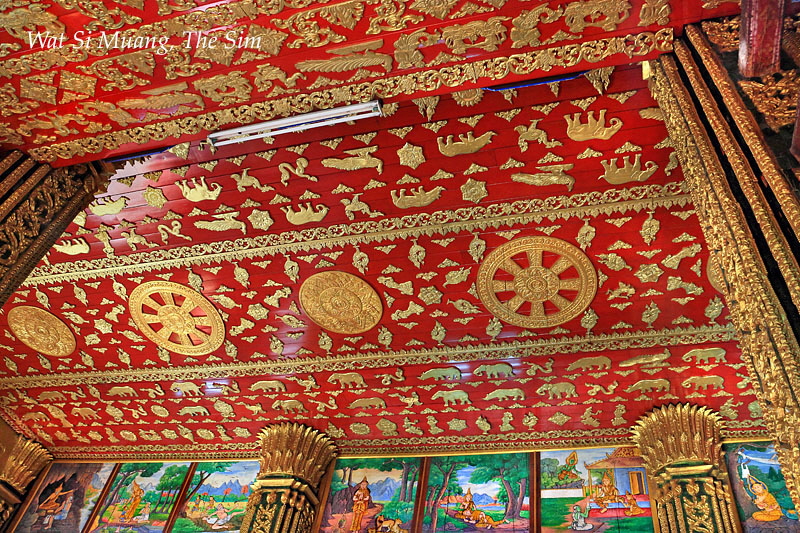
The Sim, unusually, is divided into two large rooms and lavishly decorated. In one, worshippers enter to receive blessings from monks. And the other is the shrine room with Buddha statues, for those who wish to worship and make offerings.
The lavish interior of the Sim
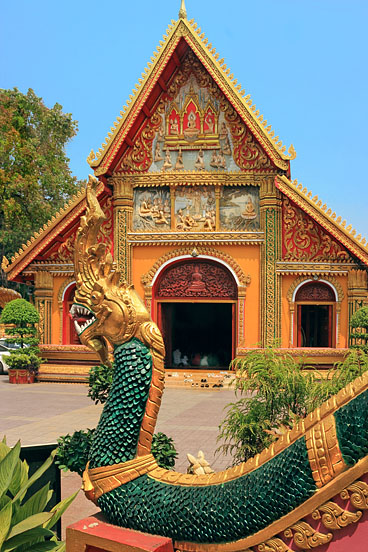
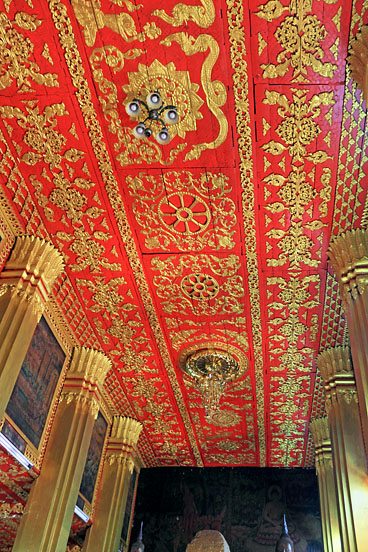
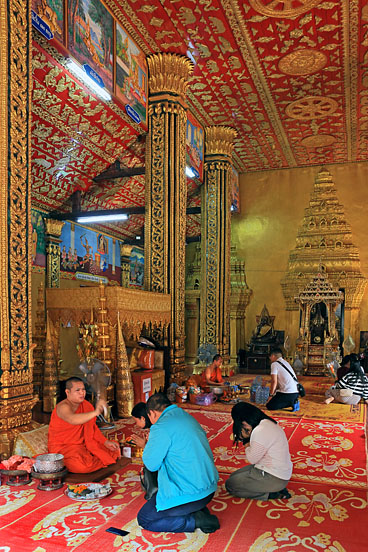
There is a plethora of Buddha statues, mythical figures and deities spread around the temple compound
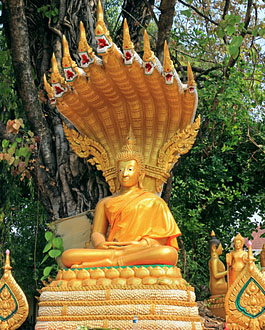
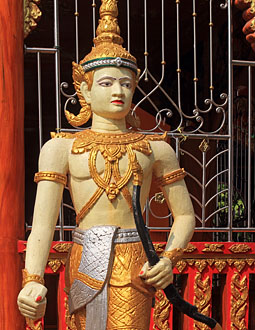
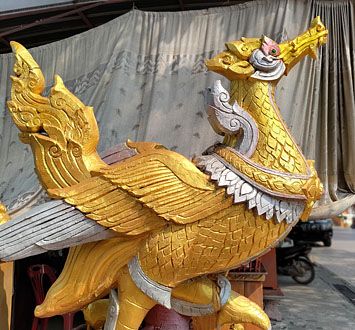
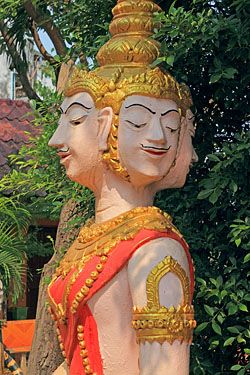
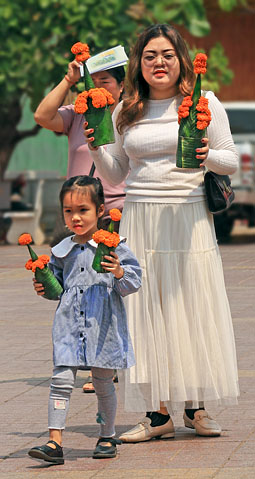
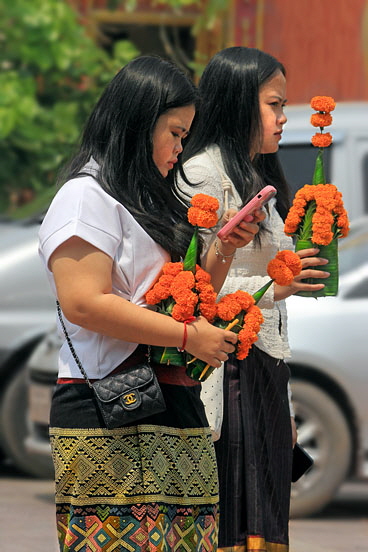
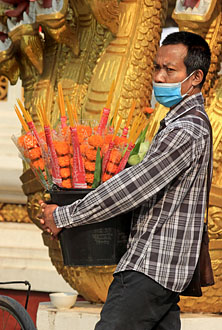
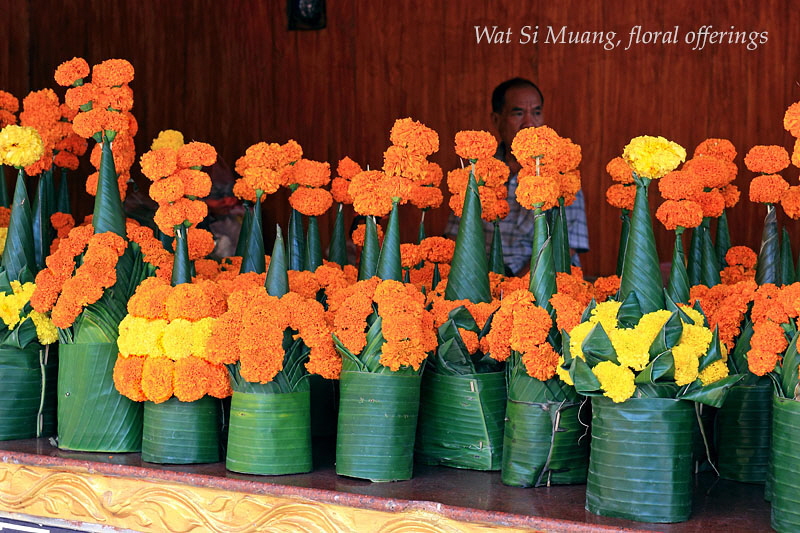
There are areas to sit down, and without being intrusive, observe the joyous sight of families arriving, purchasing pretty marigold floral offerings and worshipping at shrines.
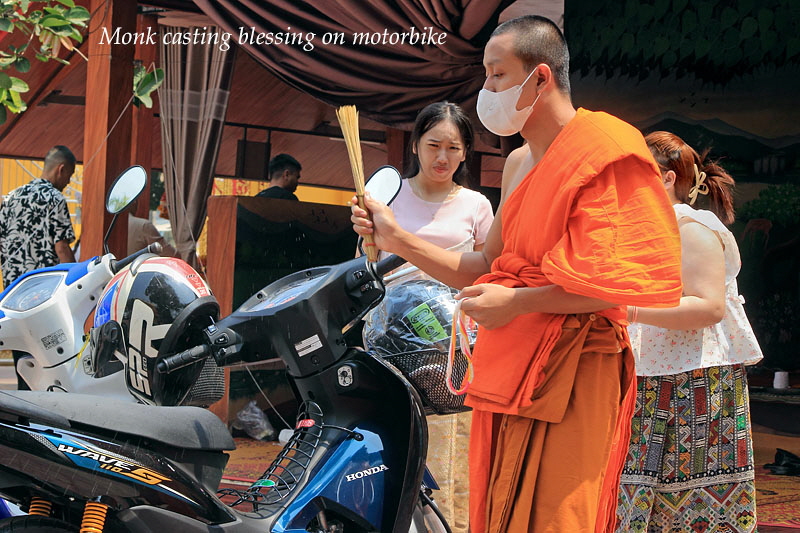
There’s even an area for motorbikes, where a monk blesses your bike in order to invoke a safe ride. I was informed that this was a generation-old tradition, as I watched a monk tie a thread on the bike handlebar and perform a brief chant.
Adjoining and south of the temple complex is a lovely small garden with a statue of King Sisavangvong. It’s also a shady spot to rest away if need be from the midday sun.
Worshippers with floral offerings
One of several shrines at the complex
King Sisavangvong statue
____________________________________________________________________________________________________________________________________________
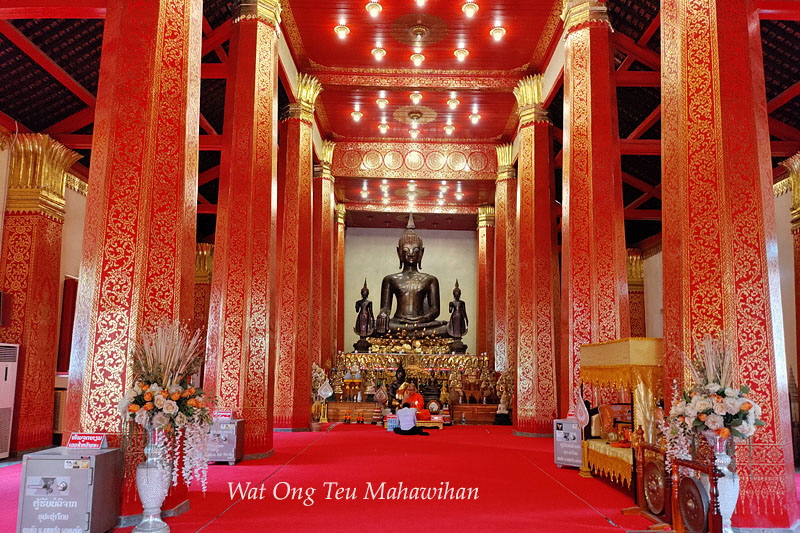
Wat Ong Teu Mahawihan - Temple of the Heavy Buddha
Dating back to the 16th century, it was built during the reign of King Setthathirat (the same period when Pha That Luang was erected). It was destroyed during invasions, and the present site is from the early 19th century. The main entrance greets you with two life-size plaster-covered elephant statues.
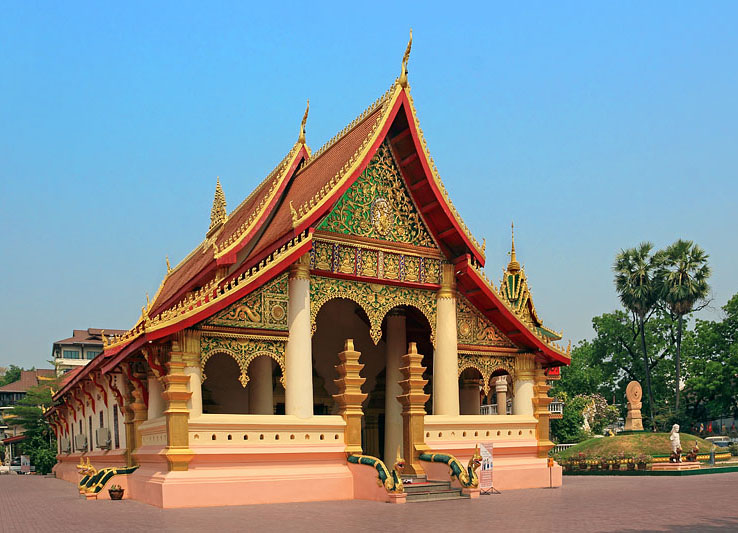
Thai/Lao style Sim
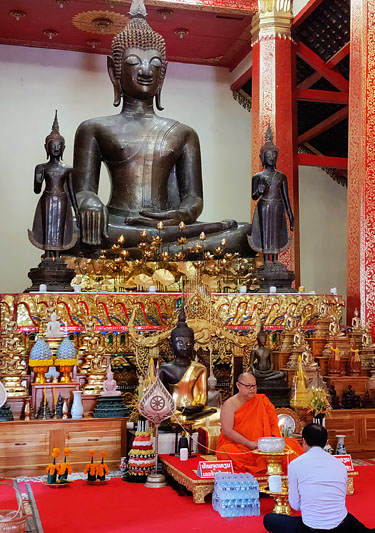
Large bronze Buddha statue in the Sim
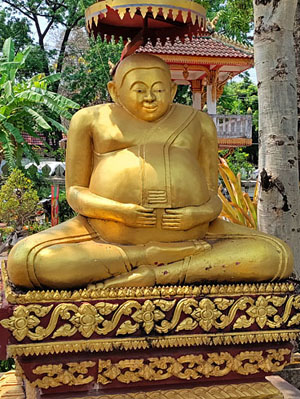
It’s a fairly large complex with the main Thai/Lao style Sim (ordination hall) and several other buildings, and decorative shrines amidst areas to stroll about and enjoy. The ‘heavy Buddha’ term refers to the seated bronze Buddha statue in the Sim, which survived invasions. It is the largest bronze statue in the city. On either side of the statue are also two smaller standing disciple figures. The Sim interior is adorned in red, from floor to ceiling and pillars. And at the far end is the large Buddha statue.
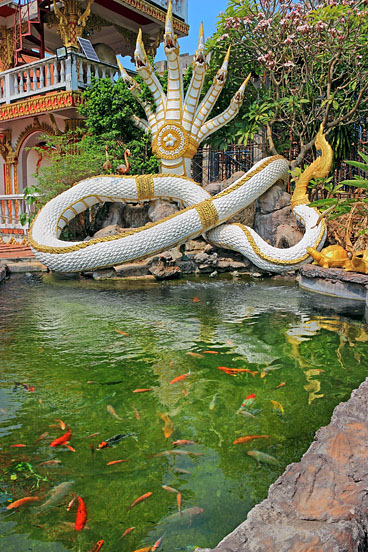
Koi pond
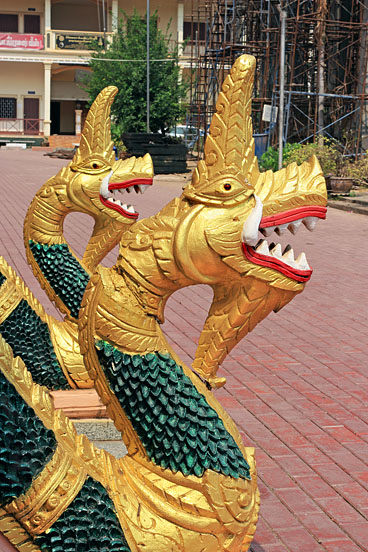
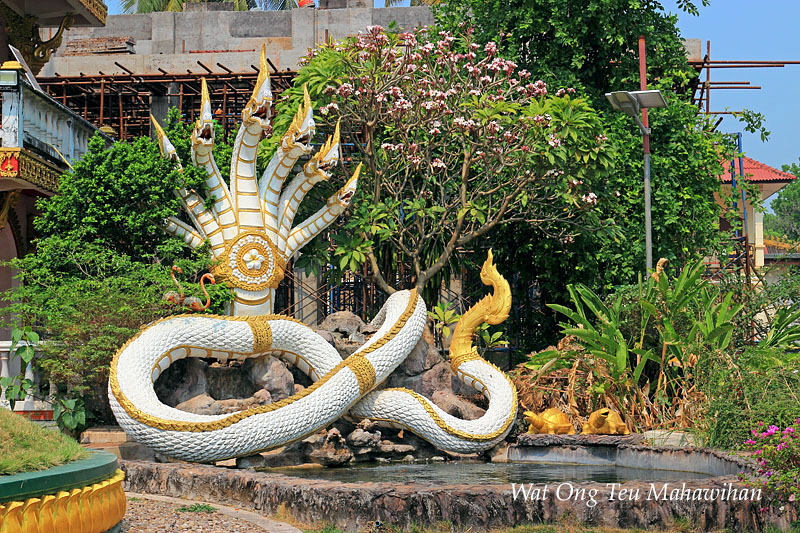
Naga (serpent) sculptures
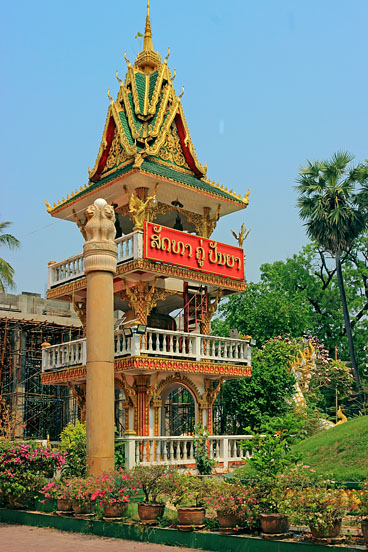
Drum Tower
When I visited, there was hardly anyone in sight except for a few worshippers who were receiving blessings from the monk. It was a pleasant occasion to sit and enjoy some time along with a few others who were in quiet contemplation and prayer. The gardens are beautifully maintained, with a koi pond, animal, serpent, and bird figures, and a decorative drum tower. The site is also a monastery with the residing monks’ quarters at one end.
____________________________________________________________________________________________________________________________________________
Wat Hai Sok - an often overlooked site, yet has a grand Sim
Right opposite Wat Ong Teu, and often overlooked, a rather uninspiring entrance leads you to this temple site. At first glance, the grounds display a less flamboyant appearance than some other sites I visited. The temple’s drum tower is almost hidden amongst the tall trees and branches. And the overgrown weeds appeared to need some controlling.
The beautiful Sim
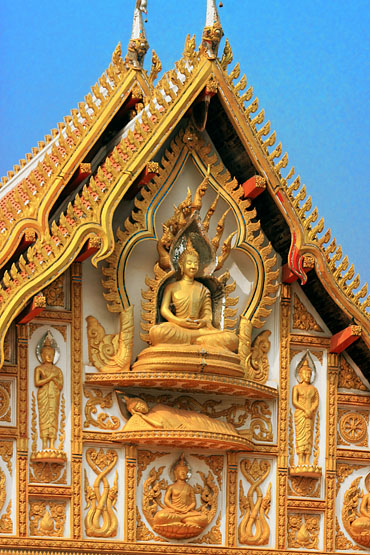
Relief carvings on the Sim facade
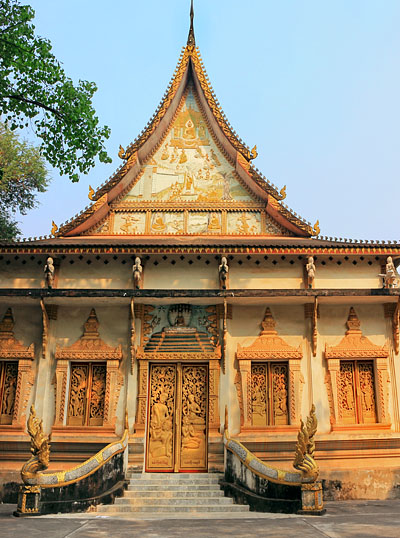
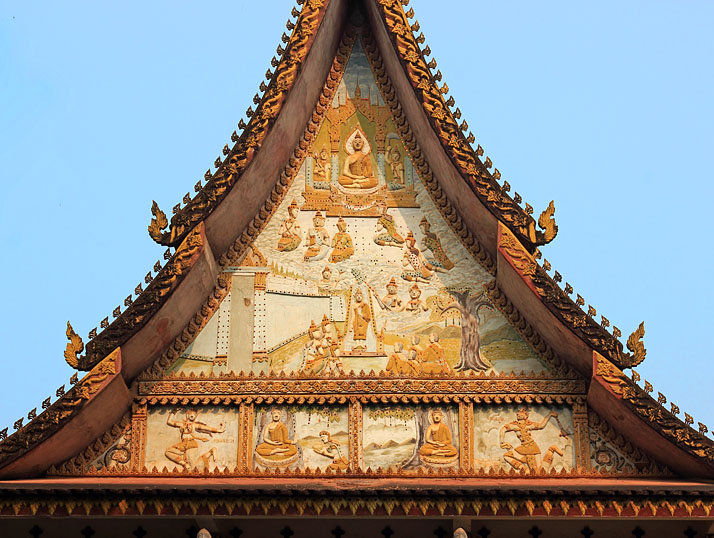
Nevertheless, I was immensely impressed by the grand tiered roofed Sim, with the top facade’s exquisite relief carvings. Gorgeous decorative doorways and windows, steps with Naga (mythological serpent) sculptures and a lovely interior make it an essential viewing.
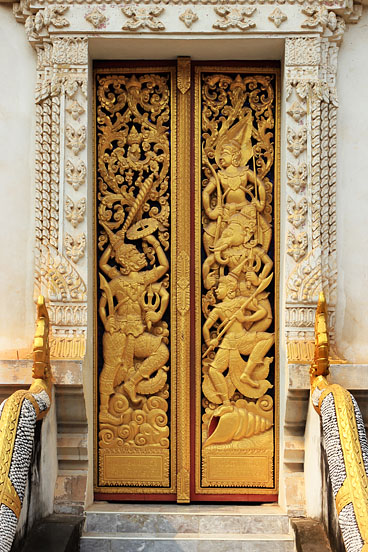
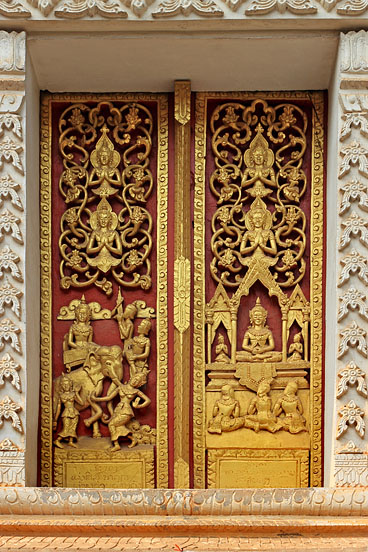
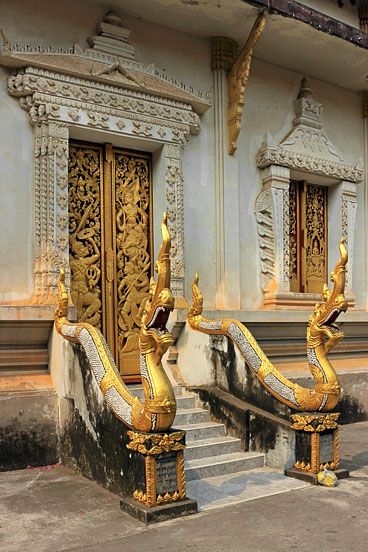
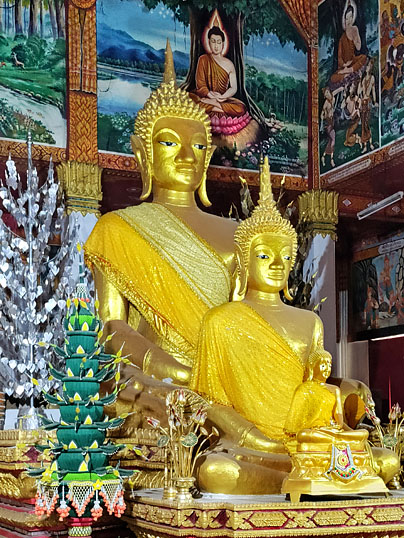
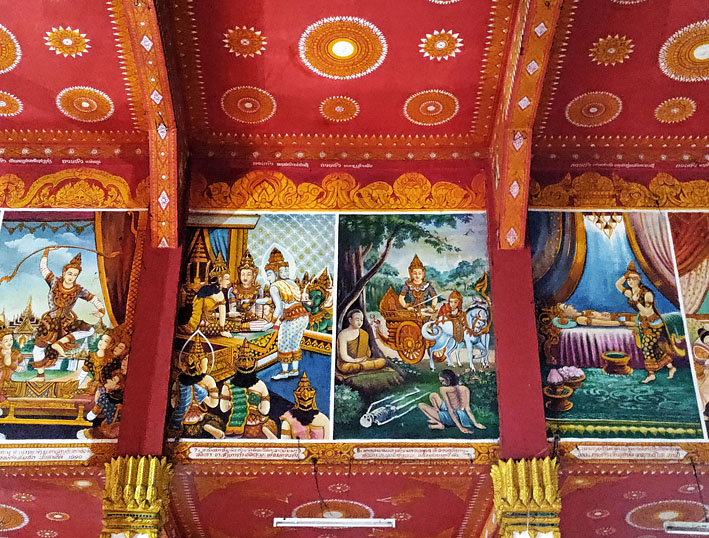
Inside, three seated Buddha statues of different sizes, adorned in yellow robes, are placed one behind the other. There are several other elaborate statues, which I was not sure whether they were of the Buddha or deities. The ornate ceiling is covered with Buddhist stories. Ignoring the faint sound of traffic outside, there was a peaceful and quiet aura.
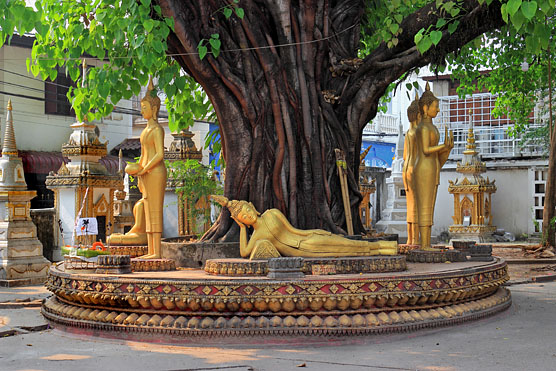
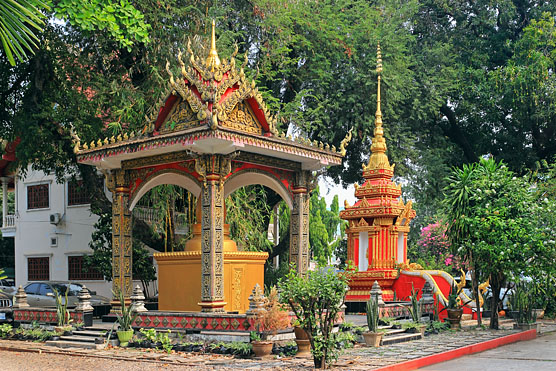
There’s not a lot to see in the grounds, except for some stupas and a large Bo tree surrounded by Buddha statues in various postures. Apart from a couple of children playing in the grounds, there was no one else present when I visited.
The three seated Buddha statues
The Sim ceiling paintings
The temple grounds has a few Buddha statues, pavilion and small chedis
____________________________________________________________________________________________________________________________________________
Wat Inpeng - with beautiful pavilions and gardens
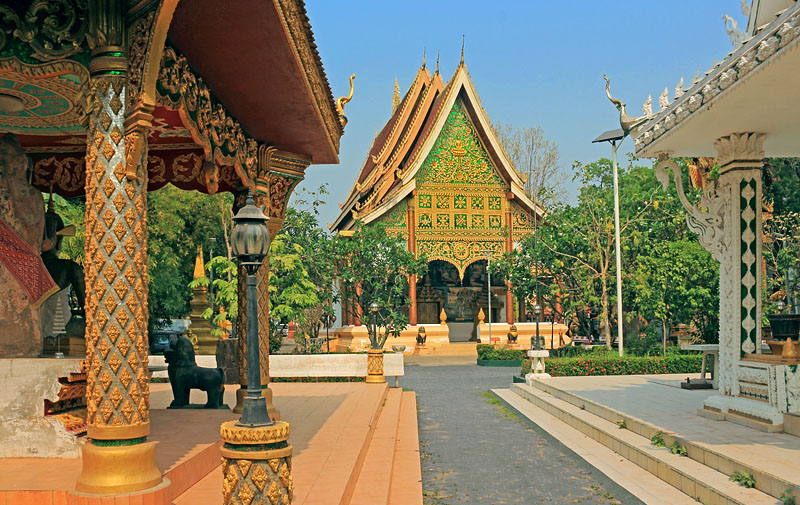
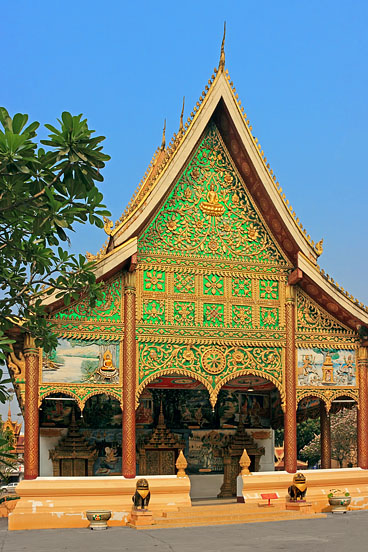
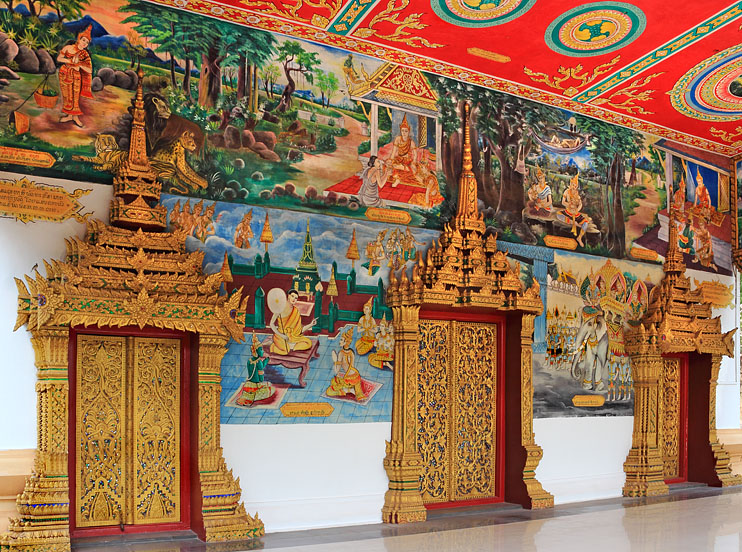
Green and golden facade of the Sim, and three entrance doorways
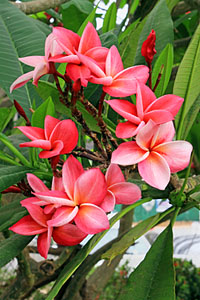
Frangipani flowers
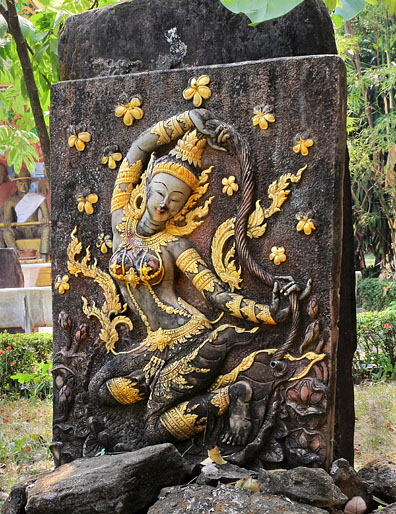
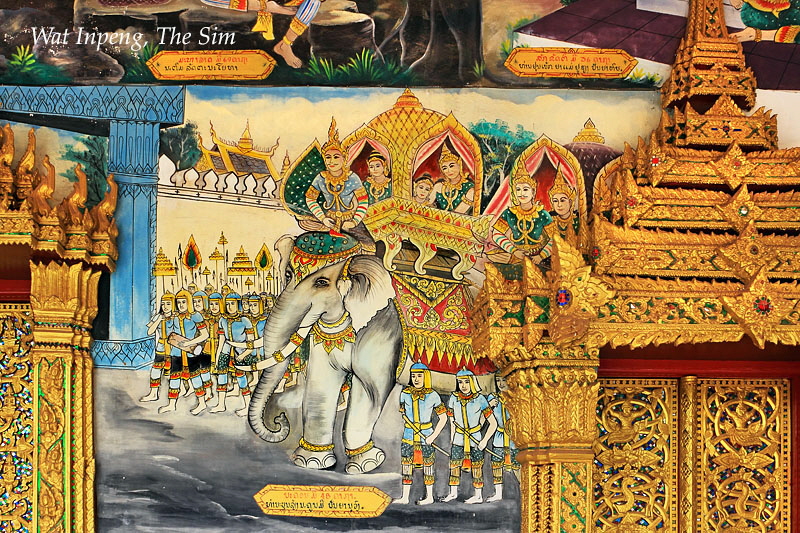
This large temple site is close to both Wat Ong Teu and Wat Hai Sok. So it’s easy to cover all three in a few hours. Centuries ago, this was a monastery for monks to reside in. From the 19th century onwards, despite damage through incursions, much renovation took place. The Sim is a grand Thai and Lao-style architectural building, and in the temple grounds, several lovely ornate pavilions were built. It’s a cool, shady compound to walk around and view the many statues and deity figures. Note an imposing sculpture of a demon guardian, and a stone slab with an exquisite relief of goddess Phra Mae Thorani.
The pavilions are truly works of art with Buddha statues. One particular pavilion has a figure of a man wearing a hat, and I could not find the identity of this statue, although I’ve seen many photos of it. The gardens are well maintained with shady frangipani and cannonball flower trees. The Ordination Hall (Sim) entrance facade is ornate with golden relief carvings on a green background. At the entrance portico, there are three grand golden carved doorways, and the walls to ceiling are painted with Buddhist stories. Unfortunately, the Sim was closed the day I visited, so I couldn’t see inside.
Exquisite Phra Mae Thorani relief sculpture
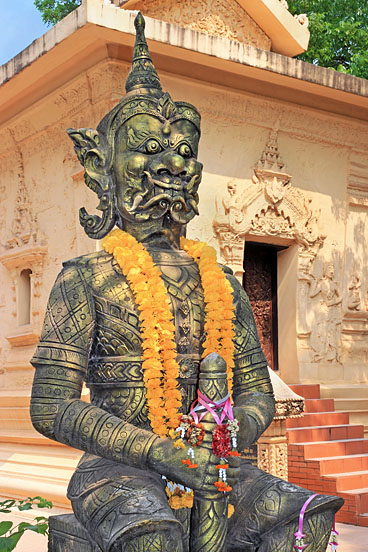
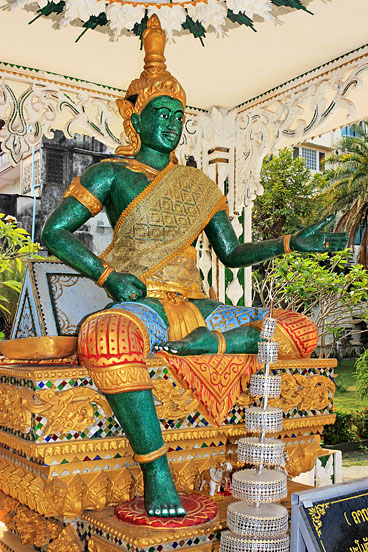
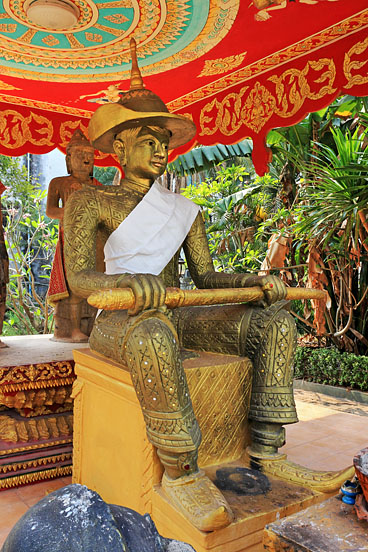
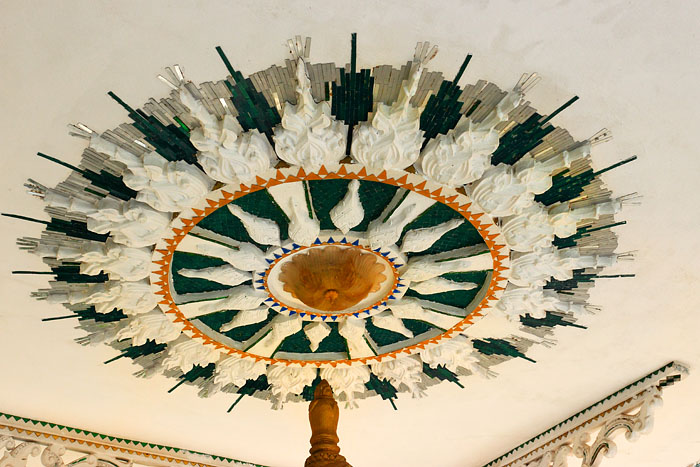
There are several decorative pavilions with statues
____________________________________________________________________________________________________________________________________________
Wat Chan (Chanthaburi) - a blend of Buddhism, Hinduism and mythology
Laos was known as the ‘Land of a Million Elephants’. Ancient kings adopted the elephant as a symbol of strength and prosperity. In Lao culture, it also became a sacred figure. Like in many other temples, at Wat Chan you’ll see elephant sculptures at the entrance as well as within the temple grounds. Another interesting sight at Wat Chan is the animal figures scattered around the gardens. They reflect the blend of Buddhist and Hindu mythology and spiritual symbolism.
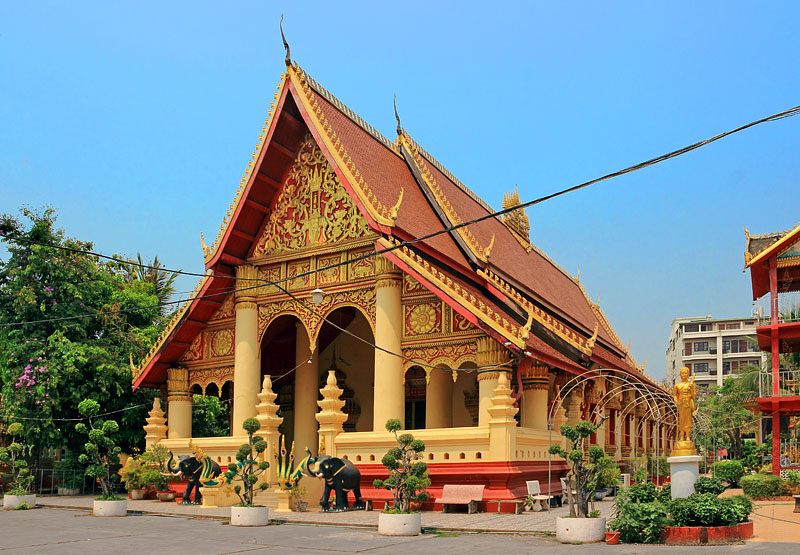
The Sim - ordination hall
The main Sim is a grand tiered-roofed building, and unfortunately it was closed the day I visited. Beside the Sim is a three-tiered Drum Tower, and in front, a beautiful golden coloured seated Buddha statue is protected by the seven-headed Naga (serpent) figure.
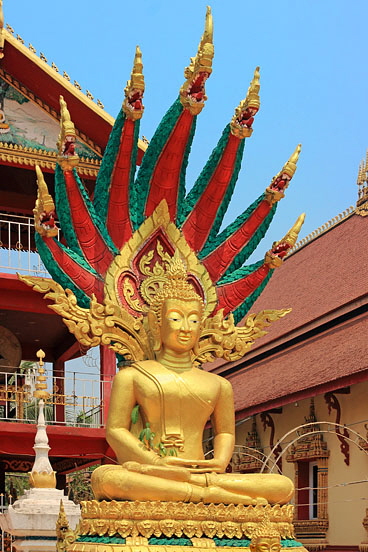
Golden Buddha statue
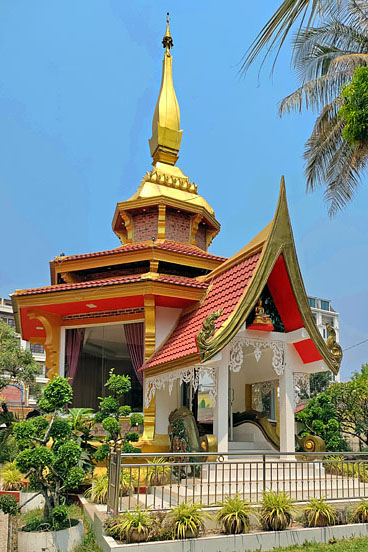
Pavilion
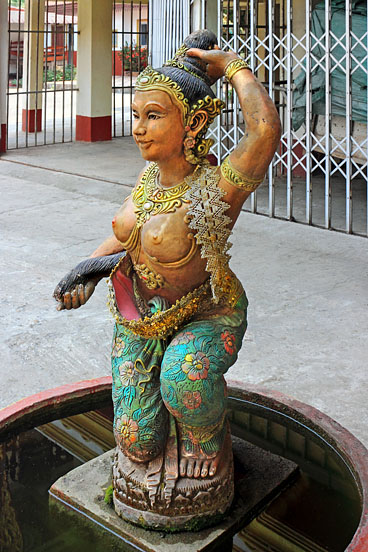
Goddess Phra Mae Thorani statue
There are several other buildings and pavilions within the compound. Look out for the excellent sculpture of goddess Phra Mae Thorani - a common feature in many temples.
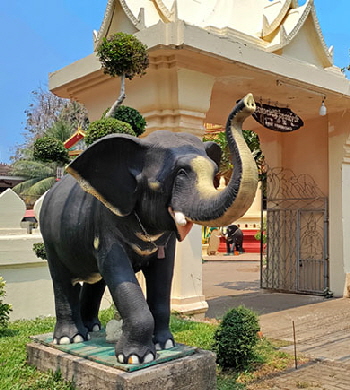
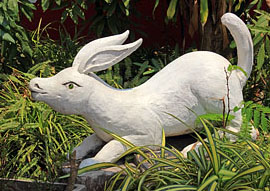
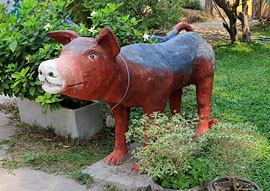
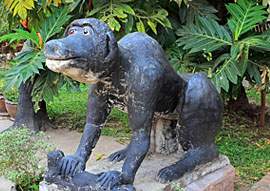
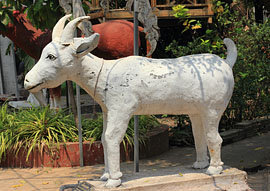
Gardens with animal statues
____________________________________________________________________________________________________________________________________________
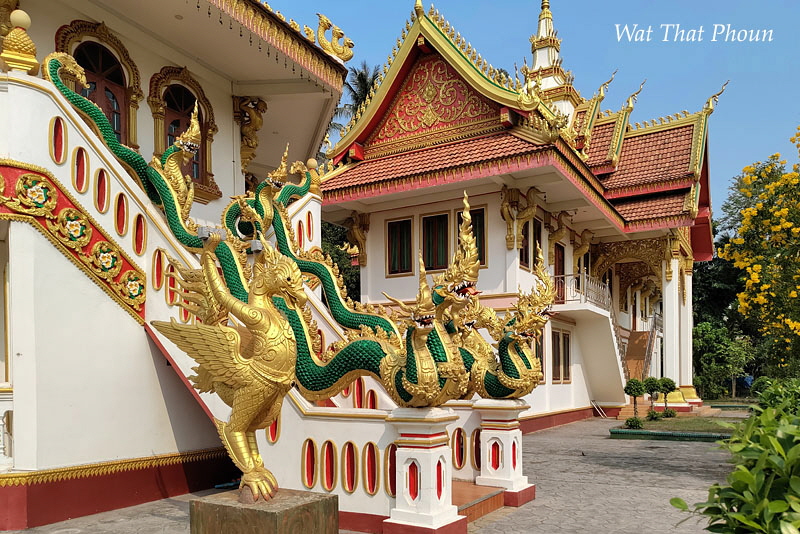
Wat That Phoun - art and architecture at one of the largest sites
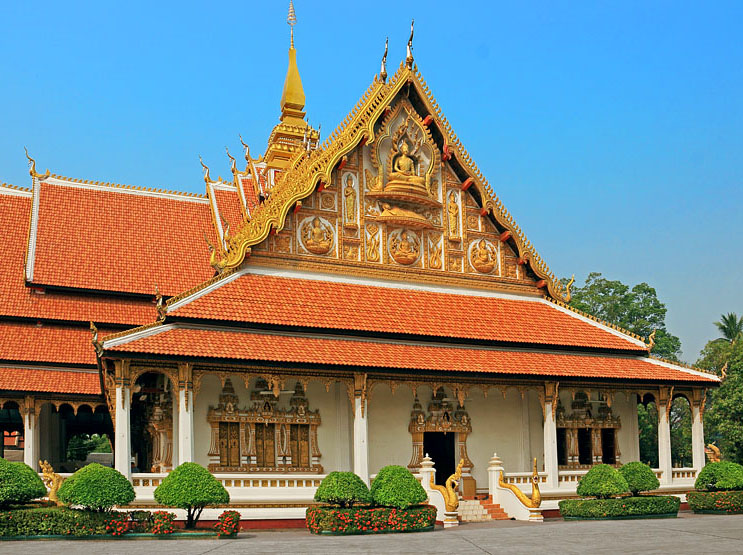
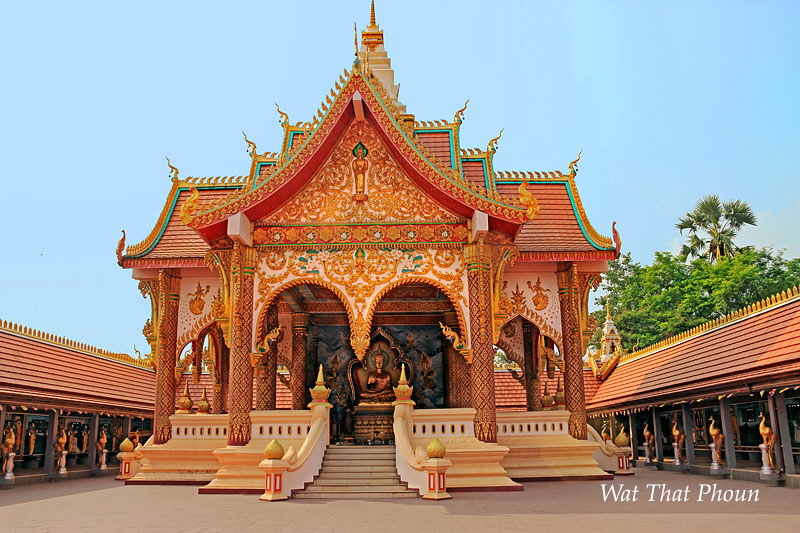
This large temple complex is off the main road, close to the Patuxai Monument. I could not find detailed historical background linked to it. Nevertheless, it is an excellent showcase of Lao culture and architecture. I was so engrossed seeing so many colourful buildings in neatly landscaped gardens and paths that I spent more than half a day at the site. Top of the list is the grand ordination hall (Sim). It was busy, as there was a congregation of worshippers gathered, I did not wish to enter and intrude.
The grand Ordination Hall (Sim)
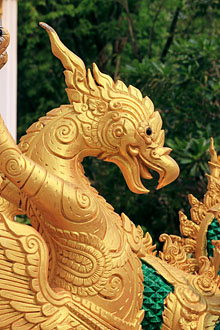
Kinnari statue
Away from the Sim, I spent exploring many other sacred buildings and shrines. Later, I learned that the recent refurbishment was the result of the glossy licks of paint on buildings and statues.
Many of the temple entrance steps are adorned on either side by beautiful Thai-style Kinnari (mythological half-woman, half-bird) and Naga (celestial serpents) statues. The gardens with flora and fountains are a delight to stroll around. Despite the midday heat, there are plenty of shady areas to relax in.
Vendor sellimg floral offerings
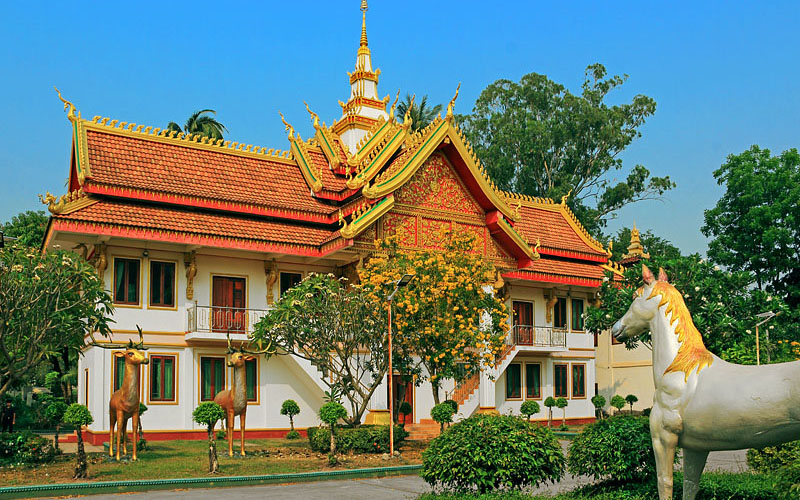
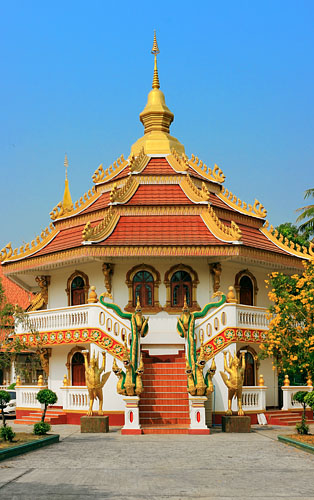
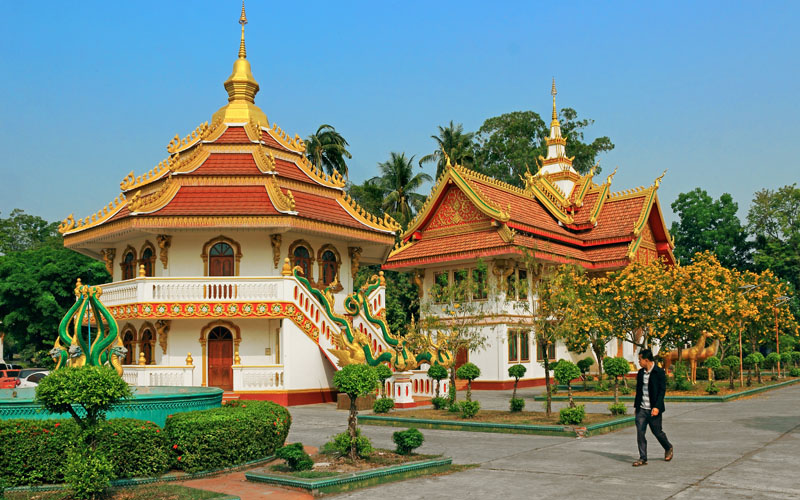
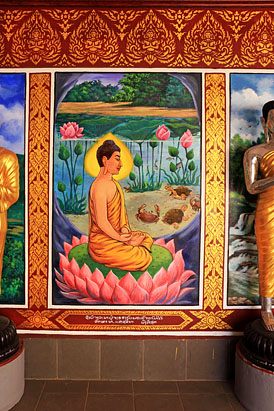
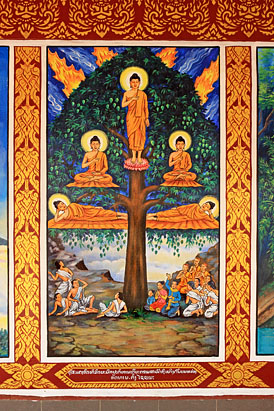
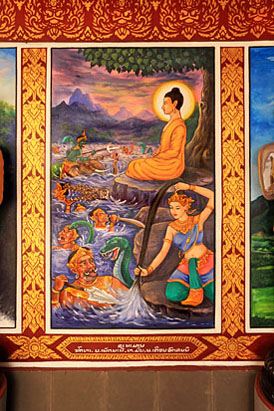
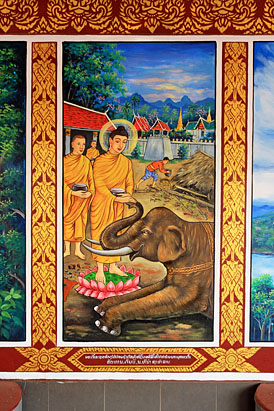
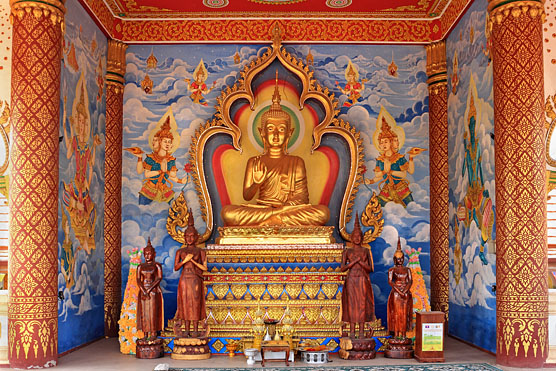
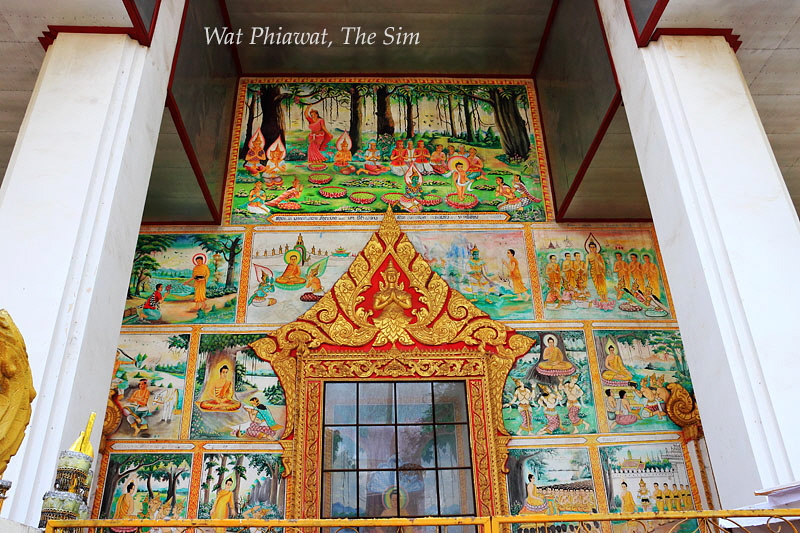
One of the most outstanding temples (which I couldn’t find the name of) has a vast courtyard of paintings of Buddhist stories, standing Buddha statues and shrines to worship at. Above all, it was a calm and peaceful place to be.
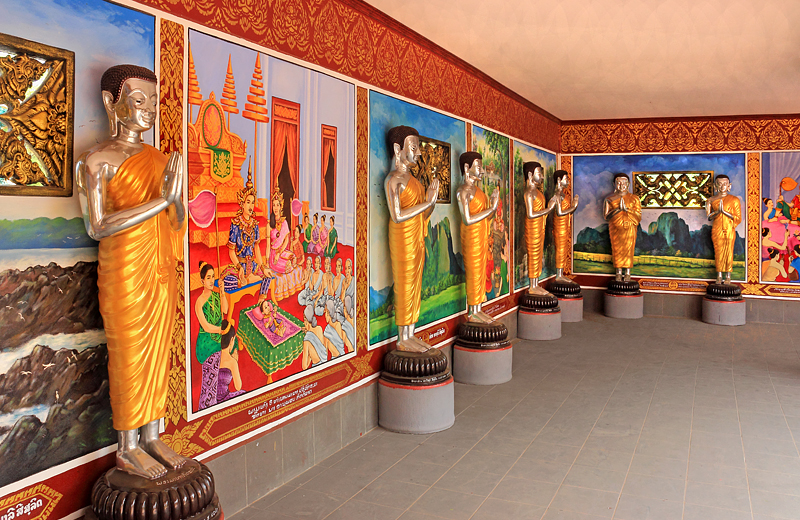
Beautiful paintings of Buddhist stories in one of the large temples within the complex
____________________________________________________________________________________________________________________________________________
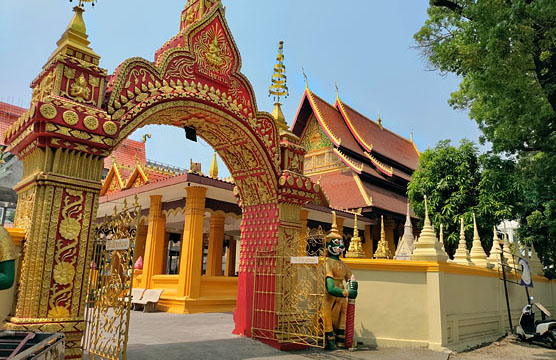
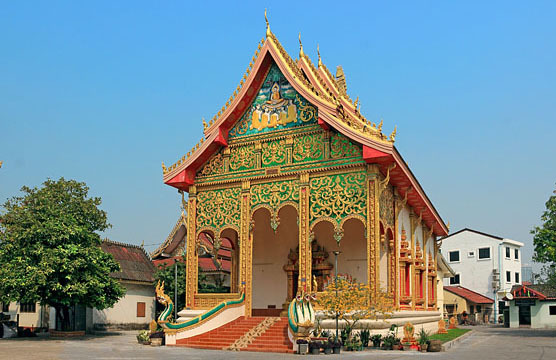
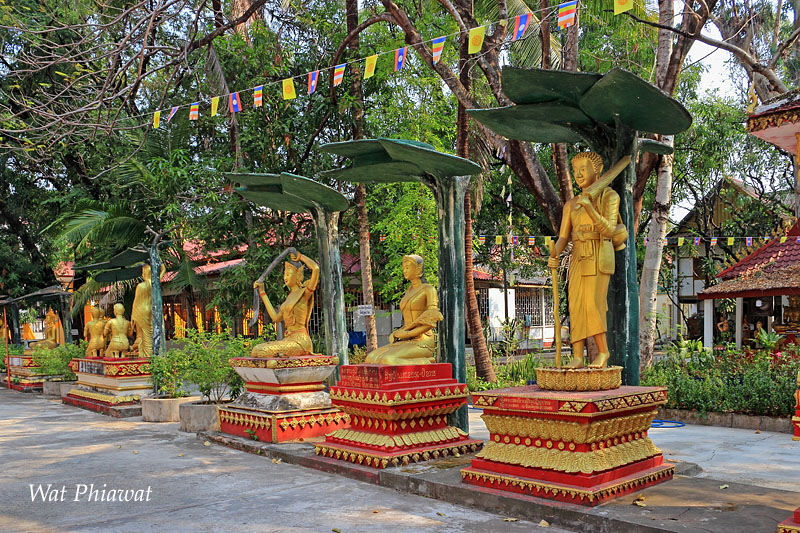
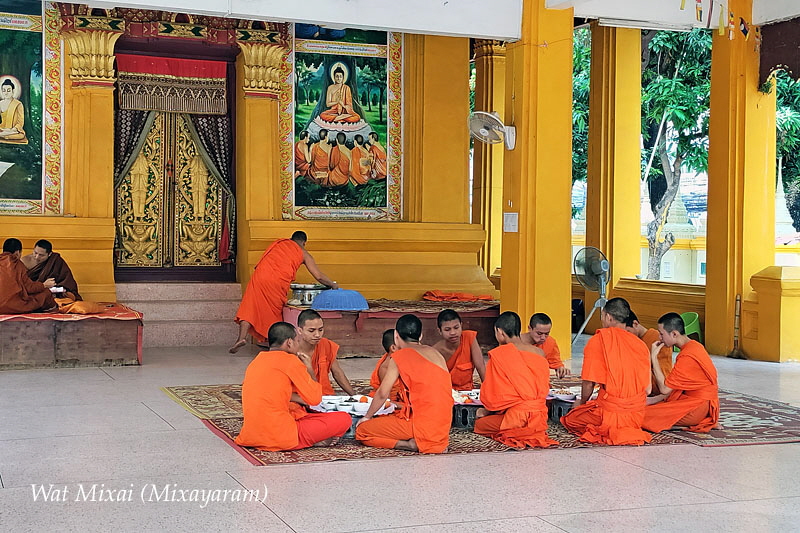
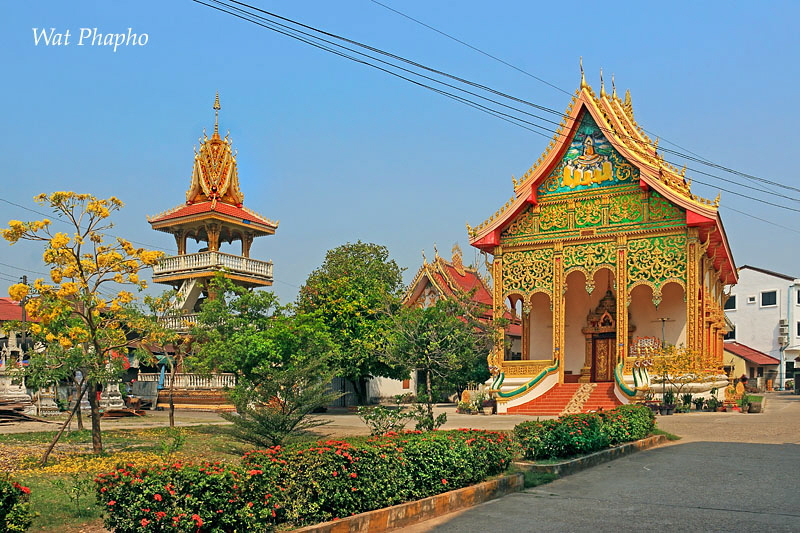
I visited several other temples, and if your enthusiasm prevails, do check these out - Wat Phiawat, Wat Xieng Gneun (Nyeun), Wat Xieng Vae, Wat Kao Nhot, Wat Mixai (Mixayaram) and Wat Phapho. All are within easy reach (use Google Maps).
Wat Phiawat
Wat Xieng Gneun (Nyeun)
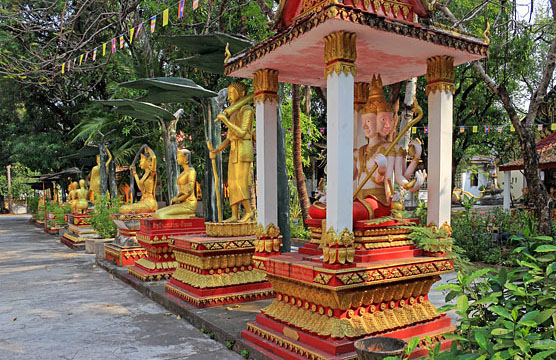
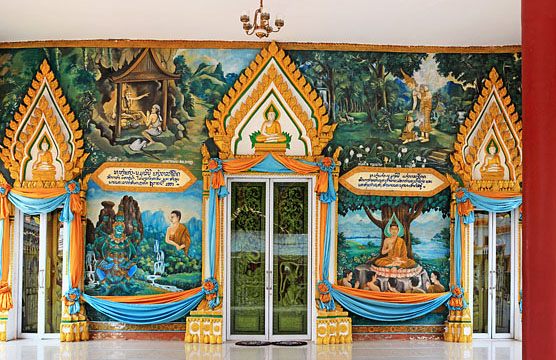
Wat Xieng Vae
Wat Kao Nhot
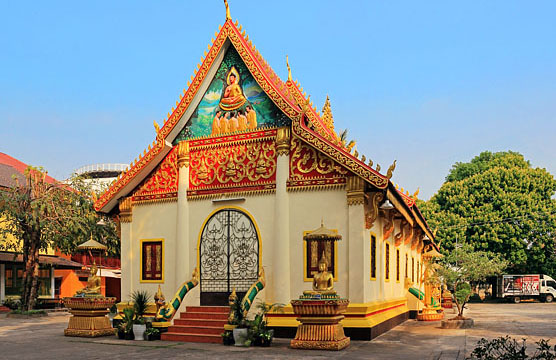
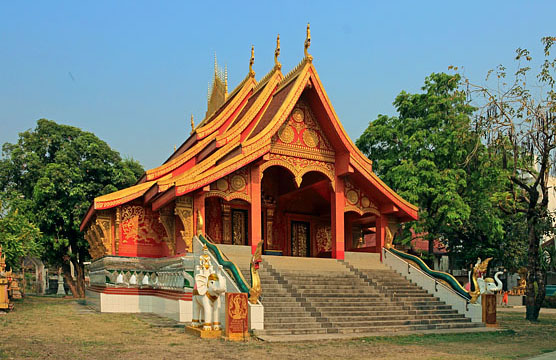
Wat Mixai (Mixayaram)
Wat Phapho
____________________________________________________________________________________________________________________________________________
Note some familiar features common in most temple sites
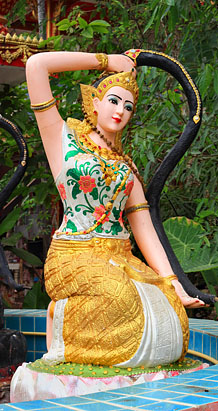
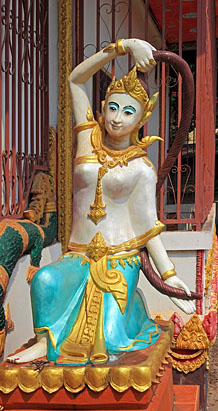
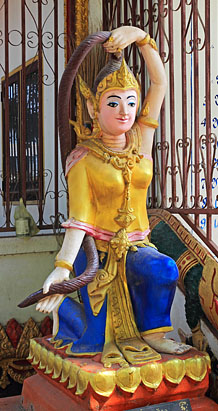
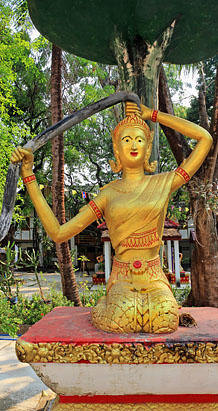
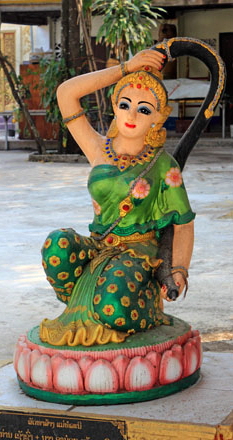
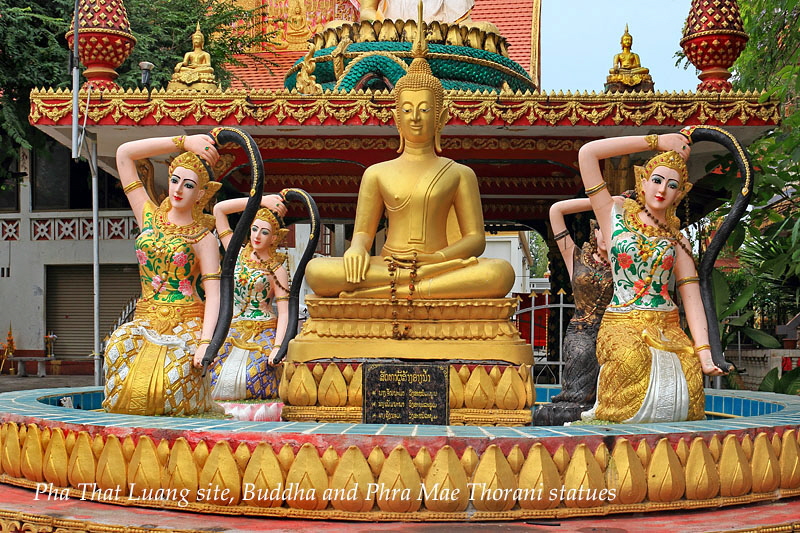
Apart from Buddha statues and deities, figures of the goddess Phra Mae Thorani are depicted as a beautiful deity, the ‘goddess of earth’ or ‘mother’. The statue portrays the woman wringing the water off her long hair to drown Mara, a demon sent to tempt Lord Buddha as he meditated under the Bodhi tree.
Phra Mae Thorani statues
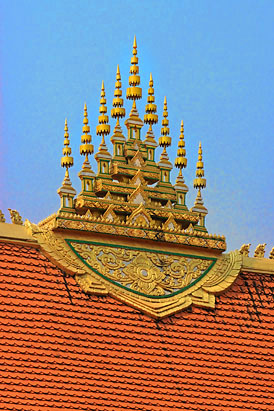
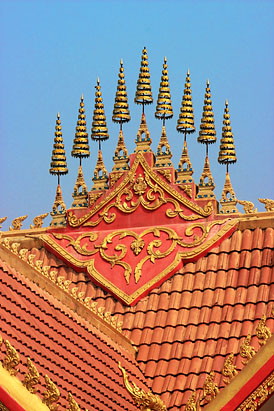
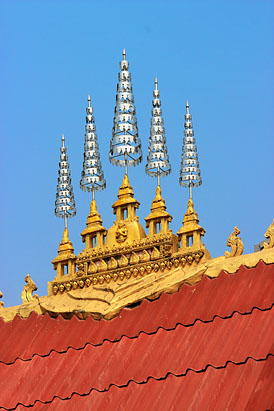
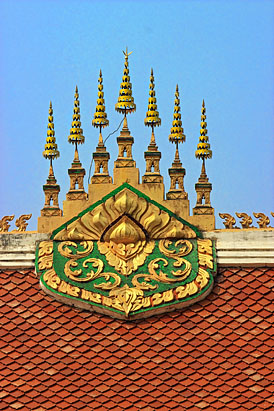
On the rooftop of a Sim is the ornamental ‘Dok So Fa’ - meaning ‘reaching towards the sky’. This decorative centrepiece consists of a line of golden mini spires or pagodas. The number of spires or elements and their ornate beauty define the importance of the temple. Ten or more elements mean they were built for a king.
The rooftop decorative Dok So Fa
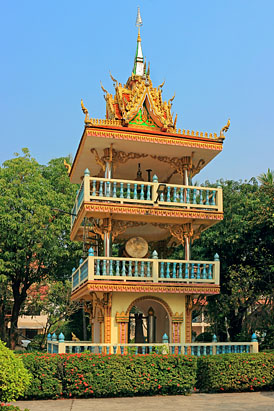
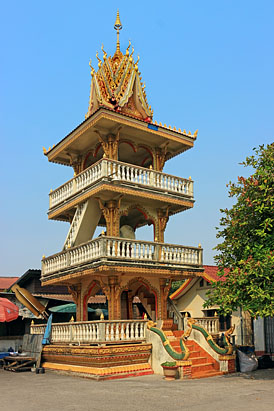
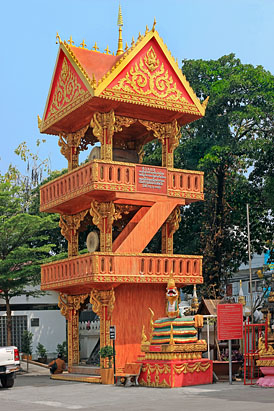
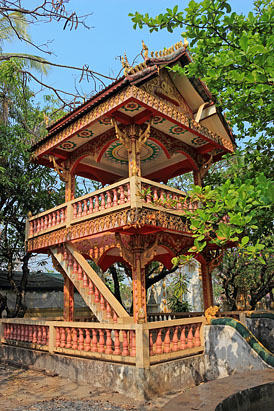
Drum Towers (Ho Kong) are traditional structures that house a large drum and bells to call monks for chanting, announcing their meal times, and inviting the community folk to attend prayer and meditation.
Announcements are made from the Drum Tower
____________________________________________________________________________________________________________________________________________
Monuments and statues to honour kings and commemorate historical events
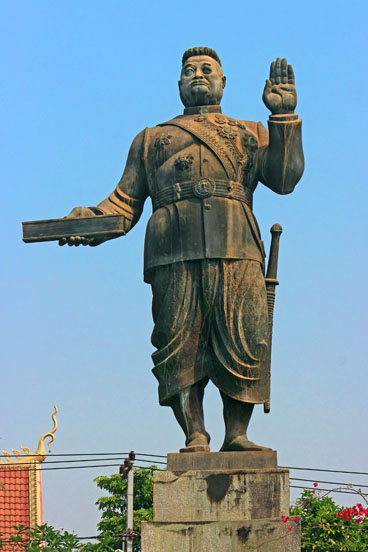
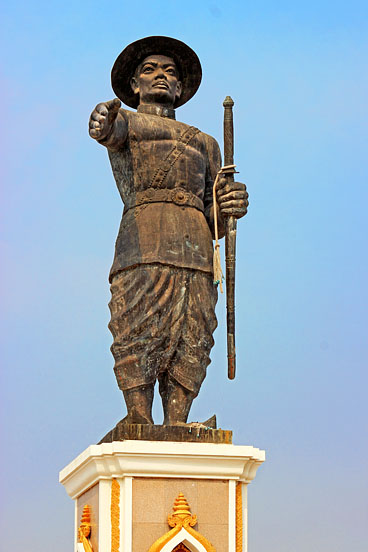
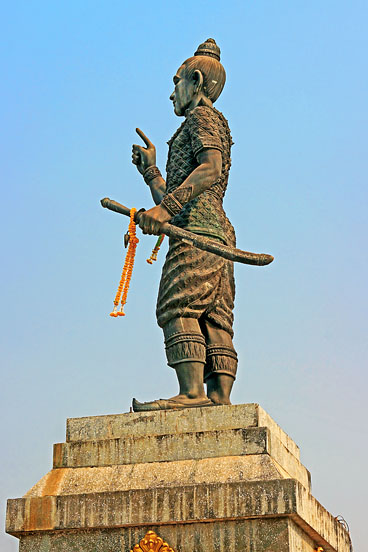
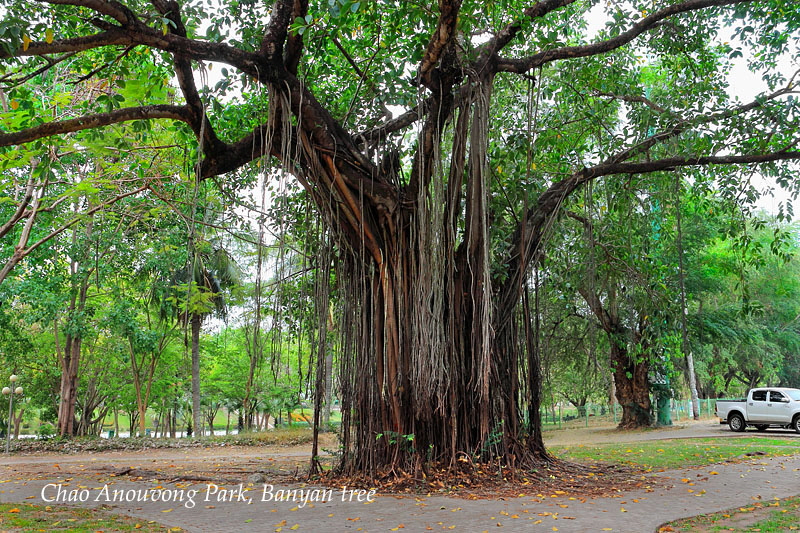
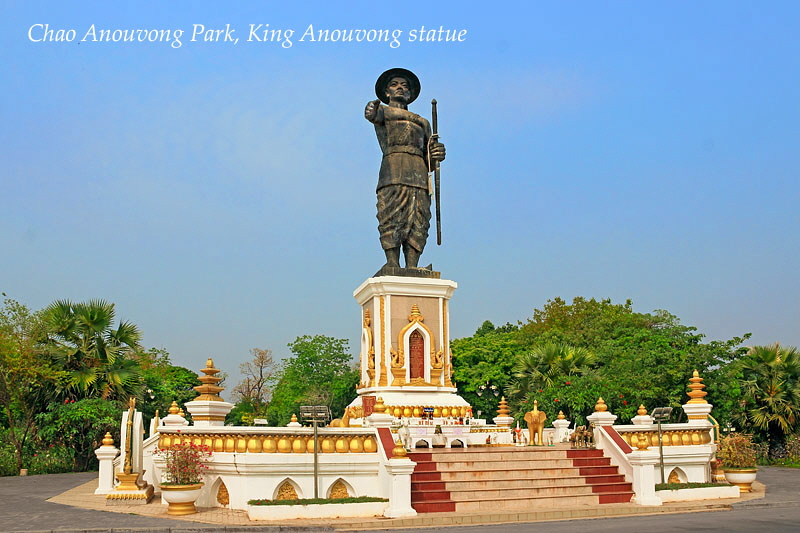
There are several spread around the city. Some are at temple sites and others in parks and streets. Most notable are statues of leaders and kings, like King Sisavangvong (at Wat Si Muang), the King Anouvong statue (at Chao Anouvong Park), the King Fa Ngum statue (at Fa Ngum Park), and King Sethathirath statue (at the Pha That Luang stupa site).
King Sisavangvong
King Anouvong
King Fa Ngum
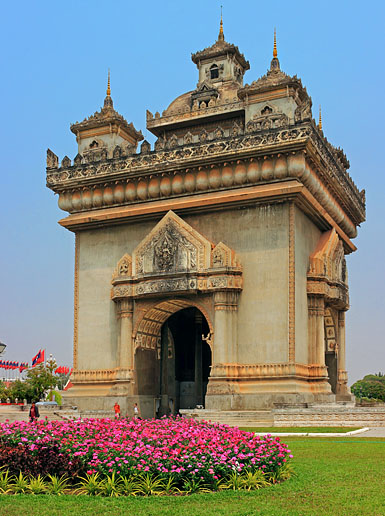
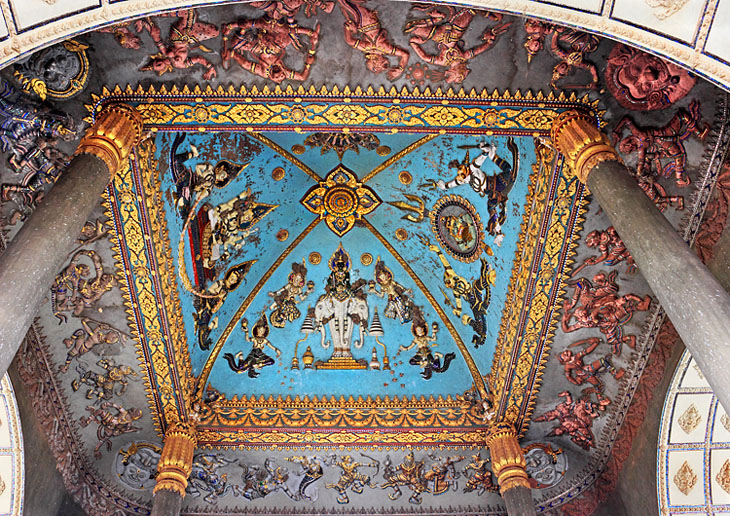
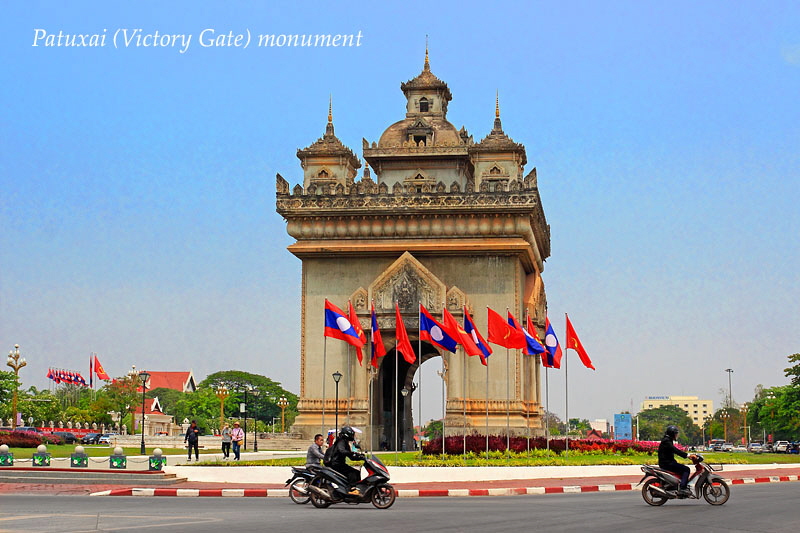
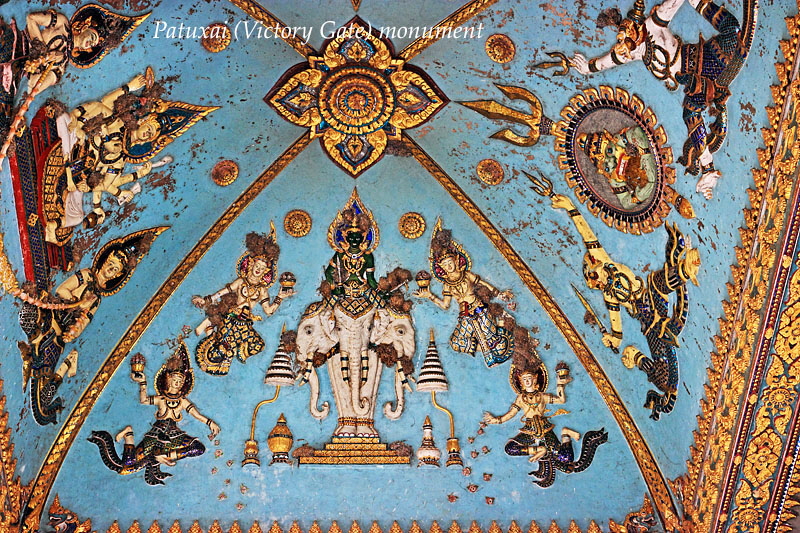
The most notable monument is the Patuxai - victory monument dedicated to those who fought for independence from French rule. Sited along the elegant Lane Xang Avenue, it was built around 1960. It resembles the Arc de Triomphe in Paris, although much of the architecture and design is in the Lao style. The interior is intricately designed with floral, elephant, and deity figures. In the foreground is also a small, beautifully landscaped garden.
Patuxai monument
____________________________________________________________________________________________________________________________________________
And when the passion for culture isn’t enough...
Night Markets
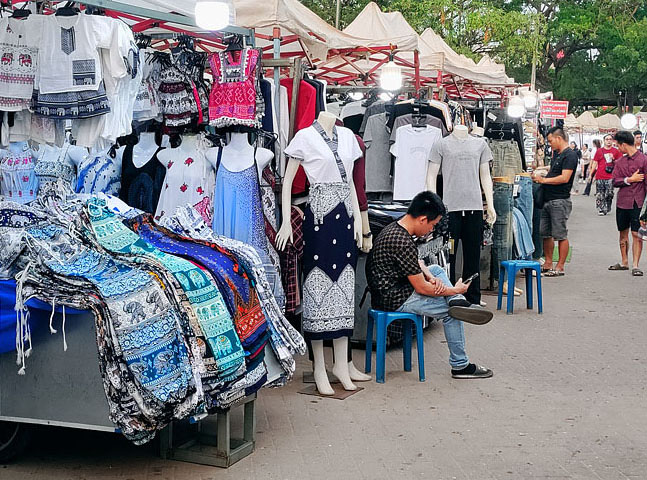
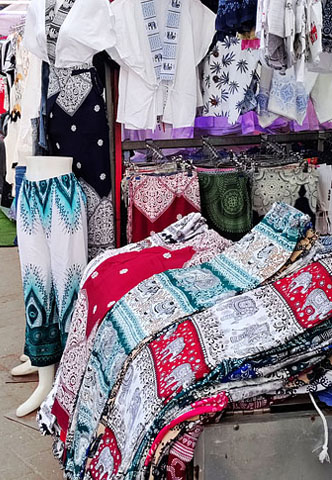
There are several, and two are situated in the city centre, within easy walking distance. Officially, the ‘Night Market’ refers to the one located by the riverside and Chao Anouvong Park. Stall after stall is crammed with Lao textiles and clothing as well as souvenirs, crafts, and toys. While haggling is the norm, prices are generally so low that it would be unethical to try to bargain for the lowest possible price. It’s a great place for a stroll after dinner and to buy a few sarongs or T-shirts to bring back home.
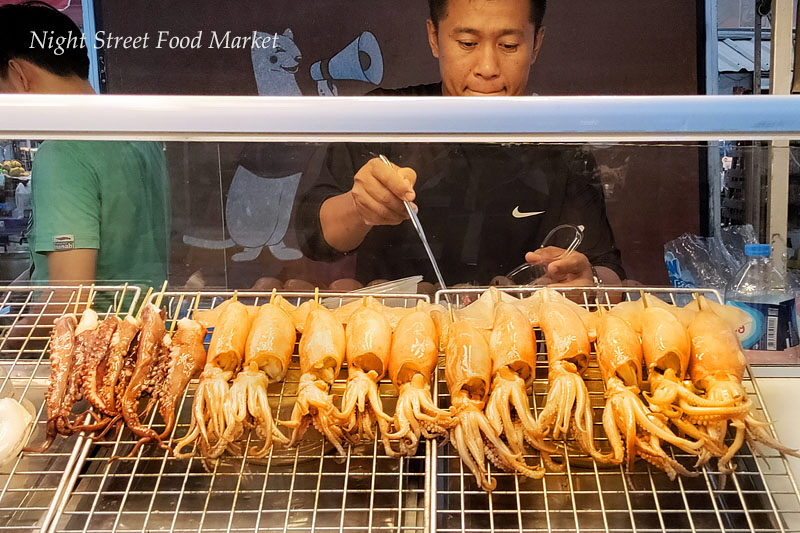
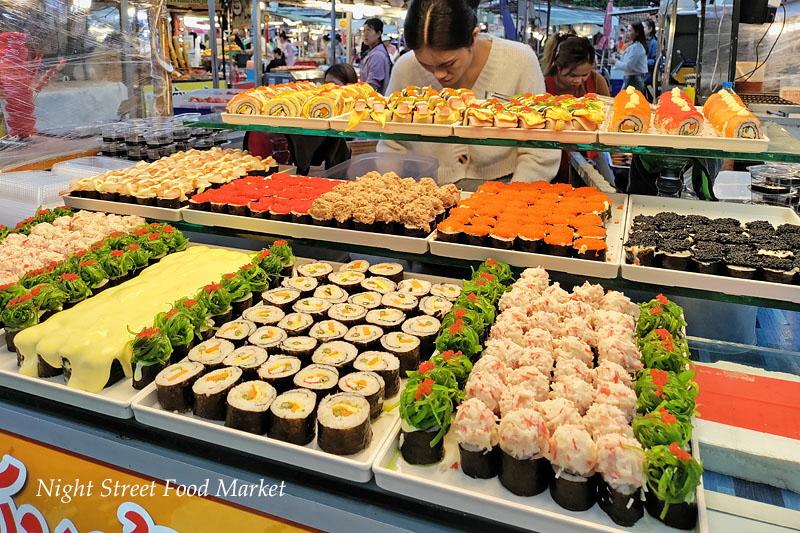
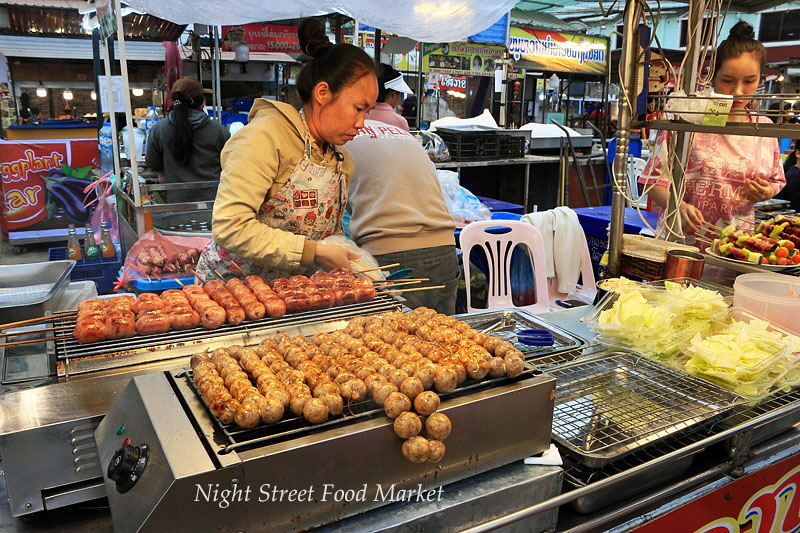
Night Street Food Market - for non-fastidious diners
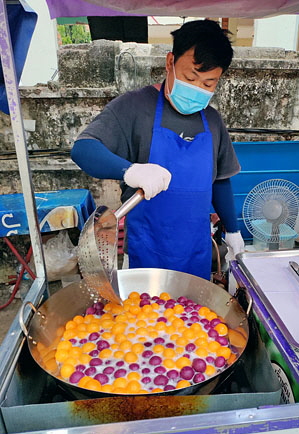
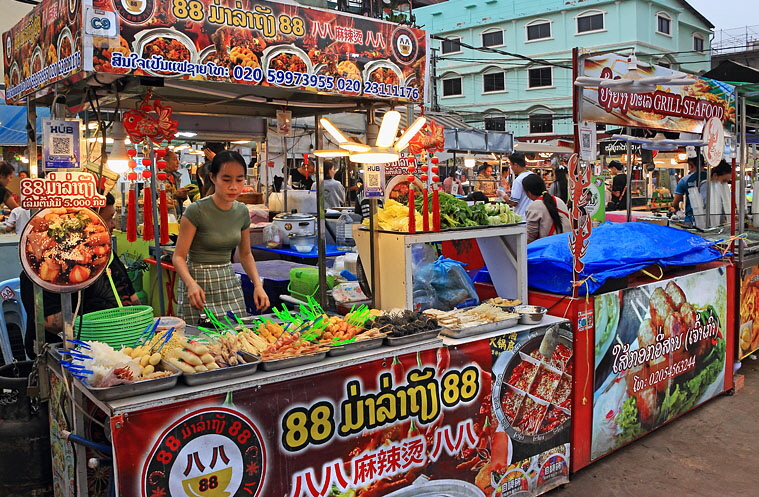
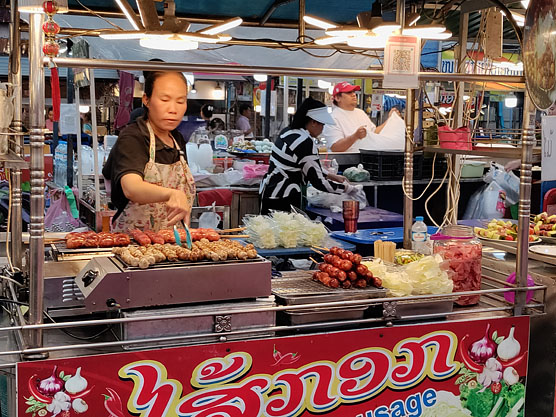
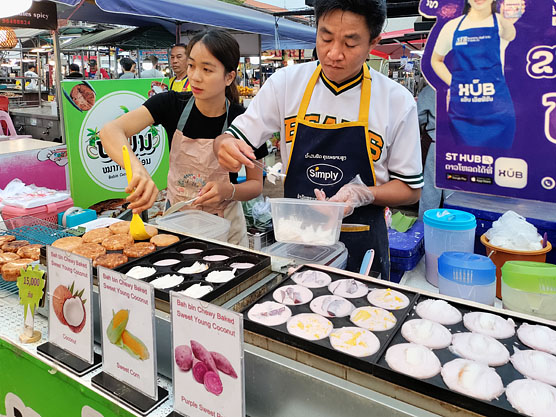
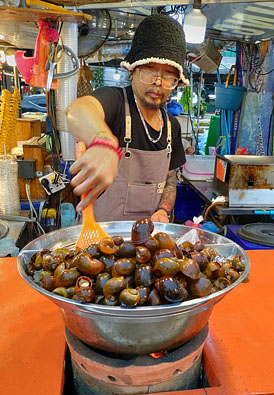
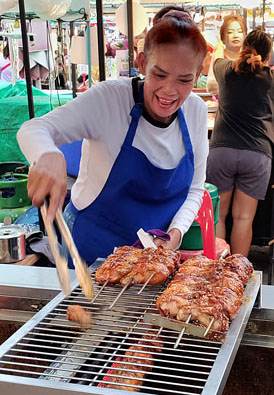
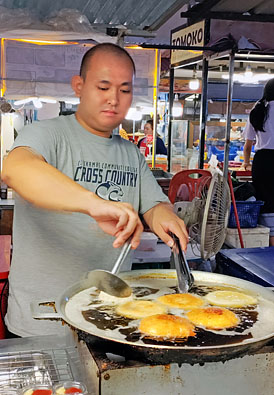
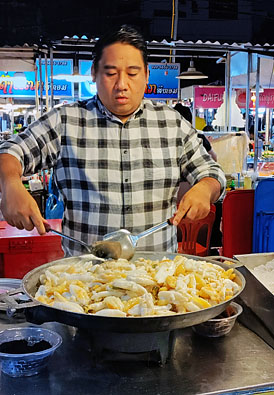
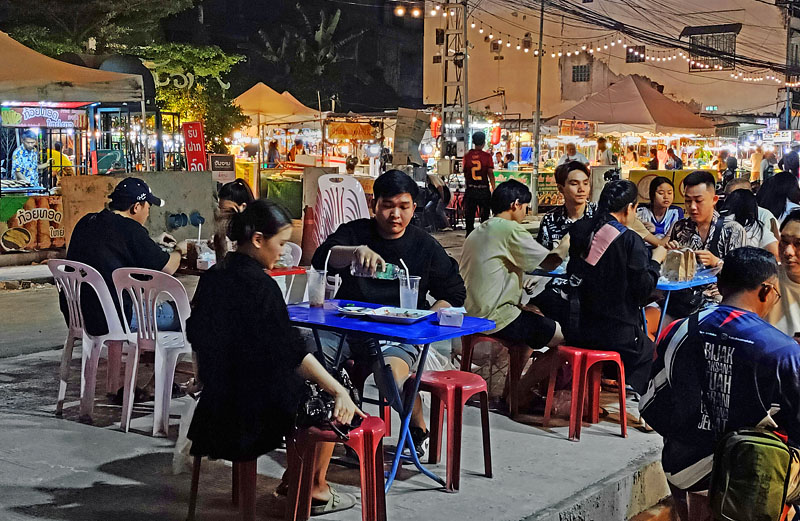
Located in Rue Hengboun. It is almost impossible to resist the enticing aromas wafting around you as you walk by stall after stall. The vendors are friendly and even tolerate those adamant tourists who are there only to take photos. The variety of food is plentiful, and some of it is unidentifiable to me. There have been some negative reviews about eating precooked food on display, so I chose food items that were cooked to order.
A couple of my favourite sweets were deep-fried sweet potato balls and fried coconut and yam cakes. The grilled squid and barbecued pork, served hot, were delicious. Some unusual items like deep-fried grubs, sago worms, and snails are, of course, not to everybody's taste. I loved this place and spent many a night trying out different snacks. The prices are so reasonable that you could choose several items and spend no more than about £3.
Dining out
There is no shortage of restaurants and outdoor casual dining places. The food options are extensive, from typical Lao cuisine (in more upscale restaurants) to Asian dishes and less Western food. Some of my favourite traditional dishes I had were:
Sticky Rice (Khao Niew) - served in a woven bamboo basket, Pork Sausage (Sai Kok), along with a green salad.
Papaya Salad (Tam Mak Hoong) - shredded raw papaya, baby tomato, chillies and fish sauce.
Grilled chicken, marinated in lemon grass, garlic and fish sauce, and served with sticky rice.
For drinks, I preferred to cool down with Lao beer, and later, Robusta coffee.
28 images here ©JAYTRAVELPHOTOS
© COPYRIGHT notice. The images on this site are for viewing only.
To purchase any, for personal or commercial use, please contact us at jaytravelphotos@gmail.com
____________________________________________________________________________________________________________________________________________